




Pair French Bronze Statues
Pair french bronze statues bring classical figures, mythological subjects and allegorical groups into rooms with enduring presence and material weight.

Pair French Bronze Statues
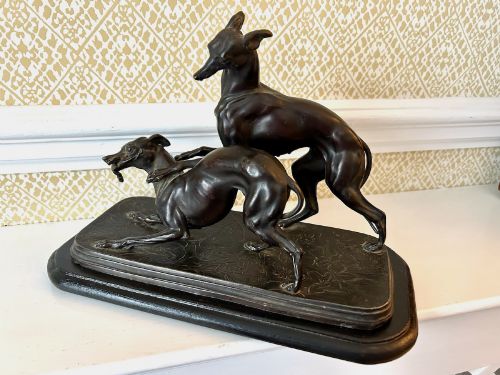
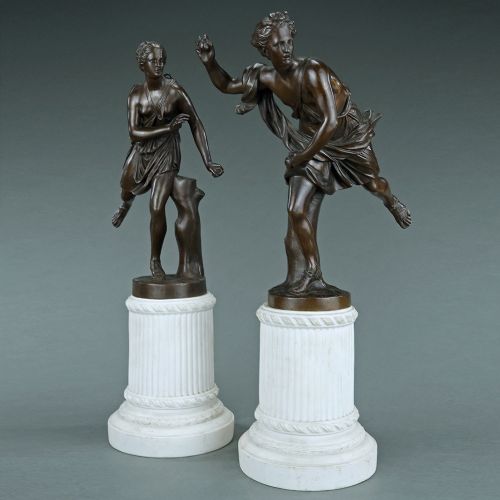
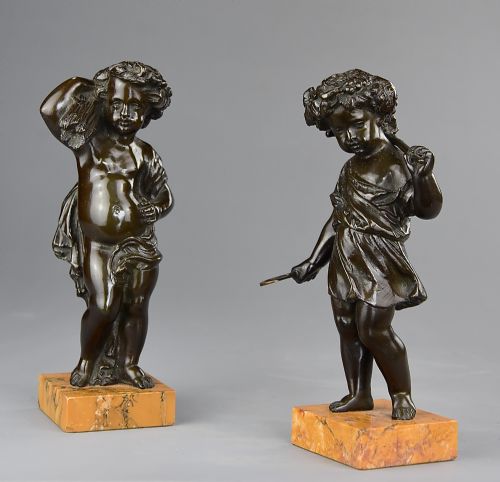
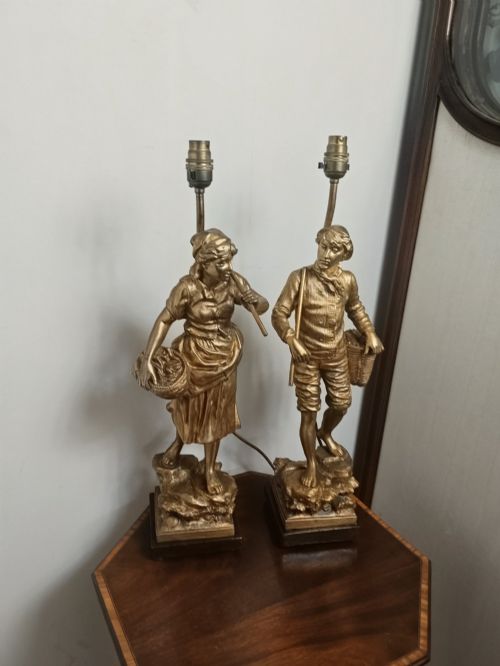
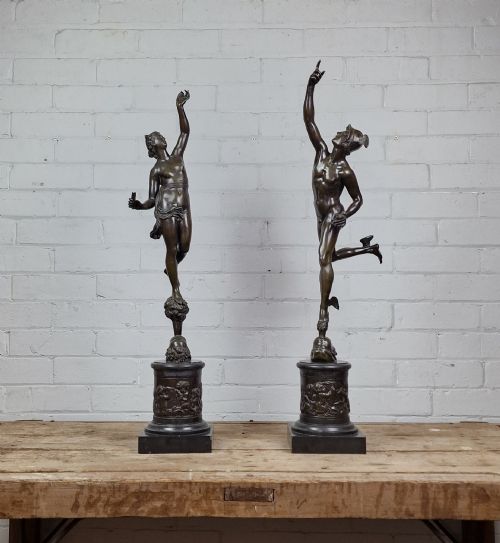
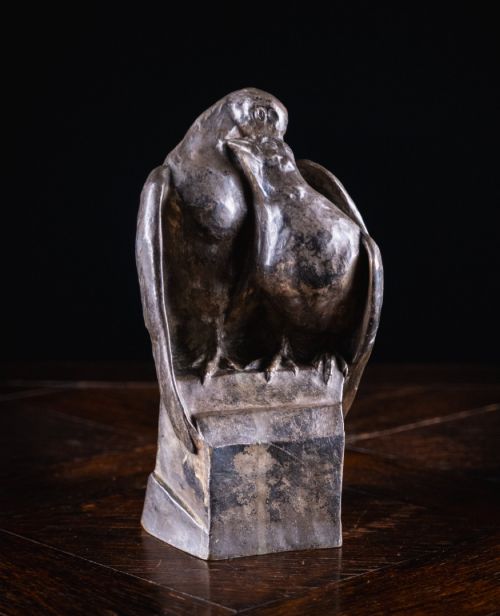
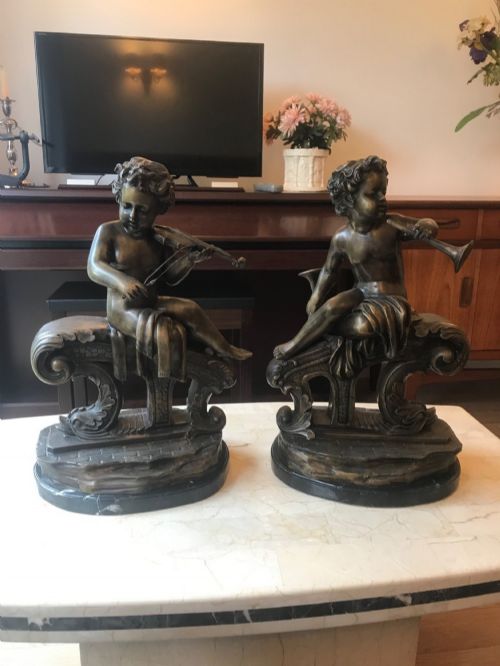
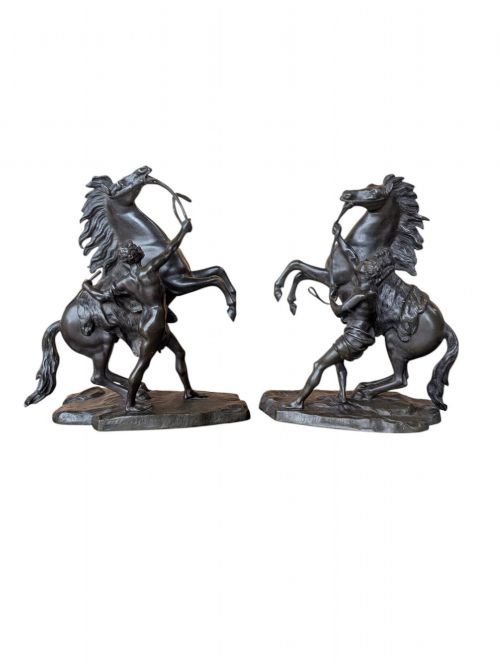
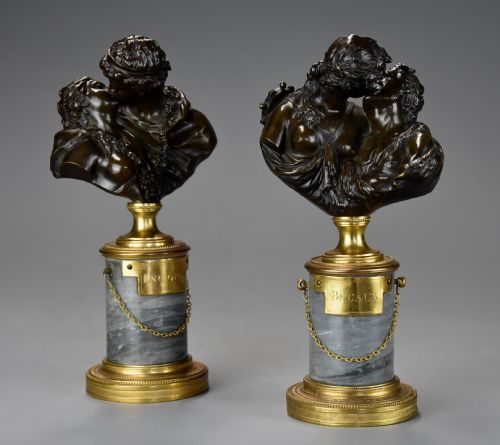
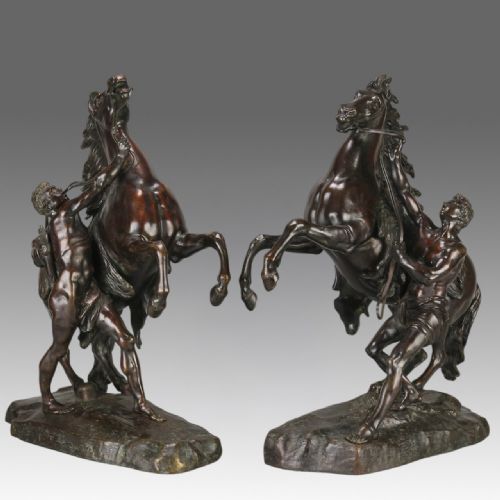
When searching for pair french bronze statues, collectors encounter dual sculptural works spanning the nineteenth century into the early twentieth century. The forms range from classical deities and allegorical putti to harvest figures, animals and historical subjects cast in matched sets.
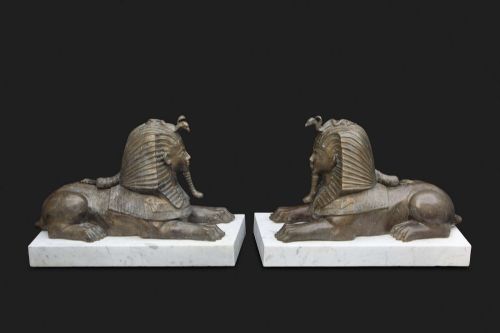
The selections frequently manifest as independent mantel sculptures, architectural torchères, table lamps or bookends mounted upon stone plinths. Pieces typically reflect French Neoclassical, Rococo Revival, or Egyptian Revival aesthetics originating from European foundry traditions.
How they were made
Foundries utilised traditional lost-wax casting and sand-casting methods to shape molten metal into intricate figural compositions. Artisans then applied chemical patination or gilt finishes to the metallic surfaces.
Many sculptures incorporate structural bases or columns fashioned from contrasting materials such as marble, onyx or wood, often secured with cast or chased ormolu collars.
Listings feature items from the nineteenth century, including the Victorian era, alongside early twentieth-century examples up to the nineteen-thirties.
What varies in quality
The sharpness of the chasing and the precision in defining facial expressions, hair, and drapery separate superior castings from softer secondary editions. Detail retention from the original model reveals the skill of the foundry work.
The richness of the applied patina, the integrity of the underlying metal, and the quality of the associated marble or onyx mountings dictate the overall refinement of the finished pair.
Barbedienne·E Rousseau·Frederique Cederlund Ozanne·Jean Antoine Houdon·Coustou·Emile Coriolan Guillemin·Alfred Grevin·Charles Anfrie·Louis Riche·P J Mene·Dumond·H Moreau·Clodion
The Pair French Bronze Statues Glossary
- Patinated bronze
- A metal alloy treated with chemical solutions to produce a specific surface colour, ranging from deep brown to greenish tones. This finish protects the metal and defines the visual contours of the sculpture.
- Ormolu
- Gilded bronze produced by applying a mixture of mercury and gold to a cast bronze base, then heating to vaporise the mercury. This technique creates a durable, luminous golden surface common on nineteenth-century mounts.
- Spelter
- A zinc alloy frequently utilised as a less expensive substitute for bronze in decorative figures. It is softer than bronze and generally carries a painted or bronzed finish.
- Chasing
- The manual process of refining a cast metal surface using hammers and punches to sharpen details and remove casting flaws. Master chasings elevate the definition of hair, clothing, and background elements.
- Grand Tour
- Cultural travel undertaken by wealthy Europeans during the eighteenth and nineteenth centuries to collect classical art and small-scale bronze copies of ancient sculptures. These items often served as foundational pieces for later domestic displays.
Pair French Bronze Statues: Frequently Asked Questions
How do I identify a true bronze casting?
True bronze figures are heavy, non-magnetic, and display a resonant sound when struck gently compared to softer metal alternatives. Examining the underside often reveals casting seams or threaded fixing bolts rather than modern assembly screws.
Foundry marks and artist signatures are frequently chased directly into the base metal before patination. These signatures help connect specific editions to established nineteenth-century French workshops.
Where should I display these figures in my home?
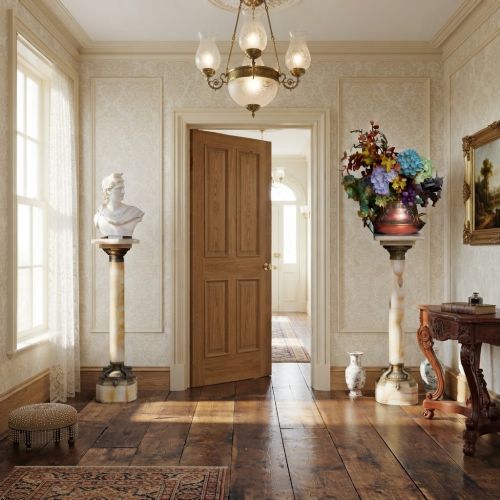
These sculptures suit prominent flat surfaces such as mantelpieces, pedestals, console tables, or large sideboards where their matched symmetry can be appreciated. Placement should avoid direct sunlight and extreme temperature shifts to protect patinated surfaces and stone bases.
Pairings often anchor either end of a decorative arrangement, framing a clock set or central architectural feature. Ensuring stable placement on a level surface protects the heavy marble or bronze components from accidental tipping.
How do I clean patinated bronze safely?
Dusting gently with a soft, dry microfibre cloth removes everyday accumulation without disturbing the chemical finish. Avoid chemical polishes, abrasives, or water, as these substances strip historical patination and damage the underlying metal.
For intricate crevices, a clean artist paintbrush helps lift trapped debris safely. Professional conservation remains advisable if deep cleaning or structural repair to loose marble mounts becomes necessary.
What is the difference between bronze and spelter?
Bronze is a durable copper and tin alloy capable of holding exceptionally sharp chased details through centuries of handling. Spelter is a zinc-based alternative that feels lighter, scratches more easily, and typically relies on an applied surface coating to simulate bronze.
Close inspection around base attachments or areas of wear often exposes the greyish-white zinc metal beneath flaking paint on spelter works. Bronze maintains a consistent metallic tone throughout its body beneath the surface patina.