
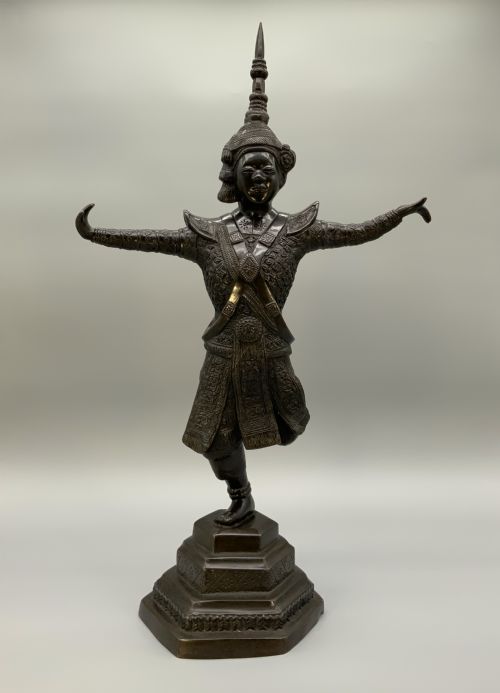


Dark Bronze Dancer Figurines
Dark bronze dancer figurines capture movement in cast metal, bringing dynamic energy and period elegance to any interior.
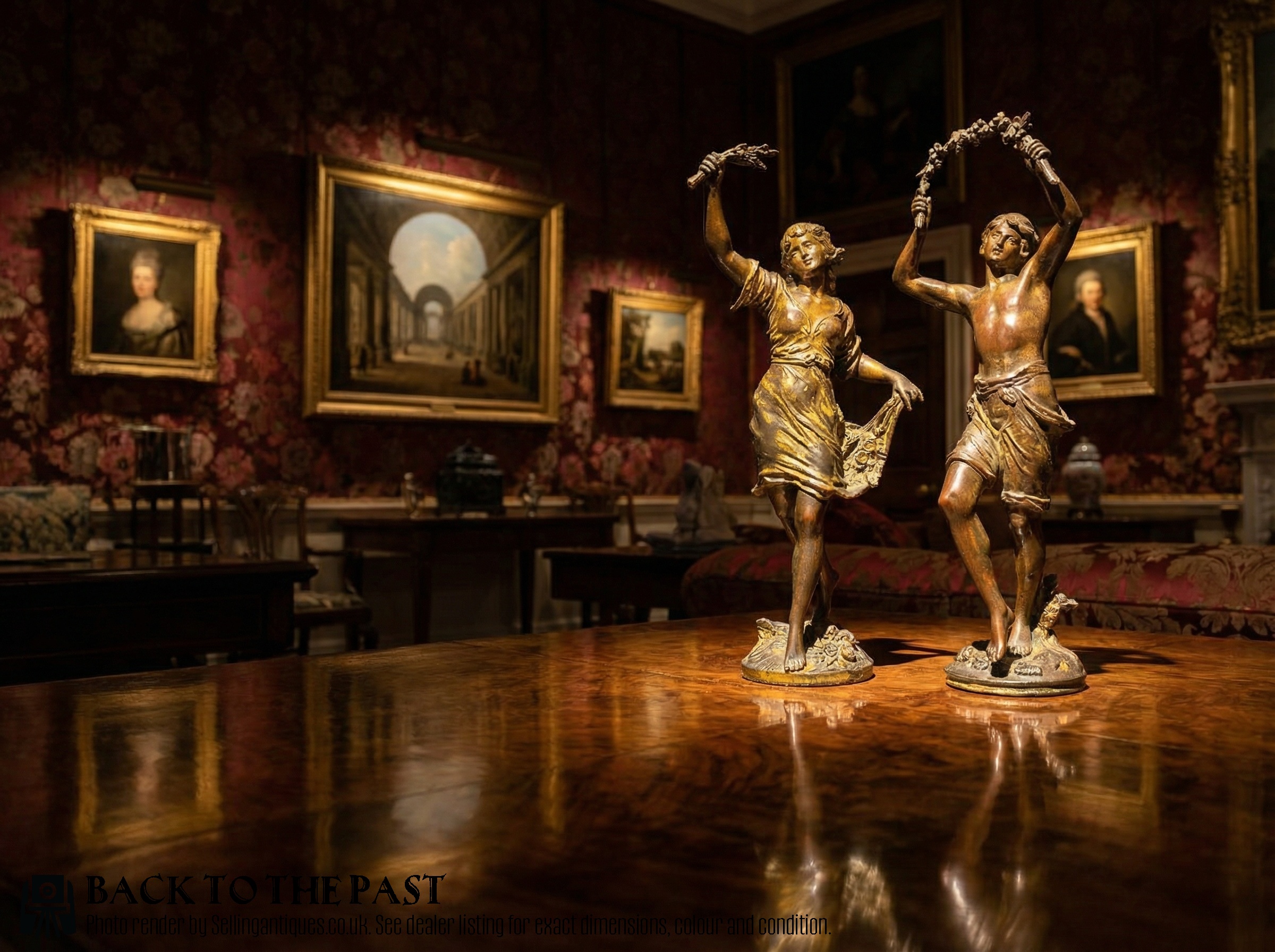
Dark Bronze Dancer Figurines
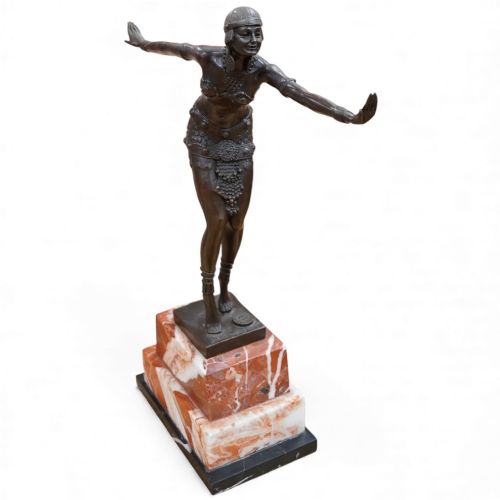
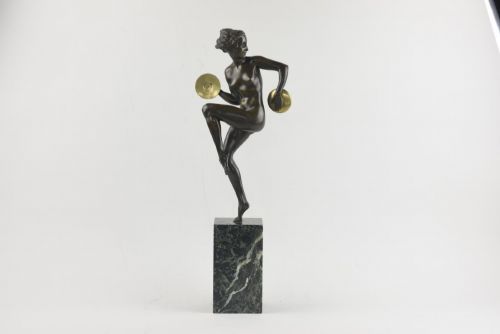
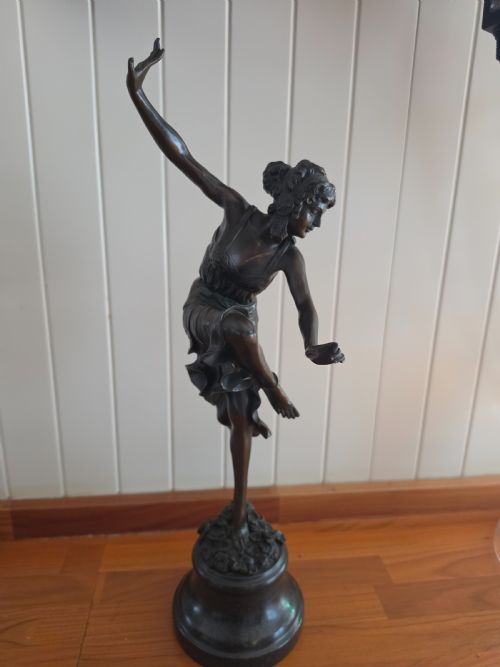
Dark bronze dancer figurines capture dynamic movement across various periods, including the nineteenth century and the Art Deco era of the nineteen-twenties and nineteen-thirties. You will frequently encounter French Art Deco works depicting nude dancers, hoop dancers, and exotic performers.
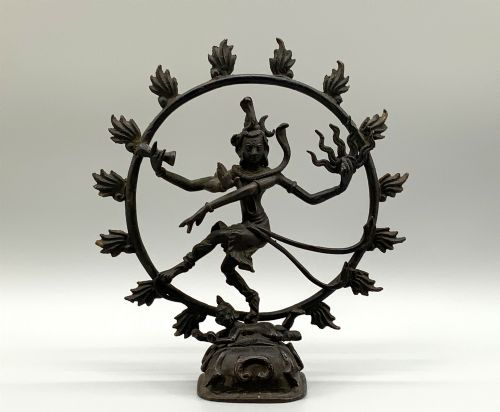
The selection ranges from classical nineteenth-century French and Indian interpretations to twentieth-century European sculptures. Subjects extend from mythological deities like Shiva Nataraja to theatrical performers such as Maria Jeritza and specific dance characters.
Figures often stand upon fitted bases made of stone or marble to provide stability and visual contrast. These sculptures function as tabletop statues, larger decorative sculptures, or matched pairs.
What varies in quality
The refinement of the casting and the crispness of the chiselling determine the fidelity of the dancer's musculature, drapery, and facial expression. Superior examples display precise anatomical control and balanced composition, particularly in complex twisting postures.
The quality of the patination and the selection of the supporting stone base significantly influence the overall presence of the object. Master founders achieved subtle tonal gradations on the bronze surface that inferior copies lack.
Listings feature works spanning the nineteenth century up to the nineteen-forties, executed primarily in bronze with marble and onyx bases.
Aurore Onu·C J R Colinet·Demetre H Chiparus·Josef Lorenzl·Paul de Boulogne·Eugène Désiré Piron·Jean Jacques Pradier·Claire Colinet·Bruno Zach·Mario Korbel·Francisque Joseph Duret
The Dark Bronze Dancer Figurines Glossary
- Patina
- A chemical or natural surface coloration applied to bronze. It protects the metal and defines the dark tones seen on these figures.
- Parcel-gilt
- A decorative treatment where portions of the bronze surface are selectively gilded with gold leaf. This technique highlights specific garments or ornaments against the dark bronze body.
- Art Deco
- A design style dominant in the nineteen-twenties and nineteen-thirties characterised by sleek lines and dynamic movement. Many dancer figures originate from this period.
- Cire perdue
- The lost-wax casting method utilised to produce detailed bronze sculptures. It allows for intricate undercuts and delicate limbs in dancing figures.
Dark Bronze Dancer Figurines: Frequently Asked Questions
What periods do these dancer figures come from?
The pieces span from the nineteenth century through the early twentieth century, with a heavy concentration in the nineteen-twenties and nineteen-thirties. You will find nineteenth-century French and Indian examples alongside classic Art Deco creations.
Twentieth-century items predominantly reflect European foundry output from the interwar period. Each era brings distinct stylistic priorities to the depiction of the human form.
Are these figures mounted on stone bases?
Many figures incorporate bases made from marble or onyx to anchor the composition. These stone plinths provide weight and architectural contrast to the dark metalwork.
Some sculptures stand independently or upon integrated bronze bases without stone elements. The choice of base often relates to the stability required for dynamic leaping or balancing poses.
How do I identify an Art Deco dancer?
Art Deco dancer figures typically feature stylised anatomical proportions, geometric costumes, and aerodynamic poses representing modern dance. Artists like Chiparus and Lorenzl popularised subjects captured mid-motion, such as hoop dancers and exotic performers.
The aesthetic emphasises clean lines and theatrical characterisation rather than strict classical realism. Many bear signatures or foundry marks associated with the nineteen-twenties.
What subjects are represented besides European dancers?
The selection includes traditional cultural works, such as nineteenth-century Indian bronze figures of Shiva Nataraja as Lord of the Dance. You will also discover regional works from school workshops like Applied Arts School Bien Hoa.
These diverse origins provide an international perspective on the sculptural interpretation of dance. Each cultural tradition employs distinct casting techniques and iconography.