


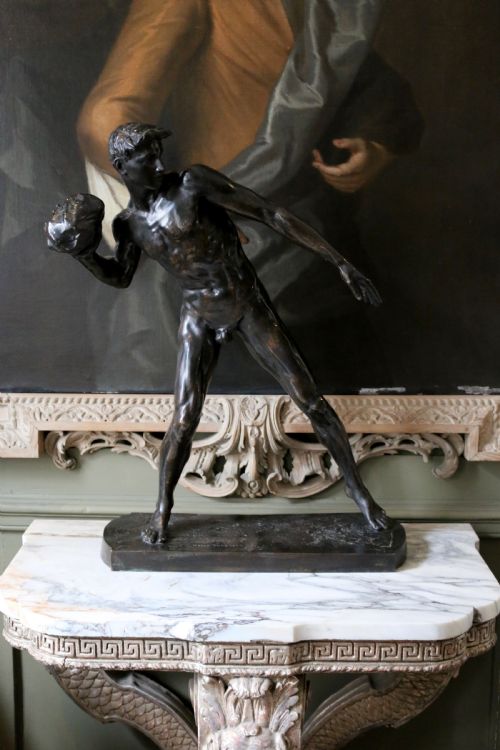




Vintage Bronze Male Figure
These vintage bronze male figure works capture classical form and athletic strength, offering tangible history for your mantelpiece or study.
Vintage Bronze Male Figure
When you search for a vintage bronze male figure, you are looking at cast metal sculpture depicting men, spanning from nineteenth century Grand Tour classical subjects to twentieth century Art Deco athletes.
The most common examples on this page are nineteenth century Grand Tour pieces, French Realist studies, and Art Deco figures of tennis players, wrestlers, and gladiators.
These works take the form of freestanding sculptures, statuettes, library busts, and figural lamps, frequently mounted upon stone or marble plinths.
Materials and construction methods
The primary material is cast bronze, alongside patinated bronze, bronzed slip cast earthenware, terracotta, and plaster, often paired with marble or fossil marble bases.
Foundries utilised traditional casting techniques to capture fine anatomical detail, finishing the metal with varied patination ranging from dark tones to green patination and gilt surfaces.
Vintage Bronze Male Figure Retail Price Guide 2026
Typical asking prices for vintage bronze male figure among the pieces listed under this phrase on Sellingantiques today, from the lower quarter to the upper quarter. They describe what is for sale here now, not the wider market.
Athletes rule this metal kingdom, where power lifters and tennis players share desk space with ancient Roman gladiators.
Assessing quality in metal sculpture
Superior pieces display thoughtful integration between the figure and its stone or marble plinth, alongside a rich, stable patination that enhances the sculptural contours.
Hamo Thornycroft·Jules Dalou·Friedrich Goldscheider·Desire Grisard·Rudolf Küchler·Bruno Zach
The Vintage Bronze Male Figure Glossary
- Grand Tour
- A traditional trip through Europe undertaken by upper-class young men in the eighteenth and nineteenth centuries, bringing home small bronze replicas of classical antiquities.
- Patination
- The surface coloration or film that develops on bronze naturally over time or is applied artificially by an artist using chemical treatments.
- Spelter
- A zinc alloy commonly used as a cheaper alternative to bronze for sculptural figures, particularly in the nineteenth and early twentieth centuries.
- Slip cast
- A ceramic manufacturing technique where liquid clay slip is poured into a plaster mould to create hollow figures like earthenware or terracotta.
Vintage Bronze Male Figure: Frequently Asked Questions
How do I clean a bronze figure?
Dust the surface gently with a soft, dry brush to remove particles without disturbing the patination.
Avoid using water, chemical polishes, or abrasive cloths, as these strip away the historic finish.
Are these figures solid bronze?
Many examples are hollow cast rather than solid metal to reduce weight and material costs during production.
Some related pieces utilise alternative materials such as spelter or slip cast earthenware with a bronze finish.
What is a Grand Tour bronze?
These are nineteenth century souvenir sculptures replicating famous classical Greek and Roman antiquities purchased by travellers.
They frequently feature detailed patination and are mounted on heavy marble or stone bases.
How do I distinguish bronze from spelter?
Bronze feels heavier, displays a warmer resonant tone when tapped lightly, and holds a more durable patination.
Spelter is softer, lighter, and tends to show grey metal beneath chips in the surface coating.