





Vintage British Clock
A vintage british clock brings functional history into a room, spanning industrial dial designs, sturdy railway timepieces and polished mahogany cases.
Vintage British Clock
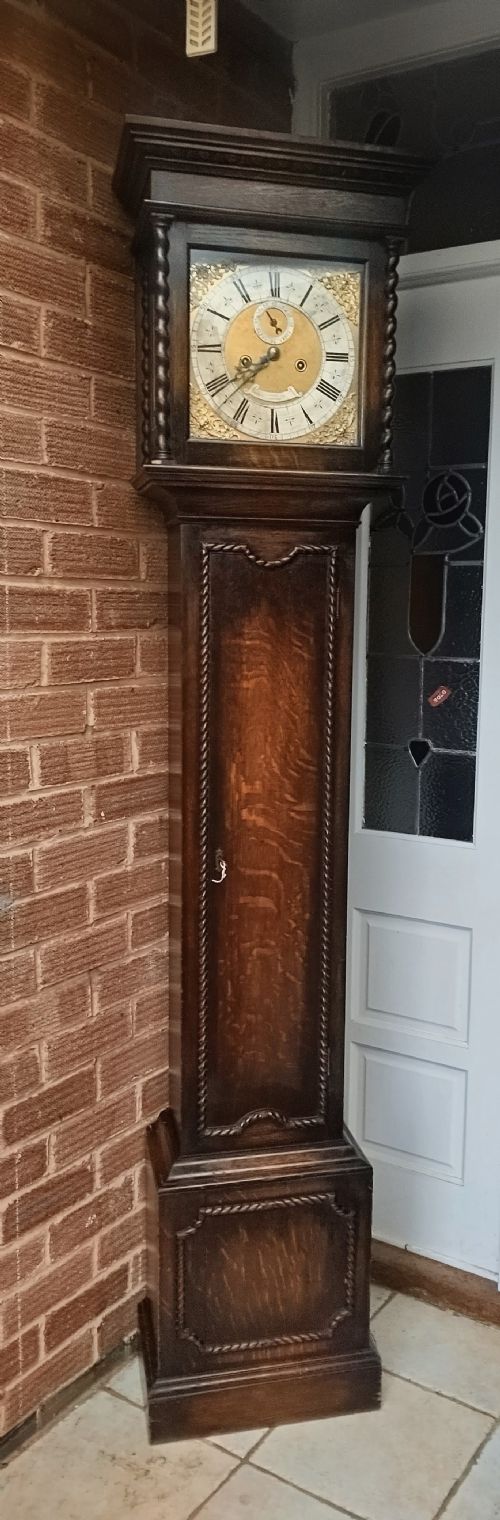
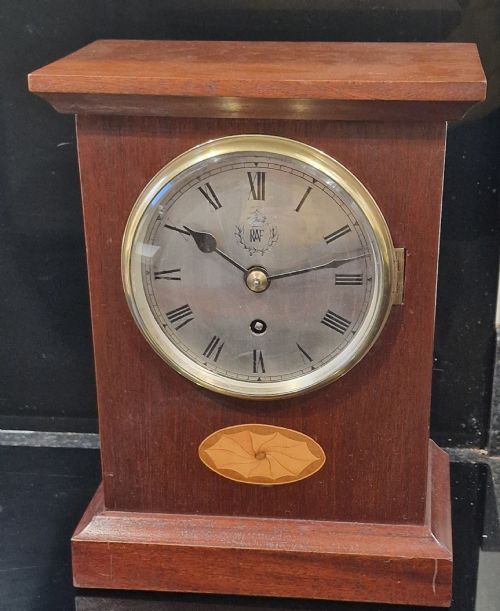
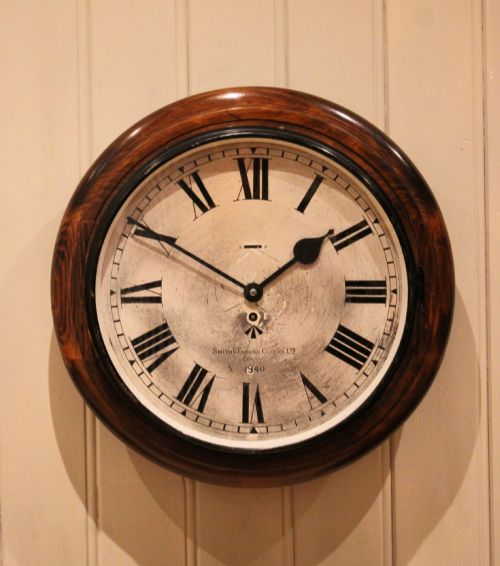
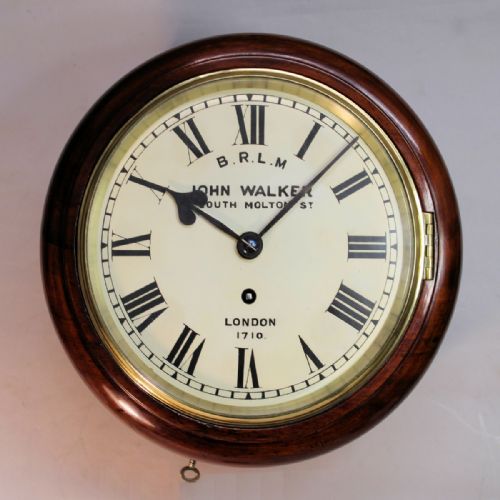
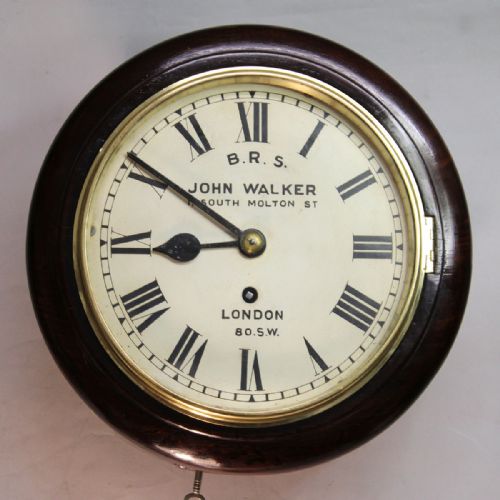
When you search for a vintage british clock, you encounter timepieces shaped by practical service across railway networks, government offices, military messes and domestic spaces. The selection on this page ranges from robust fusee dial wall clocks used by railway companies to Art Deco mantel clocks and tall longcase clocks.
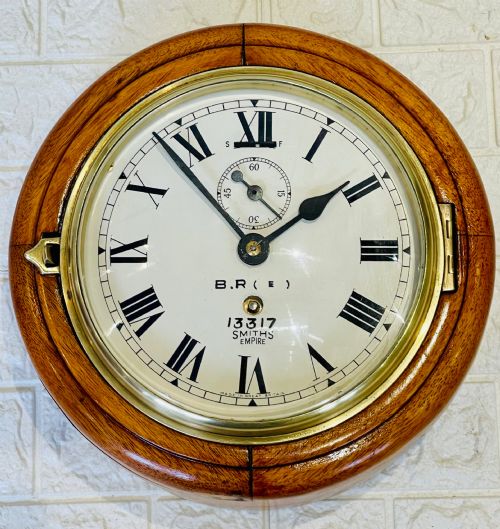
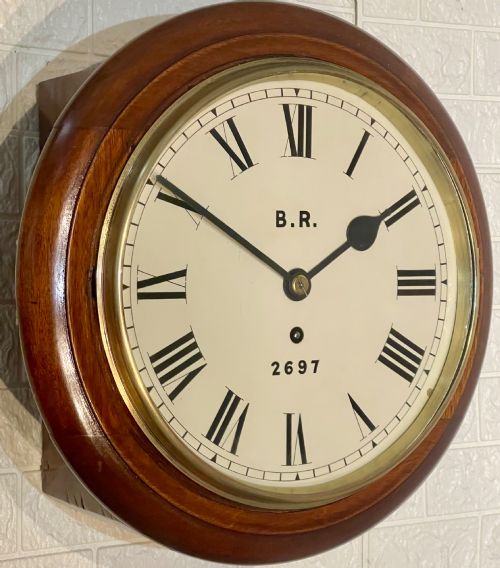
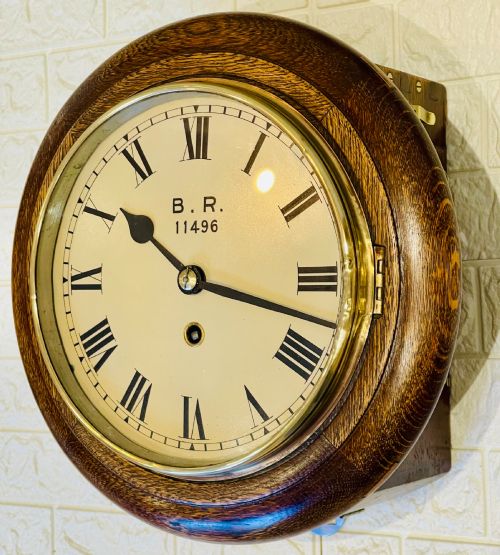
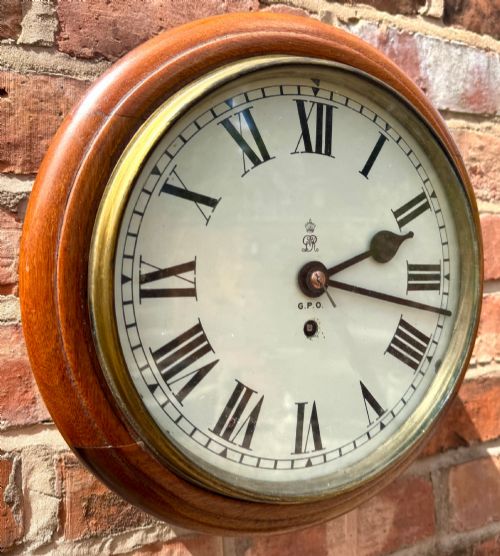
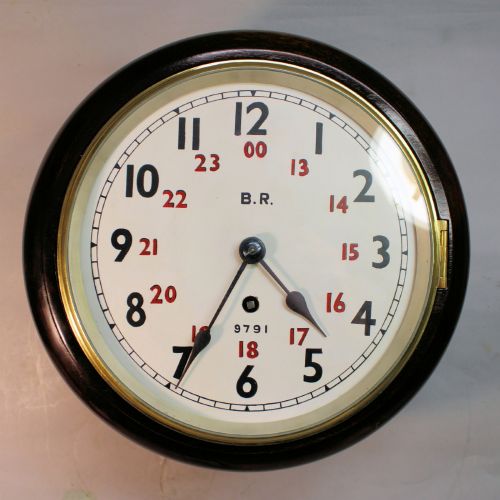
Railway and institutional wall clocks dominate the offerings, particularly fusee movements housed in mahogany or oak cases with clear painted dials. Alongside these utilitarian pieces, you find decorative Edwardian banjo barometers, Art Deco glass desk clocks, and mid-century electric designs by makers such as Smiths.
The periods represented stretch from Georgian longcase clocks and Victorian carriage timepieces through to mid-century Bakelite office models and post-war electric issues. Each form reflects the specific demands of its original setting, whether a station master's office, an engine room or a Victorian library.
How they were made
The construction of these clocks relies on durable timbers like mahogany, oak and beech for wall and longcase housings, alongside turned brass bezels and heavy cast iron or metal framing. Fusee movements utilise a cone-shaped pulley to maintain even tension on the chain or cord as the mainspring unwinds, ensuring accurate timekeeping.
Later mid-century models incorporate modern industrial materials such as Bakelite, chrome, glass and early plastics, particularly in institutional wall clocks and desk items produced by volume manufacturers. Dials are typically painted iron or wood with bold Roman or Arabic numerals designed for quick reading from a distance.
Some railway clocks bear stamped station names, proving they once watched over busy platforms and soot-stained steam engines.
What varies in quality
Quality in these timepieces rests on the precision of the mechanical movement, the crispness of dial lettering, and the integrity of the original casing. Hand-assembled fusee movements by known London makers exhibit finer finishing on internal plates and gears than standard mass-produced commercial models.
The preservation of original components, such as matching stamped case numbers on railway fusee clocks or intact glass domes on electric Bulle clocks, distinguishes a superior example from one assembled with replacement parts over time.
Goldsmiths Alliance Ltd·Maple London·Bush of London·John Walker·David Veasey·Liberty and Co·Smiths Clockmakers·Bravingtons Ltd·Parkinson and Frodsham·Gents of Leicester·Camerer Cuss and Co
The Vintage British Clock Glossary
- Fusee
- A conical pulley used in spring-driven clocks to equalise the torque of the mainspring as it runs down. This mechanism is standard in better quality British railway and dial clocks.
- Dial clock
- A wall-mounted clock with a circular face, often featuring a wooden surround and a bottom-hinged access door. They were widely utilised in offices, stations and public buildings.
- Longcase clock
- A tall, floor-standing weight-driven clock enclosed in a wooden case, frequently referred to as a grandfather clock. Examples range from simple Georgian oak housings to regulated London movements.
- Carriage clock
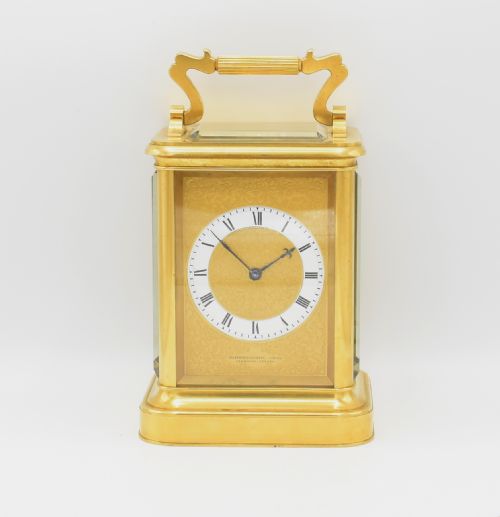
- A small, portable spring-driven clock with a carrying handle, originally designed for travellers. They often feature brass framing and bevelled glass panels revealing the escapement.
Vintage British Clock: Frequently Asked Questions
What is a fusee railway clock?
A fusee railway clock is a sturdy wall timepiece featuring a specialised mechanical movement designed to maintain steady tension and accurate time.
These clocks were standard issue for station masters and railway offices across the British network, mounted high on walls for clear visibility.
How do I wind an 8-day clock?
An 8-day clock requires winding approximately once a week using a matching key inserted into the dial holes.
Care should be taken not to overwind the mainspring, turning the key gently until firm resistance is felt.
Are Bakelite clocks original to the mid century?
Bakelite and early plastic cases became common for office, military and institutional clocks from the 1930s through the 1950s.
Manufacturers like Smiths utilised these durable synthetic materials for government and railway contracts where robust housing was essential.
What is an electric Bulle clock?
A Bulle clock is an early electric timepiece invented in the early twentieth century that uses an electromagnetic pendulum.
These pieces often sit beneath a glass dome, combining traditional dial layouts with innovative early battery-powered mechanisms.