


Retro Table Timepiece
A retro table timepiece brings geometric elegance and reliable mechanical movement straight to your desk or mantelpiece.
Retro Table Timepiece
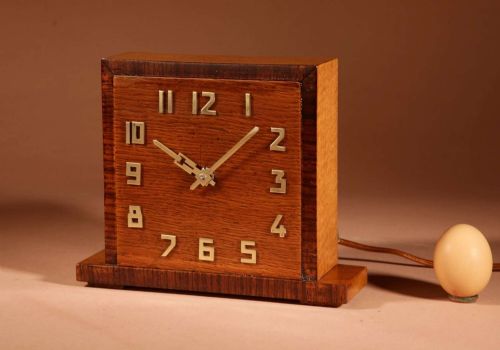
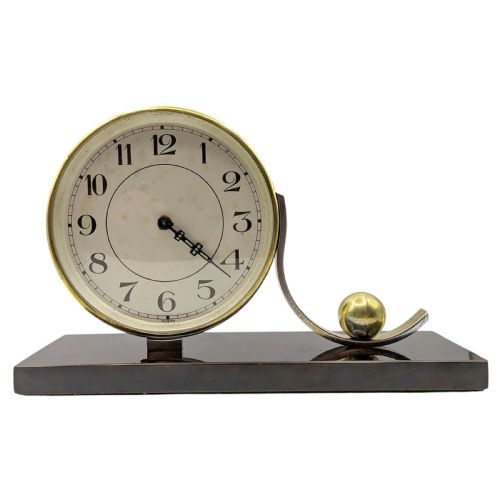
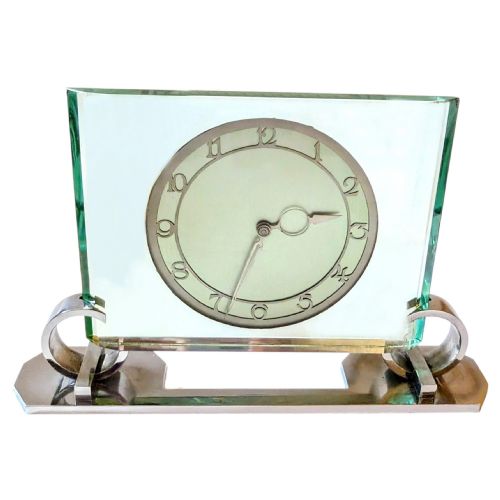
A retro table timepiece encompasses mechanical and electrical desk, mantel, and table clocks primarily originating from the early to mid-twentieth century. Buyers seeking this phrase encounter objects shaped by Art Deco design and Mid-Century Modern aesthetics, spanning the 1920s to the 1960s. The version met most frequently on this page is the Art Deco mantel or desk clock.
Forms vary from geometric wooden cases to streamlined chrome and brass housings, alongside specialised items like military mess clocks and promotional garage advertising pieces. Origins stretch across English, French, and Dutch workshops, capturing both domestic interiors and institutional settings.
Materials and construction
Casing construction relies heavily on traditional hardwoods such as oak, rosewood, and walnut, alongside natural stone including marble. Modern industrial materials of the era, notably bakelite, chrome, brass, and glass, appear frequently to create contrasting two-tone or metallic finishes.
Movements span 30-hour, 8-day, and early electrical mechanisms housed within these diverse chassis. Makers integrated mirrored panels, gilt details, and specialised dials to complete each piece.
A garage promotional clock for Alvis and Brooklands proves that even motorists needed to know the time.
What separates examples
Quality differences emerge in the complexity of the movement and the precision of the case fabrication. Multi-jewel mechanisms and complex escapements distinguish higher-grade instruments from standard thirty-hour units.
The choice of materials also dictates standing, with finely figured burr walnut, heavy French marble, and polished chrome showing superior material handling compared to simpler painted or moulded composites.
Smiths Clockmakers·Elliott of London·Jaeger LeCoultre·Imhof·Bayard
The Retro Table Timepiece Glossary
- Bakelite
- An early synthetic thermosetting plastic used widely for clock housings during the 1930s. It provides a durable, glossy frame for many modernist dials.
- Mantel clock
- A domestic timepiece designed to sit upon a fireplace mantel or shelf. These frequently feature architectural wooden or marble cases.
- 8-day movement
- A mechanical clock movement requiring winding roughly once a week. This denotes a higher mechanical complexity than standard daily or thirty-hour movements.
- Mystery clock
- A timepiece where the hands appear to move without any visible mechanical connection to the movement. This clever illusion is typically achieved using transparent glass dials.
- Escapement
- The internal mechanism that controls the release of power in a clock to maintain regular impulses. It governs the ticking sound and overall timekeeping accuracy.
Retro Table Timepiece: Frequently Asked Questions
How do I wind a mechanical desk clock?
Most mechanical pieces use a dedicated key inserted into winding arbors on the dial or back plate. Turn the key gently until firm resistance indicates the spring is fully tensioned.
Avoid overwinding, as this can strain the internal mechanism and damage the mainspring over time.
Where should I place a vintage mantel clock?
Position the piece on a stable, level surface away from direct sunlight, excessive moisture, and temperature fluctuations. Wooden and marble cases benefit from stable indoor environments to preserve their finishes.
Ensure it rests flat so the pendulum or balance wheel beats evenly.
How do I distinguish Art Deco from Mid-Century pieces?
Art Deco examples, common around the 1920s and 1930s, typically display symmetry, geometric stepped forms, chrome plating, and rich woods like walnut. Mid-Century pieces from the 1950s and 1960s favour cleaner, organic lines and minimalist dials.
Reviewing the listed date ranges helps confirm the stylistic era.
What maintenance do these clocks require?
Periodic professional servicing keeps internal pivots and gears functioning smoothly. Dust the exterior gently with a dry, soft cloth, avoiding harsh chemical cleaners on bakelite or metal surfaces.
Keeping the movement clean prevents premature wear on the brass components.