




Bakelite Mantel Clock
These bakelite mantel clock pieces combine durable phenolic resin with striking geometry to anchor a room.
Bakelite Mantel Clock
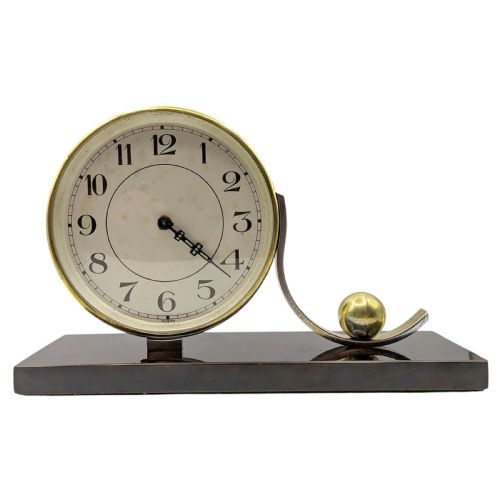
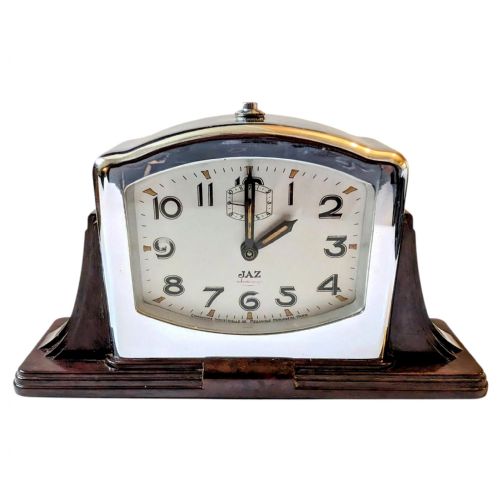
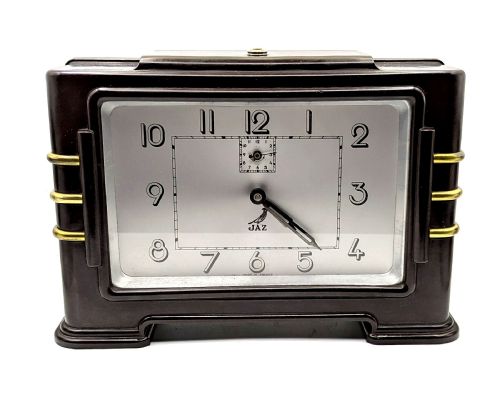
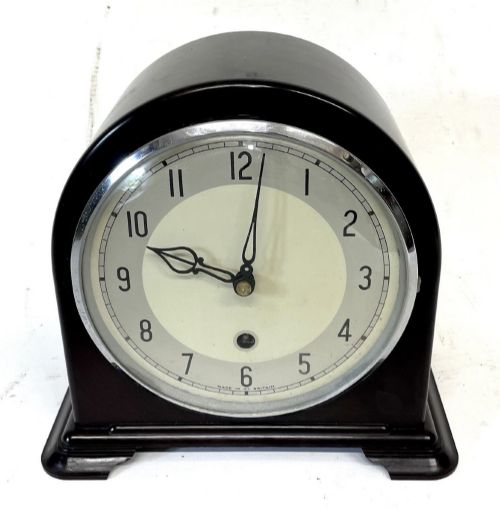
A bakelite mantel clock is a domestic timepiece housed in a moulded phenolic resin case, designed primarily for placement on a shelf, desk or mantelpiece. The pieces gathered here span several decades, featuring prominent examples from the 1930s alongside later military issues.
Most items you encounter on this page belong to the Art Deco movement, adopting streamline forms, symmetric geometry or architectural silhouettes. Alongside these domestic mantel and desk clocks, you also find specialised variants like military office clocks and moving-ship automaton pieces.
Origins stretch across Britain, France, Hungary and the Isle of Man, showcasing how international makers interpreted the material. Whether you seek a compact desk timepiece or a bold red mantel clock, the selection centres on mid-century utility paired with distinctive moulded design.
How they were made
Makers formed the distinctive outer housings using bakelite, an early synthetic thermosetting plastic that allowed for complex, smooth moulding under heat and pressure. This material was frequently paired with contrasting elements such as chrome bezels, brass fittings and glass dial covers.
Internal movements required precise mechanical engineering, ranging from thirty-hour and eight-day spring-driven mechanisms to electric motors. Some models incorporated ebonised wood bases or metal chassis to support the heavy phenolic resin bodies during operation.
Materials across these listings include glass, bakelite, chrome, brass, metal and ebonised wood.
What varies in quality
The distinction between ordinary and superior pieces rests upon the crispness of the moulded resin case and the integration of auxiliary materials. Clocks featuring combined chromework, calendar functions or complex automaton mechanisms represent a higher tier of design ambition.
Maker attribution also dictates standing, with factory names known for distinct styling commanding greater interest. Furthermore, the presence of fully serviced movements adds functional reliability to the physical preservation of the resin and metal components.
Blangy Clockmakers·Jaz·Smiths
The Bakelite Mantel Clock Glossary
- Bakelite
- A trade name for an early phenol formaldehyde resin valued for its electrical non-conductivity and heat resistance. It allowed manufacturers to mass-produce durable, richly coloured clock cases.
- Art Deco
- A design style characterised by sleek geometric shapes, streamlined forms and modern industrial materials. It dominates the aesthetic of early twentieth-century timepieces.
- Catalin
- A cast phenolic resin similar to bakelite that permitted brighter, translucent colours. It appears in the historical archive alongside standard black compounds.
- Automaton
- A mechanical device featuring moving parts that create an illusion of action. In these listings, it describes clocks with animated elements like an electric moving ship.
Bakelite Mantel Clock: Frequently Asked Questions
How do I clean bakelite?
Wipe the surface gently with a damp cloth and mild soap, avoiding harsh chemical solvents that can damage the vintage finish. Dry thoroughly with a soft cloth to maintain the lustre.
Keep phenolic resin cases away from prolonged direct sunlight to prevent colour fading or surface degradation over time.
Are these clocks still accurate?
Many examples are offered as fully serviced, meaning their mechanical or electric movements have been adjusted to keep reliable time. Performance varies depending on whether the piece relies on a vintage spring movement or an early electric motor.
Expect minor timekeeping variances inherent to antique mechanisms, and consult specific listings regarding recent service history.
What is a MOD clock?
A MOD clock was issued for use by the Ministry of Defence, typically featuring robust construction for military offices or messes. These pieces often display specific government property marks on the housing or dial.
Such items prioritize utilitarian legibility and durability over decorative streamlining.
Where should I place it?
These timepieces suit mantelpieces, sideboards and office desks where their sculptural resin forms can be viewed clearly. Ensure the surface is stable and level to support the weight of the dense phenolic material.
Avoid damp environments and areas subject to extreme temperature fluctuations to protect both the case and the internal movement.