




Mechanical 8 Day Clock
A mechanical 8 day clock holds a spring or weight drive that runs for over a week, combining brass movements with timber or metal cases.
Mechanical 8 Day Clock
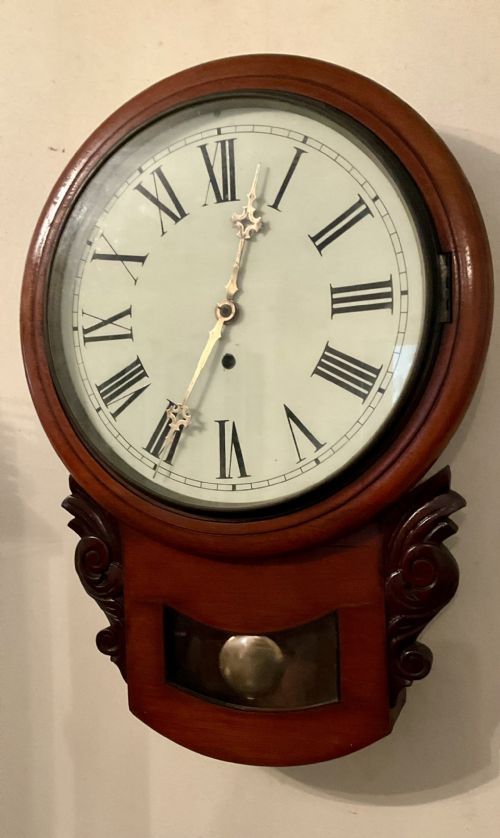
A mechanical 8 day clock is a timekeeping device that operates for approximately eight days before requiring manual winding, a practical development that reduced the frequency of winding needed in domestic life. The selection spans tall floor-standing longcase clocks, wall-hung drop dials and Vienna regulators, and compact desk or mantel pieces.
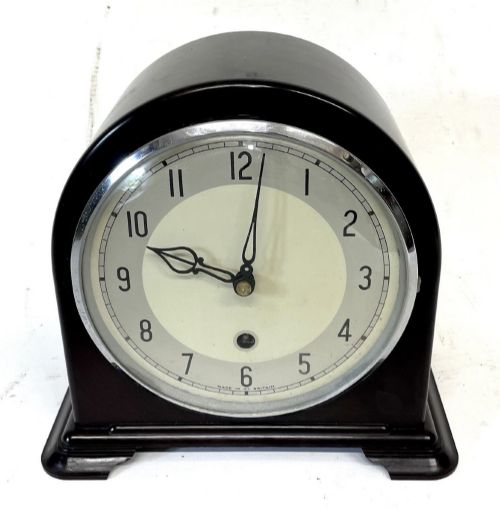
Mantel clocks and wall clocks dominate the offerings, originating from periods running from the nineteenth century through the Art Deco era and mid-century modern designs. Buyers meet specimens housed in architectural marble, polished walnut and mahogany, or industrial chrome and bakelite.
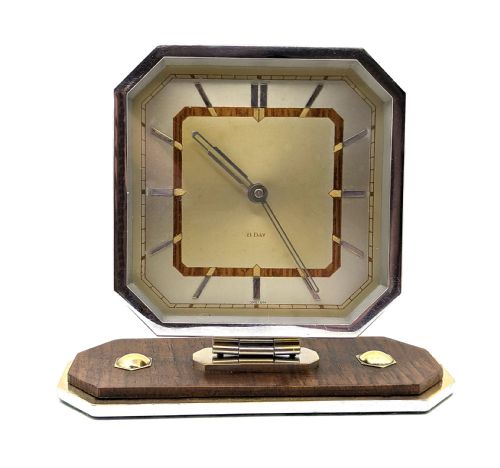
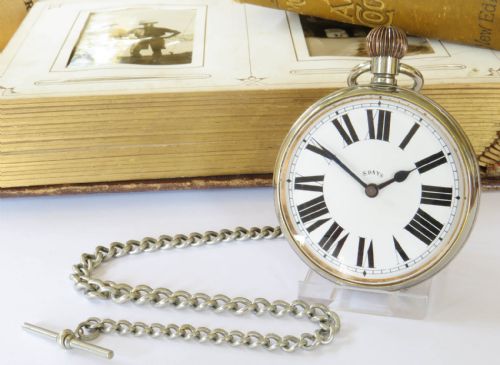
Formats range from traditional wooden bracket clocks and heavy brass carriage clocks to streamlined modernist desk timepieces and large railway wall issues. Each style reflects the prevailing aesthetic of its decade, from Victorian classical revival to the clean geometries of the nineteen-thirties.
Materials and Movements
The construction relies on internal brass gear trains, escapements, and springs or weights that translate stored energy into measured motion. Cases utilise a variety of solid timbers and veneers including mahogany, walnut, oak, and rosewood, alongside polished marble, cast brass, and plated chrome.
Designers incorporated glass panels to protect delicate dials and expose swinging pendulums or rotating torsion mechanisms. Exterior ornamentation often employs enamel chapter rings, applied brass numerals, and subtle marquetry inlay or bakelite moulding.
The listings here span nineteenth-century Victorian marble and brass up to mid-century bakelite models from the nineteen-fifties.
Standards of Execution
Quality in a mechanical 8 day clock rests upon the precision of the gear cutting and the stability of the movement's mounting within its case. Finer examples display meticulous hand-finishing on internal plates and use heavier gauge brass, whereas simpler utilitarian issues rely on stamped industrial components.
The integrity of the housing separates standard production from superior pieces, evident in the selection of figured wood veneers, solid marble plinths, and crisply cast decorative mounts. Original components and signed movements by known makers elevate the standing of a timepiece significantly.
H.A.C.·Elliott·Drocourt Paris·B H A·Harrods of London·Winterhalder W H·Smiths British Rail·Bravingtons Ltd·John Thompson·Hay Wolverhampton·Jaeger LeCoultre·Junghans·Mappin and Webb
The Mechanical 8 Day Clock Glossary
- Fusee
- A conical pulley connected to the mainspring by a chain or cord, designed to equalise the torque as the spring unwinds. This mechanism improves timekeeping consistency throughout the weekly run.
- Carriage Clock
- A small, portable spring-driven clock featuring a glass-panelled brass case and a folding handle, originally designed for travel by officers. They frequently incorporate alarm or striking complications.
- Torsion Clock
- A timepiece regulated by a slow-moving pendulum suspended from a thin metal ribbon that rotates back and forth. Often called anniversary clocks because some variations run for a full year on a single winding.
- Striking Movement
- An independent gear train within the clock that sounds the hours or fractions thereof on a bell, gong, or series of chime rods. These movements require a separate power source or an additional spring barrel within the same case.
- Bracket Clock
- A portable spring-driven clock traditionally placed on a dedicated wall bracket or shelf. Early versions used fusee movements to maintain accurate time.
Mechanical 8 Day Clock: Frequently Asked Questions
How do I wind a mechanical 8 day clock?
Insert the matching winding key into the designated arbour on the dial face and turn it clockwise until you feel firm resistance. Take care not to overwind the mainspring, as this can strain the internal mechanism.
For clocks with multiple arbours, such as striking or chiming models, wind each one fully to ensure all trains operate for the entire week.
Where should I place a mantel clock?
Position the piece on a stable, level surface away from direct sunlight, draughts, and damp areas which can warp wooden cases or rust steel components. A sturdy mantelpiece or sideboard provides an ideal base.
Ensure the surface does not experience excessive vibrations from foot traffic, as steady foundations help the pendulum maintain an even beat.
What is a fusee movement?
A fusee is a conical drum linked to the mainspring via a fine chain that moderates the pulling power as the spring unwinds. When fully wound, the chain pulls on the narrow top of the cone, moving to the wider base as tension decreases.
This clever engineering delivers constant force to the escapement, producing much more reliable timekeeping across the eight-day cycle than a standard spring barrel.
How do I identify Art Deco clocks?
Art Deco pieces typically feature geometric forms, stepped cases, and streamlined silhouettes executed in chrome, mirror glass, bakelite, or contrasting dark woods. The dials often display stylised Arabic numerals and distinct modernist hands.
These clocks emerged around nineteen-thirty and reflect an industrial aesthetic that contrasts sharply with the ornate carvings of earlier Victorian styles.