


Smiths Table Clock
These smiths table clock pieces range from eighteenth century bracket clocks to twentieth century Art Deco timepieces, offering reliable movement and distinct period design.
Smiths Table Clock
When searching for a smiths table clock, you encounter domestic timepieces spanning multiple centuries of British design and manufacturing. The examples presented here include mantel clocks, desk clocks, and bracket clocks produced across various eras.
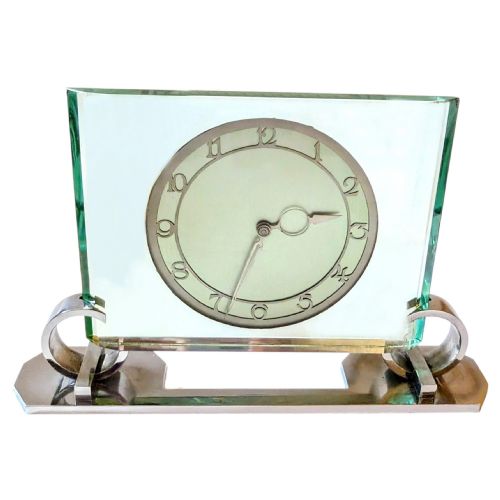
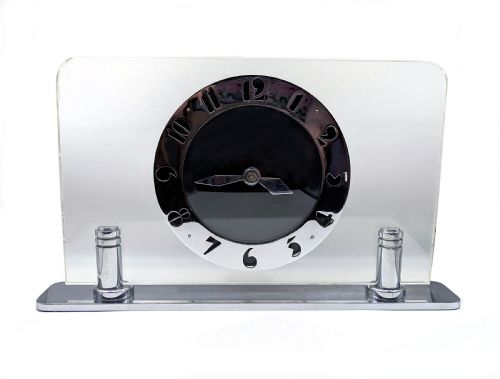
The most prevalent style on this page is the Art Deco mantel clock from nineteen thirty, typically featuring materials like chrome, bakelite, and peach or blue glass. These models reflect the modernist aesthetic popular during the interwar period.
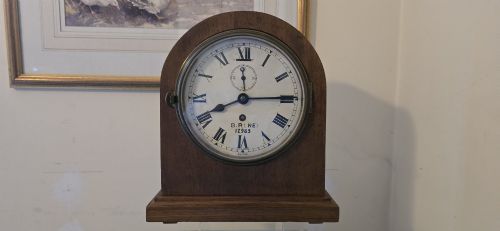
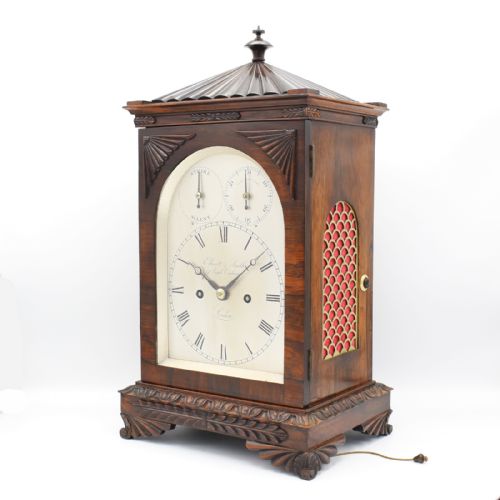
Earlier iterations also appear in the evidence, taking the form of eighteenth and nineteenth century bracket clocks in mahogany and brass. These traditional pieces contrast with the later electric and promotional desk clocks produced in the mid twentieth century.
How they were made
Glass is employed extensively for dials and decorative surrounds, including peach and blue mirror glass on Art Deco variations. Metal framing and specialised electric or wind up movements complete the construction of these timepieces.
Materials span glass, chrome, metal, brass, bakelite, mahogany, mirror glass, and wood.
What varies in quality
The standard of a smiths table clock rests upon the sophistication of its movement and the preservation of its original materials. Pieces retaining their original lacquer, glass panels, and working mechanisms command greater interest from collectors.
Design complexity also defines the upper tier, particularly in Art Deco mystery clocks or promotional pieces with distinct corporate associations like garage advertising. Simpler standard models sit at the baseline of the range.
Smiths Clockmakers·Smiths Clock Company·James Smith London·William Smith London·A.L. Davenport
The Smiths Table Clock Glossary
- Bracket clock
- A portable domestic clock originally designed to sit on a wall bracket to aid acoustics and visibility. They often feature robust mechanical movements housed in wooden cases with carrying handles.
- Bakelite
- An early form of synthetic plastic utilised heavily in twentieth century manufacturing. It allowed makers to mould durable, smooth clock cases in various solid colours.
- Mystery clock
- A timepiece where the mechanism driving the hands is concealed, often making the hands appear to float on a clear glass dial. These require precise engineering to achieve the visual illusion.
- Twin fusee
- A mechanical movement using conical pulleys and chains to equalise the force of the mainspring as it unwinds. This mechanism improves the timekeeping accuracy of older bracket clocks.
- Chinoiserie
- A decorative style reflecting European interpretations of Chinese artistic traditions. It is seen on older lacquered clock cases featuring gold ornamentation against a coloured ground.
Smiths Table Clock: Frequently Asked Questions
How do I date a smiths table clock?
Dating relies on the materials, styling, and movement type visible in the construction. Art Deco models generally point to the nineteen thirties, whilst mahogany bracket cases indicate eighteenth or nineteenth century origins.
Examining the maker marks and promotional details provides further context. Garage advertising pieces often point directly to mid twentieth century manufacturing periods.
Are these clocks electric or wind up?
The selection includes both traditional wind up mechanical movements and electric mechanisms. Interwar pieces often utilise electric power alongside chrome and bakelite housings.
Earlier bracket clocks rely entirely on weight driven or spring driven mechanical systems. Each movement type requires appropriate handling and maintenance.
Where should I place a mantel clock?
Mantel clocks suit flat surfaces in principal rooms, such as sideboards, desks, or mantelpieces. Their compact dimensions allow them to integrate easily into various domestic settings.
Ensure the chosen surface is level to keep mechanical movements running accurately. Avoid areas subject to excessive moisture or direct sunlight.
What is a mystery clock?
A mystery clock is a timepiece designed with a transparent glass dial where the hands move without any visible connection to a mechanical gear train. The effect creates a striking visual centrepiece.
These models gained popularity during the Art Deco period and relied on ingenious concealed gearing within the outer rim or base.