



Vintage Brass Tea Table
A vintage brass tea table brings tactile warmth and metalwork detail to a room, offering a functional surface rooted in global design traditions.
Vintage Brass Tea Table
A vintage brass tea table encompasses low serving pieces, folding stands, and tray tables originating from Anglo-Indian, Victorian, and Edwardian traditions.
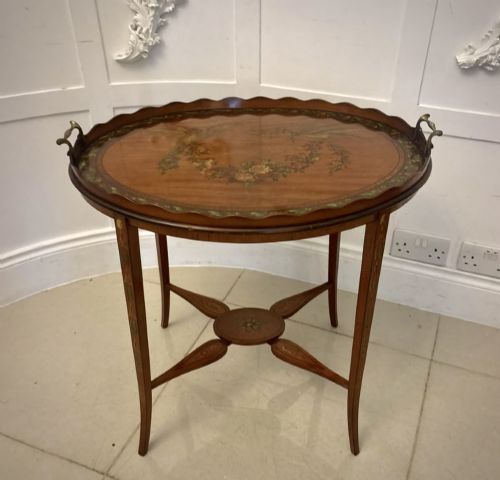
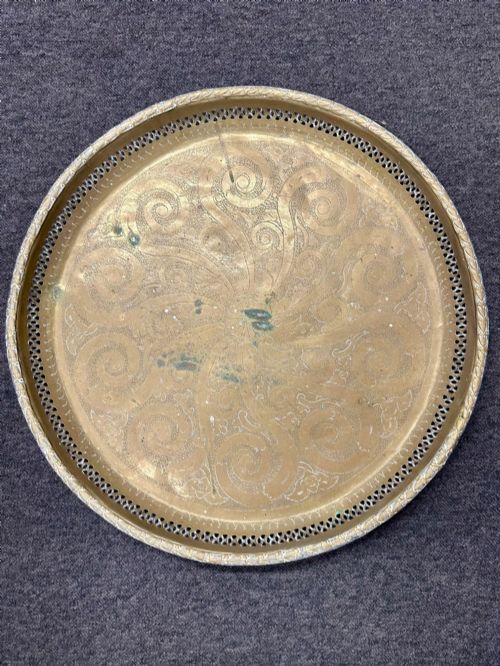
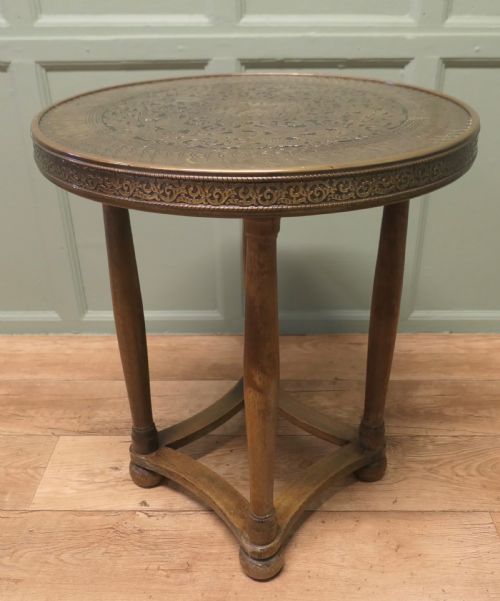
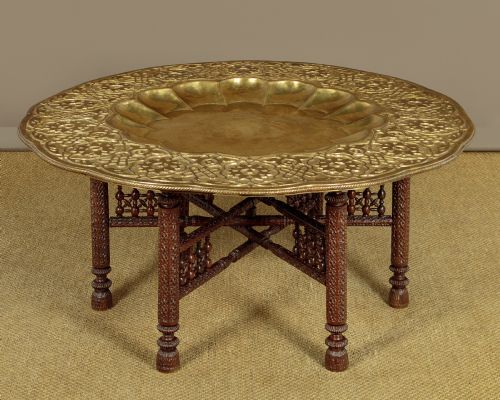
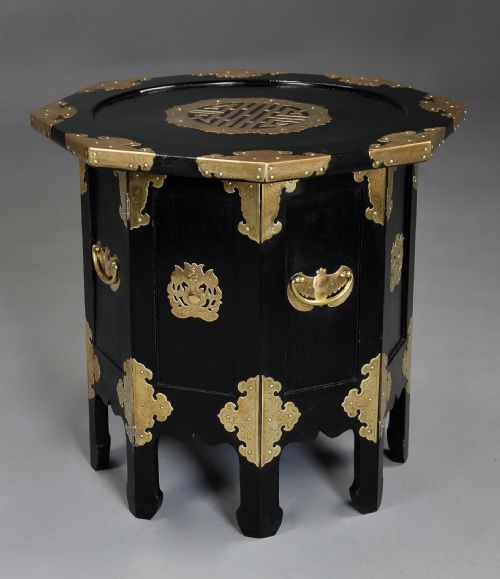
Buyers seeking a vintage brass tea table encounter pieces with folding wooden bases, octagonal silhouettes, and removable metal trays adorned with etched or hammered decoration.
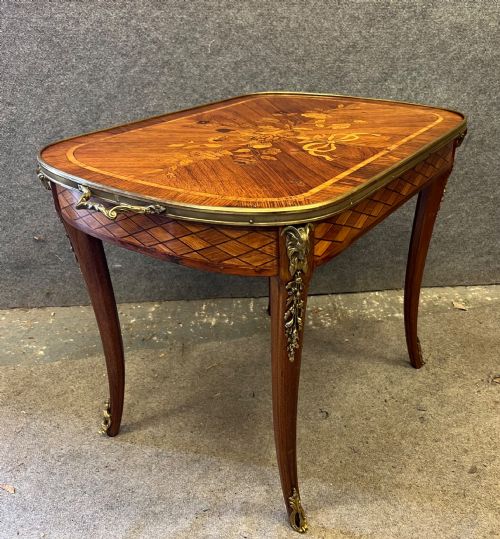
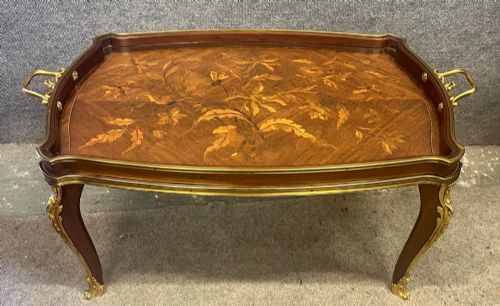
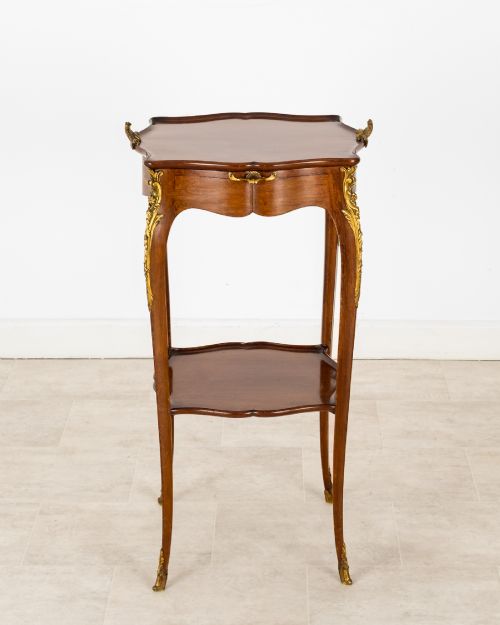
Makers ranged from French cabinet makers using ormolu mounts to North Indian workshops producing inlaid teak and folding tables.
Materials and Construction
Construction relies on a combination of metals and timbers, pairing brass, copper, and ormolu with hardwood, mahogany, walnut, satinwood, and oak.
Top surfaces feature sheet brass or copper secured to wooden carcases, often embellished with bone inlay, parquetry, lacquer, or intricate hand-beaten patterns.
Folding frames utilise hinged joints and collapsible stands designed for portability, particularly evident in pieces from Indian workshops and campaign furniture.
Vintage Brass Tea Table Retail Price Guide 2026
Typical asking prices for vintage brass tea table among the pieces listed under this phrase on Sellingantiques today, from the lower quarter to the upper quarter. They describe what is for sale here now, not the wider market.
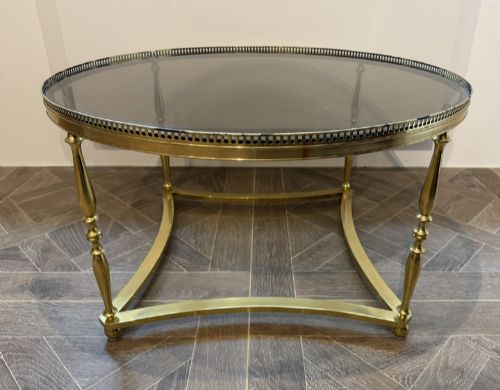
Listings feature various timbers including mahogany, satinwood, walnut, and teak, paired with brass, copper, and glass across Edwardian and Victorian periods.
Distinctions in Execution
Quality rests on the crispness of the metal engraving, the tightness of the joinery in folding wooden frames, and the richness of inlay materials like bone and satinwood.
Higher tier pieces demonstrate substantial timber weight, refined ormolu mounts, and balanced proportions, whereas simpler items rely purely on surface pattern to create visual impact.
François Linke·Maison Baguès
The Vintage Brass Tea Table Glossary
- Tray table
- A low table comprising a removable metal or lacquered tray resting upon a separate folding or fixed wooden stand. These pieces originated for portable serving and tea ceremonies.
- Anglo-Indian style
- Furniture manufactured in India during the British colonial period, combining traditional local metalworking techniques with European forms. They frequently utilise brass inlay on teak or hardwood.
- Ormolu
- Finely chased and gilt bronze mounts applied to furniture. This technique appears on French neoclassical and Louis XV style tables.
- Parquetry
- Geometric wood veneer mosaics arranged in repeating patterns on table surfaces. It provides a decorative contrast to plain brass trays.
- Spirit kettle
- A water heating vessel mounted on a stand above a small burner. These items formed part of formal tea service equipment in the Victorian and Edwardian periods.
Vintage Brass Tea Table: Frequently Asked Questions
How do I fold an Indian tea table?
Most folding tables utilise a clever intersecting wooden lattice design that collapses flat once the top tray is removed. Lift the tray straight off its base and gently fold the wooden legs inward along their central hinge.
Store the flat base and tray together carefully to avoid warping the timber or denting the softer brass edges during movement.
Can I use a tray table for daily dining?
These tables provide sturdy surfaces for serving tea, drinks, or displaying decorative objects. Their removable trays make them practical for carrying items between rooms.
Consider the stability of the folding base and the delicacy of the metal surface before placing heavy or hot items directly onto the brass.
How do I clean a brass tea top?
Maintenance requires gentle dusting with a soft cloth to protect the aged patina and any delicate etching. Avoid harsh chemical polishes that strip away historical character and darken recessed areas.
If the metal requires cleaning, use a mild, non-abrasive cleaner formulated specifically for antique brass, testing a small area first.
What is the difference between Anglo-Indian and French tables?
Anglo-Indian tables typically feature folding wooden stands, octagonal shapes, and hand-hammered brass tops decorated with floral or animal motifs. They reflect traditional craftsmanship from regions like Hoshiarpur.
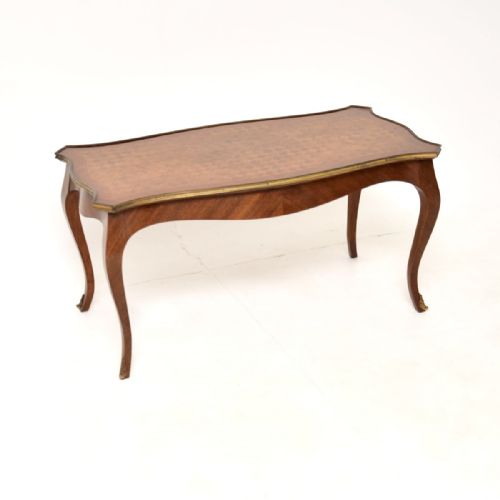
French tables from the same eras tend to use refined mahogany, parquetry, ormolu mounts, and lacquer finishes, focusing on European cabinet-making styles such as Louis XV revival.