



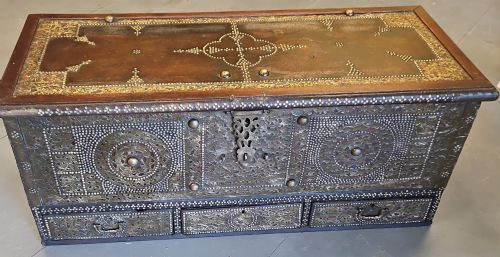


Vintage Brass Studded Coffer
A vintage brass studded coffer is a robust storage piece combining timber, leather, and metalwork for travel or domestic use.
Vintage Brass Studded Coffer
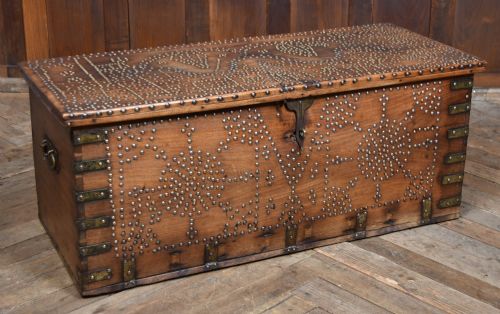
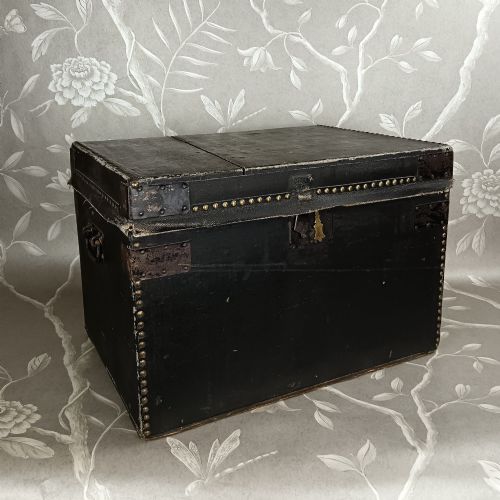
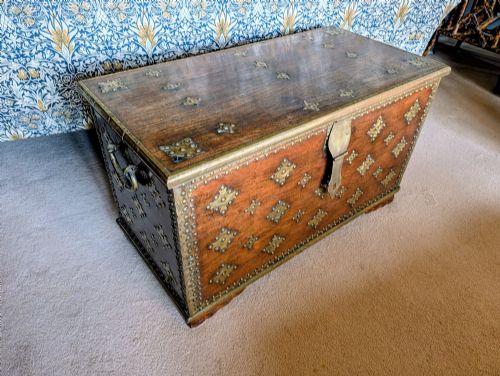
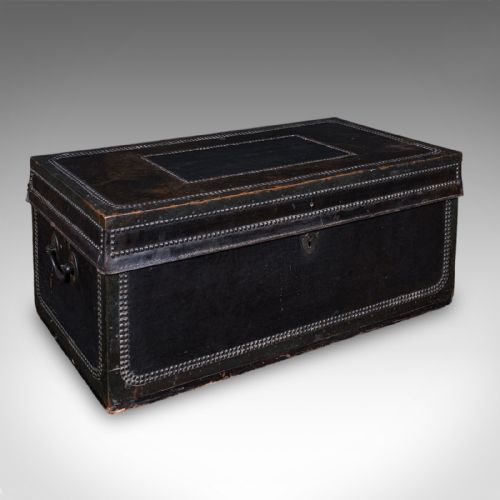
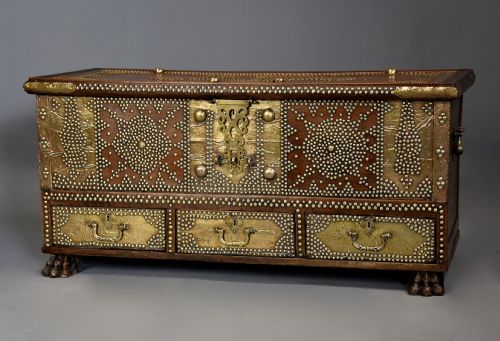
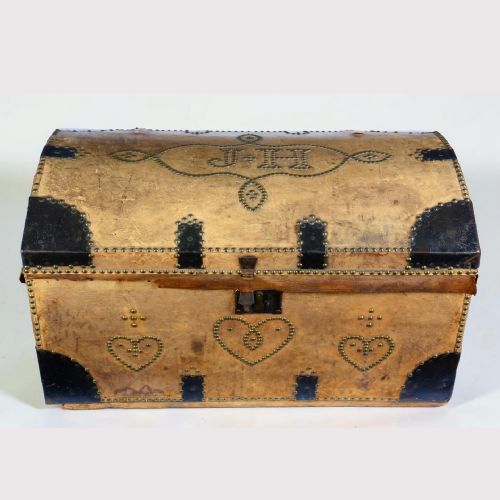
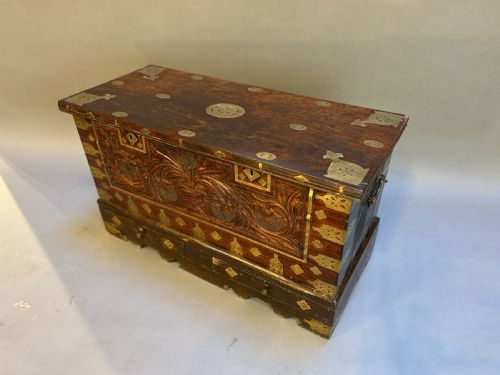
A vintage brass studded coffer spans sturdy travel trunks, blanket boxes, and domestic storage chests originating from the seventeenth century through the early twentieth century. Buyers encounter forms ranging from compact camphorwood boxes to large Zanzibar traders chests and leather-clad coaching trunks.
The materials used across these pieces reflect global trade routes, combining hardwoods like padouk, teak, and mahogany with iron reinforcements and decorative brass studwork. Regional styles include Anglo-Indian, Chinese Export, and Spanish Baroque examples alongside standard Victorian designs.
How they were made
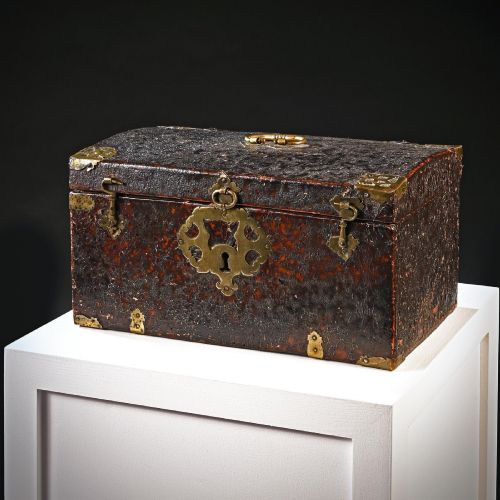
Makers constructed these coffers using durable timbers such as camphorwood, teak, hardwood, and mahogany, often pairing them with internal wooden carcases. Surfaces were frequently wrapped in hide or leather and secured with heavy iron bands.
Decorative detailing relies heavily on individual brass studs and nailheads hammered into the leather or wood in geometric and traditional patterns. Specialised makers added brass binding and carrying handles to withstand the rigours of coaching and maritime travel.
The listings show pieces spanning from pre-sixteenth century panels to 1920s leather ottomans, constructed in teak, padouk, camphorwood, and iron-bound leather.
What varies in quality
The distinction between standard utility boxes and finer examples rests on the integrity of the timber framing and the precision of the metalwork. Superior pieces feature dense hardwoods like padouk or camphorwood rather than softer secondary woods.
Attention to detail in the brass studwork and the execution of leather binding differentiate ordinary transport trunks from high-status merchant chests and country house ottomans.
Samuel Pratt·Wm Insall·Arthur Wannop
The Vintage Brass Studded Coffer Glossary
- Coffer
- A heavy chest traditionally used for storing valuables or textiles. These pieces often feature hinged lids and reinforced corners.
- Zanzibar chest
- A distinct form of trading chest originating from East Africa and India, characterised by heavy brass studding and intricate metal straps.
- Camphorwood
- An aromatic hardwood valued in trunk making for its insect-repellent properties, commonly found in export pieces.
- Studwork
- The decorative application of brass nails or studs arranged in patterns across leather or wooden surfaces.
Vintage Brass Studded Coffer: Frequently Asked Questions
What is a vintage brass studded coffer used for?
These pieces served historically as secure travelling trunks, coaching chests, and blanket boxes for domestic storage. Today, they function primarily as decorative storage furniture in living spaces and bedrooms.
Owners frequently utilise them as coffee tables or blanket boxes while storing household items inside the robust wooden carcase.
How do I identify a Zanzibar chest?
Zanzibar chests are distinguished by their heavy brass studding, strapwork, and the use of regional hardwoods like teak and padouk. They often reflect Anglo-Indian and East African trade influences.
These chests typically feature compartmented interiors and elaborate brass locking mechanisms suited for merchants.
What woods are found in these chests?
Common timbers include camphorwood, teak, padouk, mahogany, and general hardwoods selected for strength during transport. Secondary woods were frequently covered in leather or hide.
Exotic woods like camphorwood helped protect stored textiles from moths and damp conditions during long journeys.
How do I date a leather covered trunk?
Dating relies on the style of the brass studwork, the method of leather attachment, and the construction of the wooden hinges and locks. Earlier seventeenth-century examples display different nailhead patterns compared to Victorian pieces.
Makers' marks and labels inside the lid also provide precise chronological evidence.