

Antique Travelling Trunk
An antique travelling trunk brings the history of global transit into a room, offering robust storage built for movement across sea and rail.
Antique Travelling Trunk
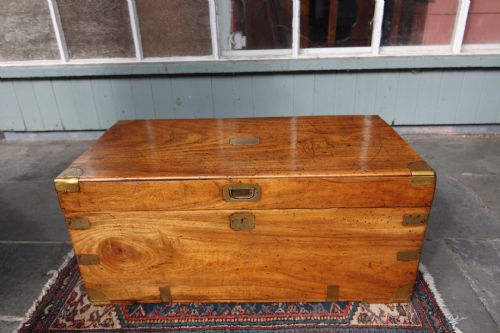
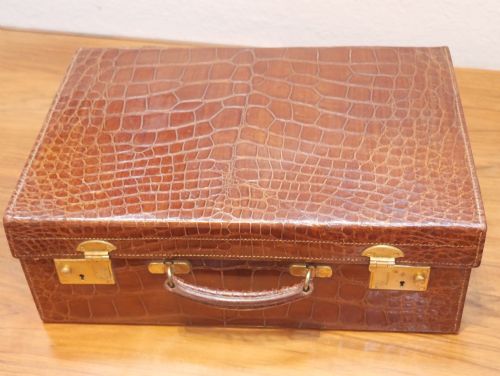
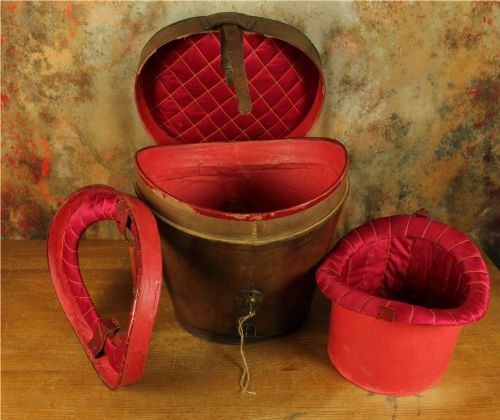
An antique travelling trunk is a rigid container designed for personal baggage during transit, surviving from periods when journeys demanded heavy protection for clothing and belongings. These pieces range from compact hat boxes and suitcases to large military campaign chests and steamer trunks built for ocean liners.
The versions most frequently met on this page date from the nineteenth and early twentieth centuries, spanning Victorian, Edwardian, and Regency eras. Survivors often display the marks of heavy usage, with reinforced corners and travel labels reflecting journeys across continents.
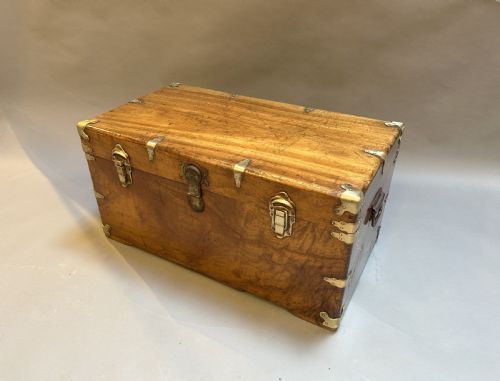
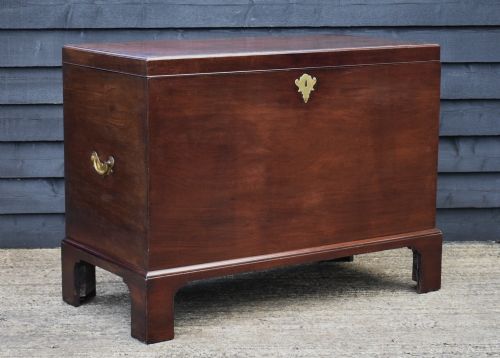
Makers produced these containers in various forms, including dome-top coach trunks, flat-topped storage chests, and fitted cabin wardrobes designed to stand upright in steamship staterooms. Materials shift from humble pine and canvas to exotic camphor wood and robust leather bound in brass or iron.
Materials and construction
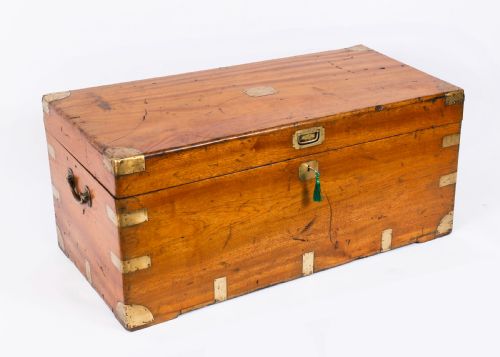
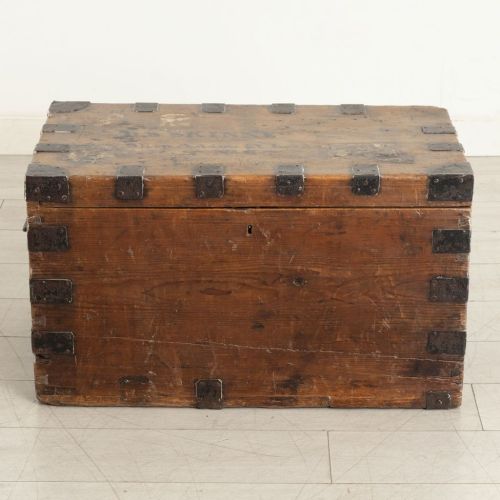
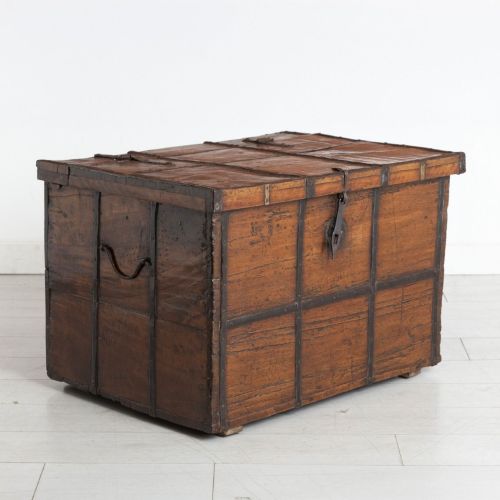
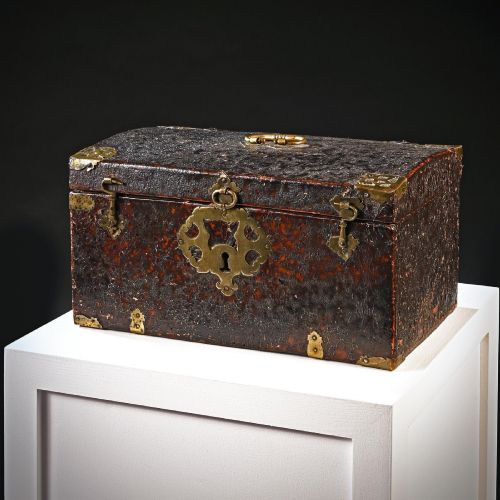
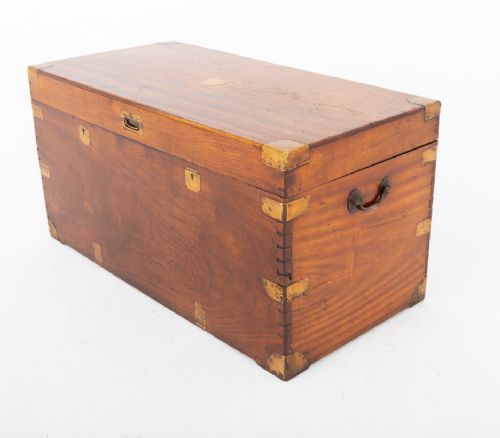
Construction relies heavily on sturdy timbers such as pine, teak, mahogany, and insect-repelling camphor wood, chosen for durability during arduous journeys. Frameworks are reinforced with metal bands, iron straps, and brass corner brackets to withstand the rigours of baggage handling.
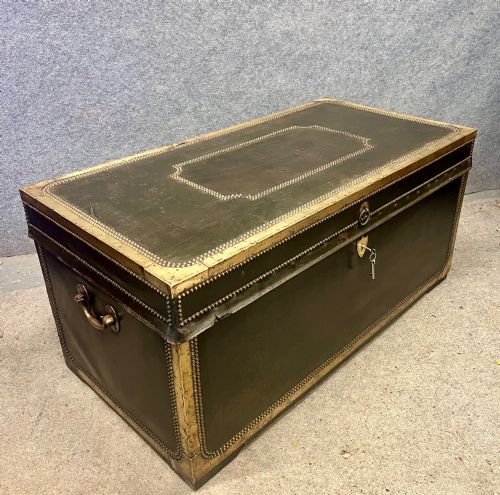
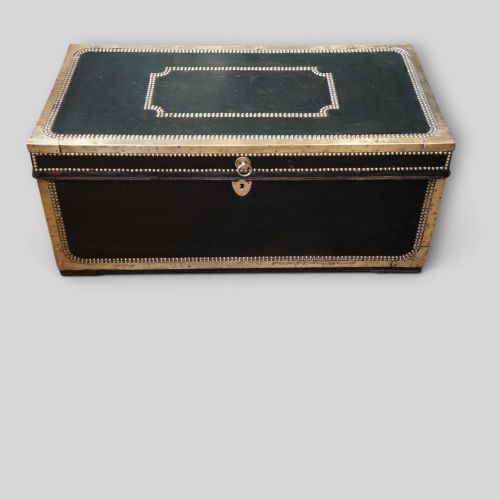
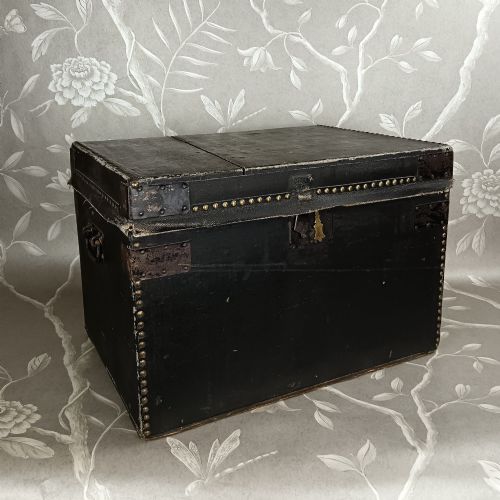
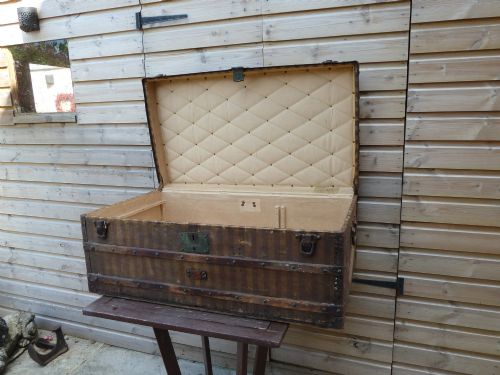
Exteriors are typically wrapped in durable hides, leather, or painted canvas, secured with thousands of individual brass or iron studs. Internal fittings often incorporate wooden compartments, lift-out trays, and textile linings tailored to keep garments secure in transit.
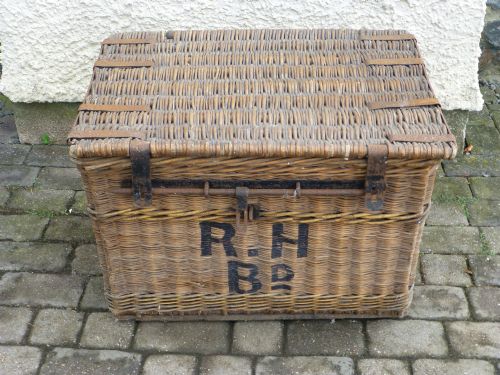
Several survival trunks retain the initials of their original owners painted upon the lid, hinting at forgotten Victorian journeys.
Quality variations
Quality in an antique travelling trunk depends on the grade of materials selected by the maker and the complexity of internal compartmentalisation. Pieces destined for military officers or luxury liners utilise superior hardwoods, dense leather, and substantial brass hardware rather than basic pine and tin.
The integrity of the original locking mechanisms, handles, and internal trays distinguishes standard utility luggage from bespoke commissions bearing maker signatures. Superior examples retain their original structural bracing and exterior coverings without excessive modern replacement.
Samuel Pratt·Wm. Insall of Bristol·LOUIS VUITTON·Lincoln Bennett·Seaward
The Antique Travelling Trunk Glossary
- Campaign trunk
- A chest designed for military officers on active service, typically constructed in sections with recessed brass handles for ease of transport.
- Steamer trunk
- A low-profile luggage chest created for the restricted ceiling height of steamship cabins during the late nineteenth and early twentieth centuries.
- Camphor wood
- An aromatic timber native to Asia, frequently utilised for campaign trunks because its scent naturally repels insects from stored garments.
- Portmanteau
- A large travelling bag or suitcase that opens into two equal compartments, often fitted for extended journeys.
- Studded leather
- An exterior finish where hides are fixed to a wooden core using rows of decorative brass or iron nails to reinforce the seams.
Antique Travelling Trunk: Frequently Asked Questions
What is a steamer trunk?
A steamer trunk is a lower-profile luggage chest specifically designed to fit beneath the berths or within the restricted storage spaces of ocean liners.
These pieces emerged as global travel expanded, requiring durable construction that could endure stacking in ship holds while remaining accessible during voyages.
Why use camphor wood?
Makers utilised camphor wood for military and China Trade trunks because its natural aromatic oil acts as a powerful deterrent against moths and insects.
This property kept uniforms and civilian garments protected from damage during extended deployments and long sea voyages.
How do I use one at home?
An antique travelling trunk functions well as a coffee table with internal storage or as a blanket box placed at the foot of a bed.
Their sturdy lids and flat tops provide practical surface space while concealing everyday household items within historic surroundings.
How can I tell the period?
Dating relies on observing construction methods, materials, and hardware, such as the transition from hand-forged iron in Regency pieces to machine-pressed steel on later steamer trunks.
Maker stamps, locks, and regional styles help narrow the decade of production alongside the primary woods used in the carcase.