



Victorian Studded Coffer
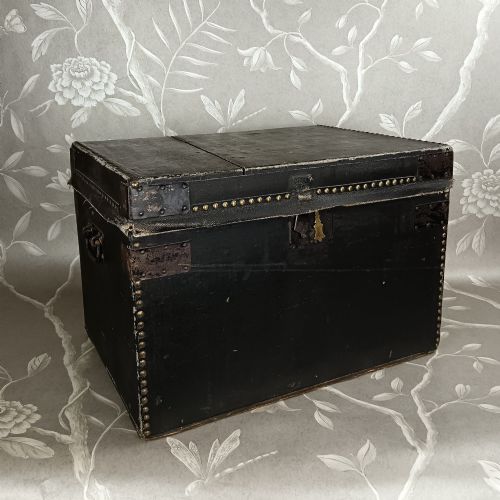
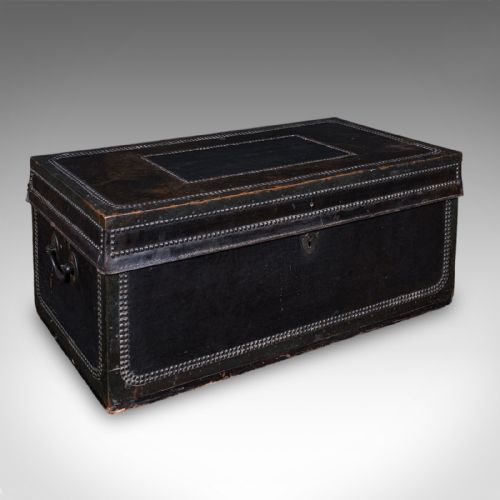
These Victorian studded coffer pieces combine practical storage with robust leather, wood, and brass studwork.
Victorian Studded Coffer
A victorian studded coffer serves as a durable storage chest designed for travel, transport, or household utility. Buyers searching for a victorian studded coffer will encounter robust wooden trunks and blanket boxes wrapped in leather and decorated with brass studwork.
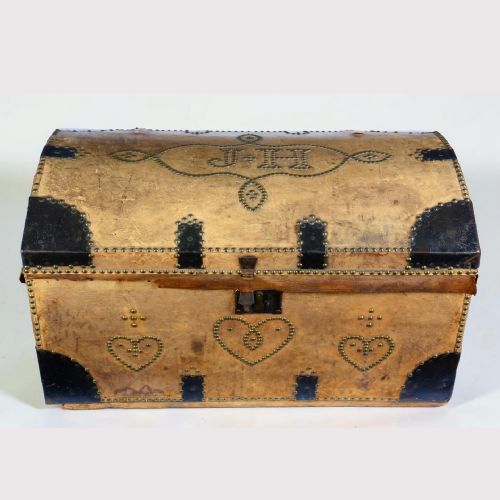
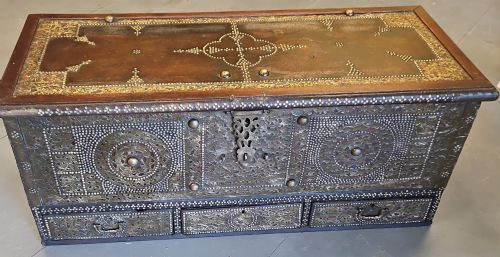
The selections span the nineteenth century, including high Victorian and mid-Victorian examples alongside Regency and Anglo-Indian colonial pieces. Forms range from domed travelling trunks and campaign chests to ottomans and Zanzibar chests made from teak, camphorwood, mahogany, oak, and pine.
Materials and construction
Construction relies on sturdy timbers such as teak, camphorwood, mahogany, oak, and pine, often framed as travel trunks, blanket boxes, or ottomans. Woods like camphorwood and teak provided natural resilience for long journeys.
Outer surfaces are frequently covered in leather, hand-dyed leather, or upholstery, secured and decorated with brass studwork, brass binding, and brass caps. Iron and metal reinforcement hardware ensured durability for coaching and travel.
Listings feature woods such as teak, camphorwood, mahogany, oak, birch, rosewood, and pine across nineteenth-century periods.
Distinctions in quality
Quality rests upon the selection of timber and the precision of the metalwork, particularly the density and regularity of the brass studwork. Finer examples utilise exotic woods like camphorwood or rosewood alongside heavy brass bindings rather than basic pine.
The integrity of the original leather covering, the strength of the internal joinery, and the presence of maker attribution elevate specific pieces. Purpose-built travel trunks and campaign chests designed for rigorous transit show superior structural joinery compared to standard domestic blanket boxes.
Wm. Insall of Bristol·Arthur Wannop·W Insall
The Victorian Studded Coffer Glossary
- Coffer
- A heavy wooden chest traditionally used for storing valuables or household goods. These pieces often feature hinged lids and sturdy construction.
- Studwork
- Decorative or reinforcing patterns made using brass studs driven into leather or wood surfaces. This technique adds both visual texture and structural security.
- Campaign trunk
- A portable chest built for military officers or travellers on the move. They typically incorporate robust brass corners and carrying handles.
- Zanzibar chest
- An ornate storage chest originating from East Africa, characteristically constructed from teak and heavily embellished with brass studwork and strapping.
- Ottoman
- A low upholstered seat or storage box lacking arms and a back. Victorian iterations frequently doubled as blanket boxes with hinged lids.
Victorian Studded Coffer: Frequently Asked Questions
How were these coffers used?
These pieces served primarily as practical storage and luggage for travel, coaching journeys, and military campaigns. Households also utilised them as blanket boxes, ottomans, and secure chests for valuables.
Over time, their robust timber and decorative metalwork transitioned from functional transit gear into static domestic furniture.
What woods are commonly found?
Makers utilised a variety of native and exotic timbers depending on the intended destination and purpose of the chest. Common examples include sturdy mahogany, oak, and pine alongside resilient tropical woods like teak and camphorwood.
Camphorwood was particularly favoured for travel chests due to its natural insect-repellent properties.
How do I identify a Zanzibar chest?
Zanzibar chests are distinguished by their heavy East African construction, typically using teak or rosewood. They feature elaborate brass studwork, decorative brass strapping, and often distinct compartment layouts inside.
These pieces reflect trade connections and colonial influences of the nineteenth century.
Are these trunks suitable for daily seating?
Certain forms, specifically ottomans and upholstered blanket boxes, were designed with padded tops for sitting. Flat-topped trunks and coffers can also function as occasional seats when paired with cushions.
One should check the internal framing and lid hinges to ensure they remain stable under weight before use as seating.