
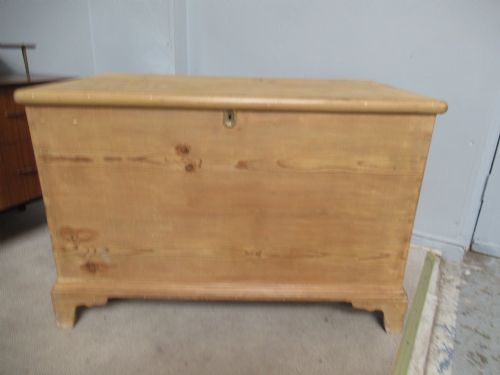
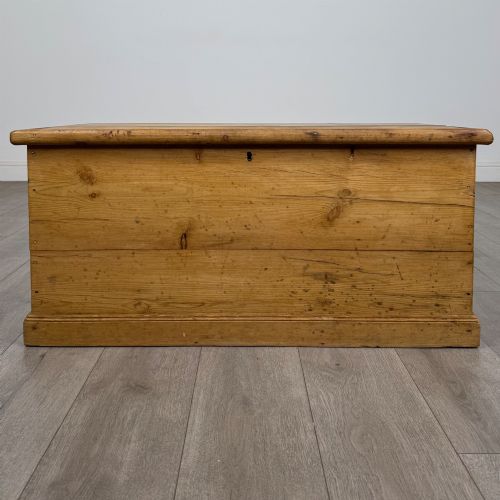
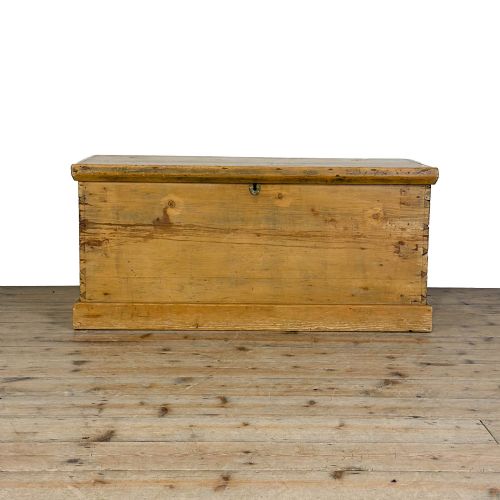
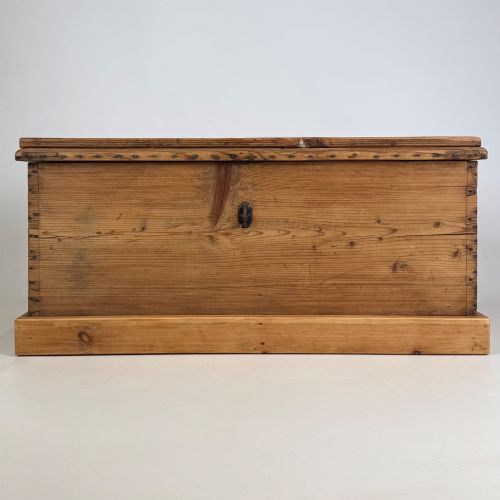
Rustic Pine Trunk
These rustic pine trunk pieces offer sturdy domestic storage, built from honest timber with practical metalwork for everyday utility.
What a rustic pine trunk is
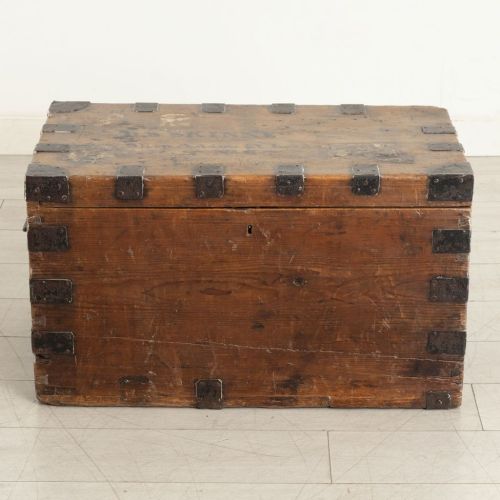
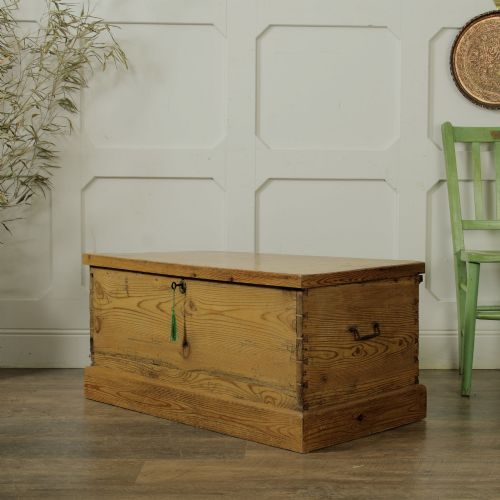
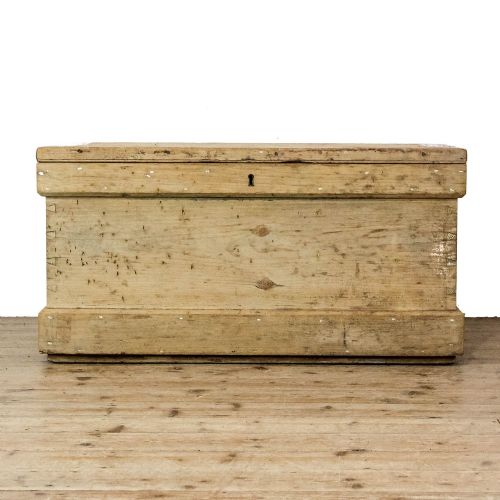
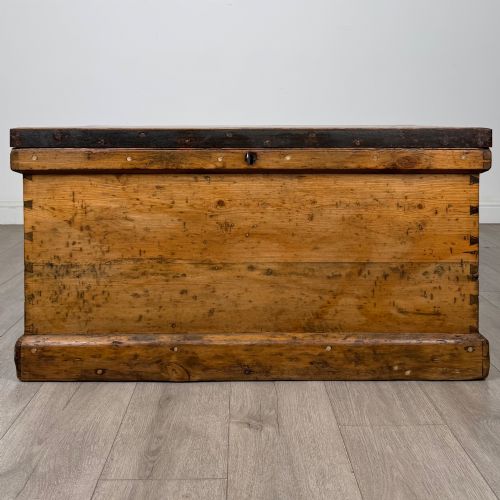
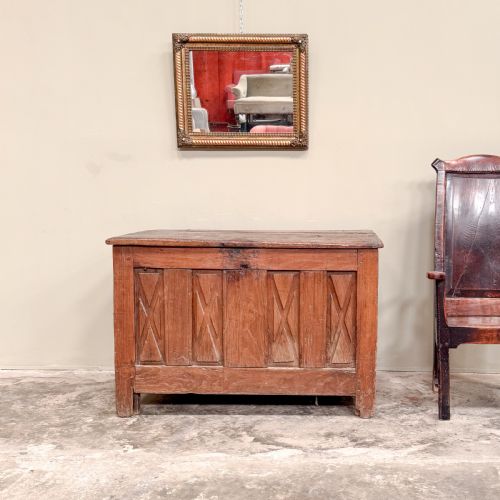
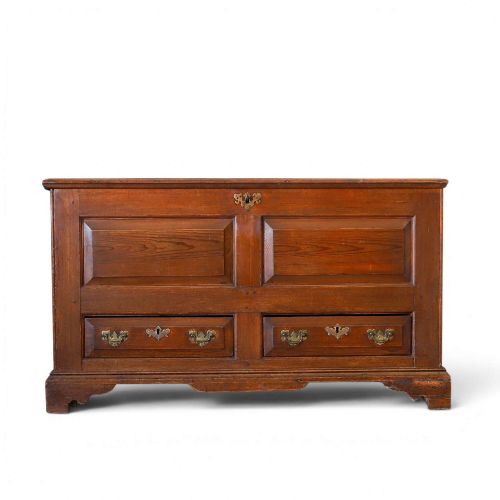
A rustic pine trunk serves as a capacious storage box, historically relied upon for household linens, blankets and personal possessions. These pieces span the Victorian era, alongside examples dated to eighteen-fifty, eighteen-ninety and nineteen-hundred.
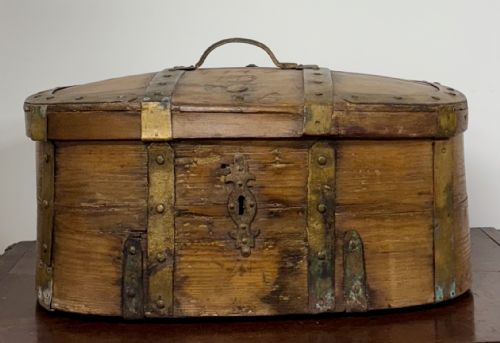
Forms vary between straight-sided blanket chests and dome-top variations designed to shed water during transit. The style is distinctly vernacular, appearing across Victorian country and rustic country designations in the record.
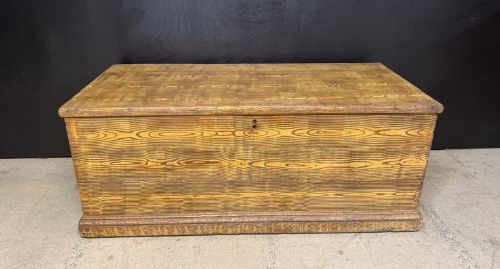
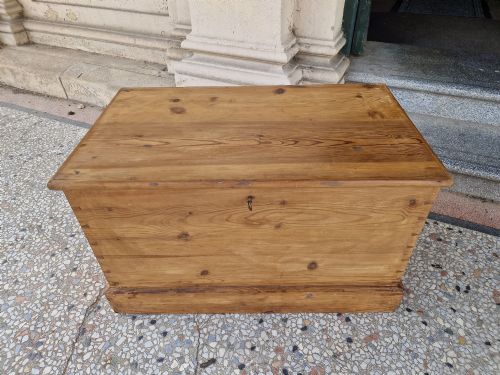
The most common formats on this page are blanket boxes and storage chests fashioned from soft timber. Buyers encounter practical sizes ranging from compact small storage trunks up to large chest formats.
How they were made
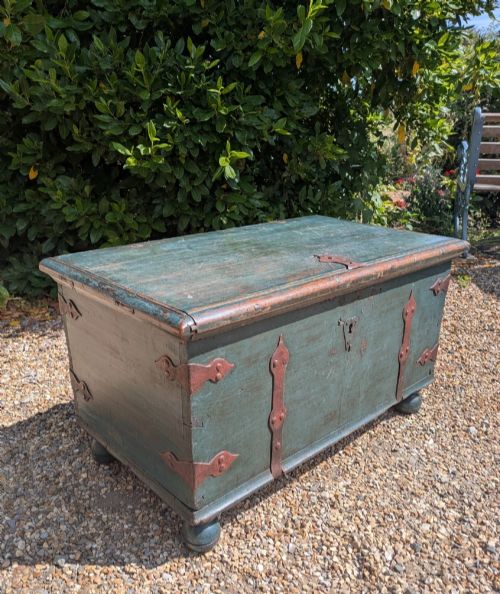
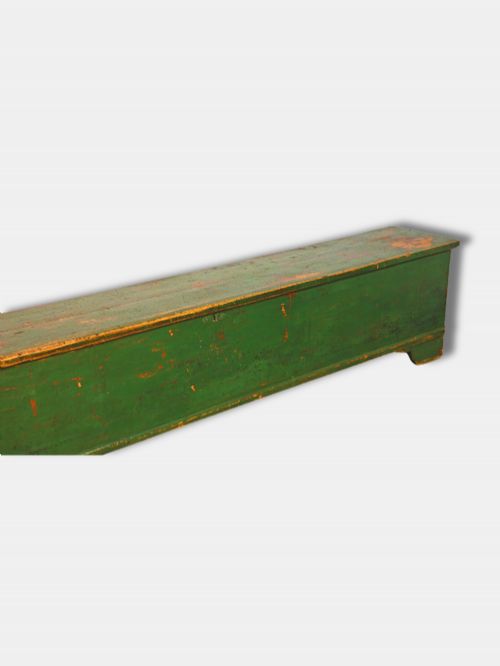
Construction relies entirely on pine boards joined to form deep rectangular or arched carcases. Surfaces show historical wax finishes or retain remnants of blue paint.
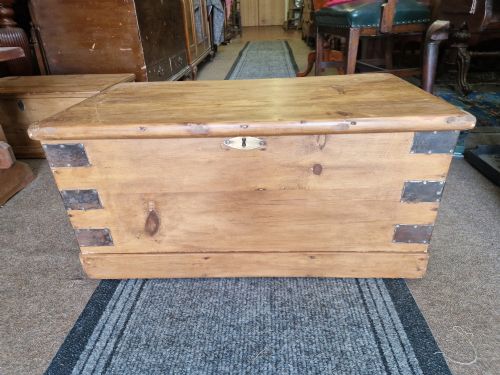
Metal hardware is integral to the construction, utilising iron and brass for strapwork, carrying handles and operational locks. These mounts reinforce the corners and lids against heavy daily usage.
Retail Price Guide 2026
Typical UK retail prices for rustic pine trunk, calculated from the Sellingantiques database of over a million retail prices indexed since 2003. This retail price guide relies exclusively on Sellingantiques data; no external sources or auction records are used, so the figures do not describe the wider market.
Listings span Victorian eras, eighteen-fifty, eighteen-ninety and nineteen-hundred, utilising pine, iron and brass.
What varies in quality
Quality rests upon the structural integrity of the timber and the retention of original surface treatments. Pieces with well-maintained waxed finishes or untouched painted surfaces sit higher in character than heavily altered examples.
The sophistication of the joinery and the presence of robust original brass or iron hardware distinguish superior trunks from utilitarian boxes. Scale also plays a role, with particularly large chests commanding attention for their proportions.
The Rustic Pine Trunk Glossary
- Dome-top
- A curved lid construction designed to shed dust and water, frequently seen on travel chests. This form provides additional internal height.
- Blanket box
- A large rectangular chest traditionally utilised for storing woollen bedding and household textiles. These pieces often feature hinged lids opening from the top.
- Pine
- A softwood timber utilised extensively for vernacular furniture due to its availability and workability. It accepts wax and paint finishes readily.
- Strapwork
- Metal bands of iron or brass applied across the exterior of a trunk to strengthen joints and corners. This hardware provides both structural reinforcement and visual contrast.
Frequently Asked Questions
What were rustic pine trunks used for?
These chests served primarily for storing household textiles, blankets and personal belongings in domestic settings. Their sturdy construction also made them suitable for moving possessions from place to place.
Over time, they transitioned from utilitarian utility items to decorative storage solutions within the home. Their robust timber bodies allowed them to withstand heavy daily use across generations.
How do I date a pine trunk?
Dating relies upon observing construction traits, hardware types and recorded periods such as Victorian examples or pieces from eighteen-fifty, eighteen-ninety and nineteen-hundred. Earlier trunks often display hand-wrought ironwork and pegged joinery.
Stylistic shifts between flat-lidded blanket boxes and dome-top forms also help place an object within its nineteenth-century context. Comparing the wear patterns on the pine timber provides further clues to age.
Are pine trunks heavy?
Pine is a softwood, which makes these trunks lighter than equivalent pieces built from dense hardwoods like oak or mahogany. However, their large proportions and thick timber walls still give them a substantial physical weight.
Metal iron and brass handles fitted to the sides assist with lifting and repositioning the chest. The overall weight depends directly on the physical dimensions of the specific trunk.
How do I care for a waxed pine surface?
Maintaining a waxed finish requires occasional application of a quality beeswax to nourish the soft timber and preserve the sheen. Avoid placing the chest in direct sunlight or near heat sources to prevent the wood from drying out.
Gentle dusting with a dry cloth keeps the surface clean without stripping the historical patina. Regular care ensures the pine retains its rich texture over years of use.