
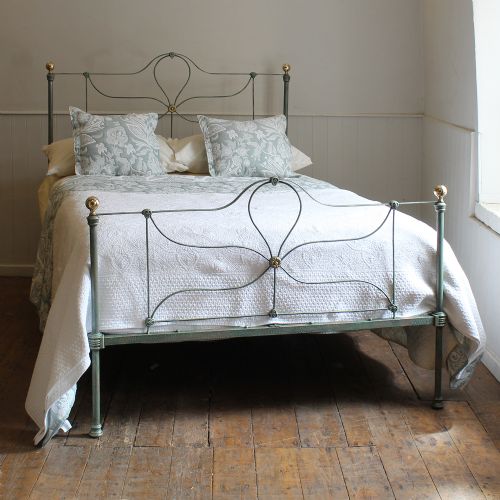
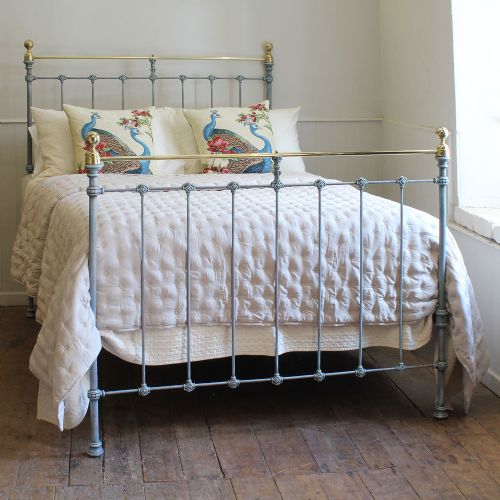
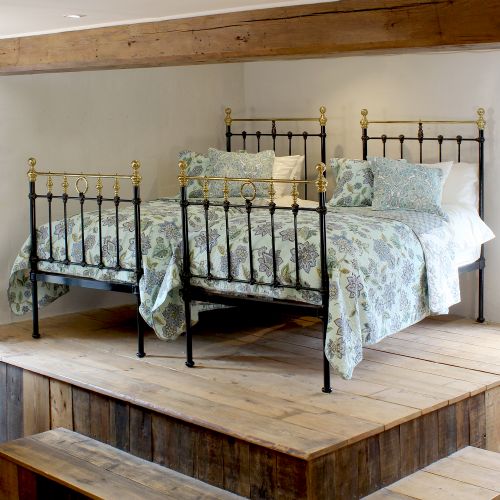
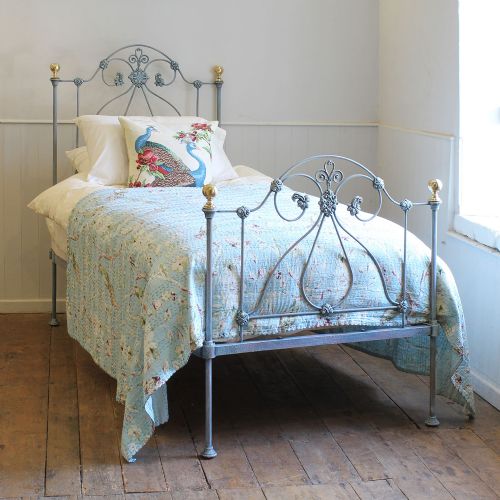

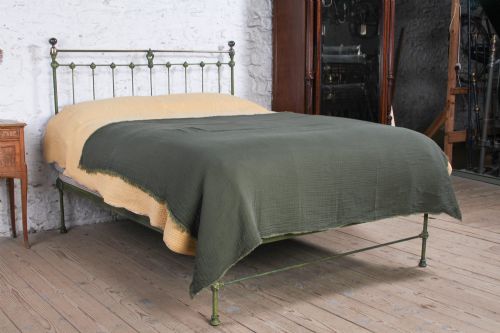
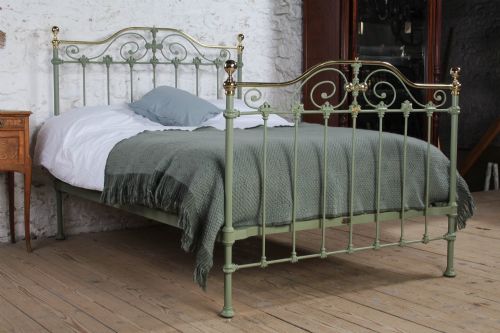
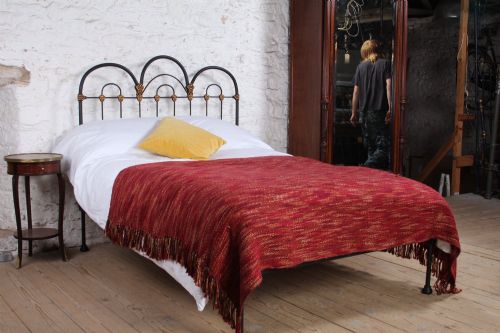
Vintage Brass Iron Bedstead
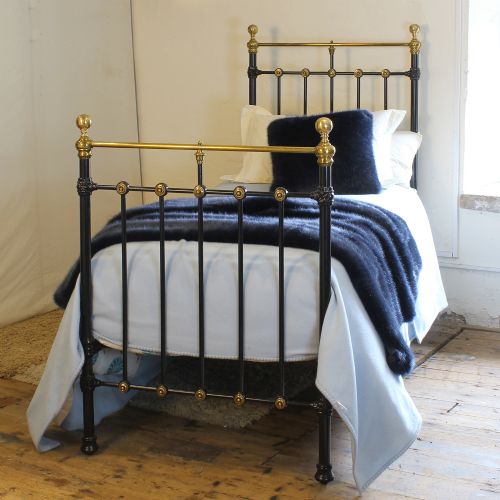
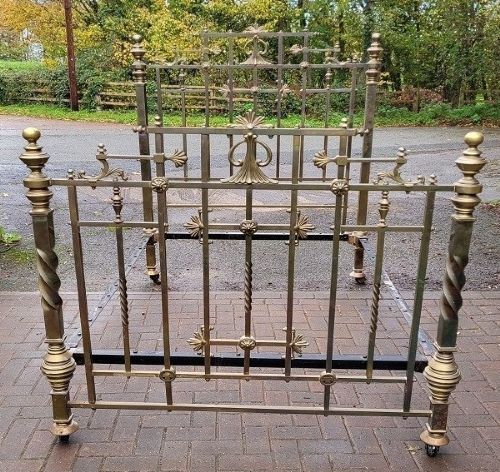
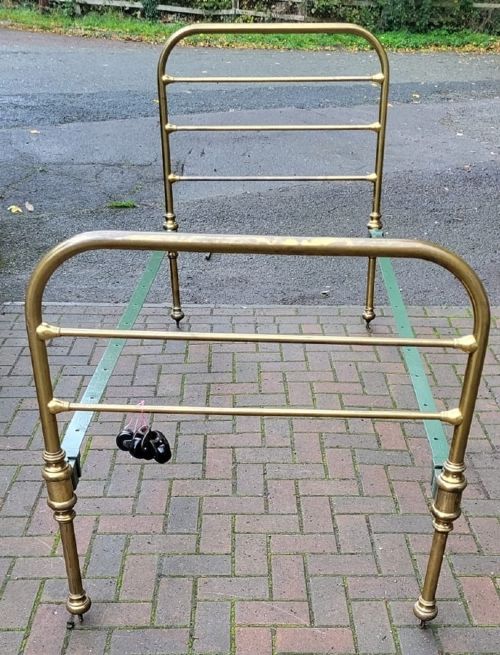
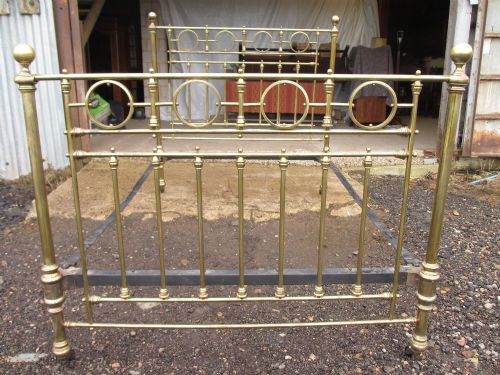
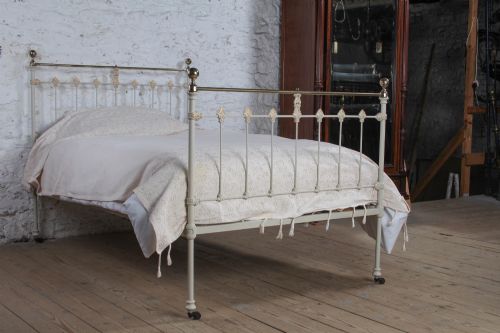
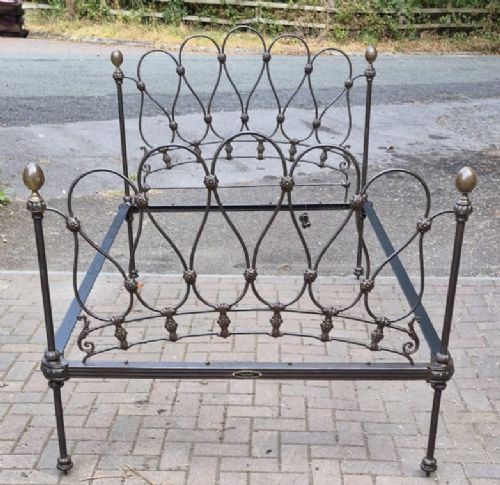
These vintage brass iron bedsteads combine robust metal frames with warm metallic mounts, offering durable sleeping furniture shaped by Victorian and Edwardian hands.
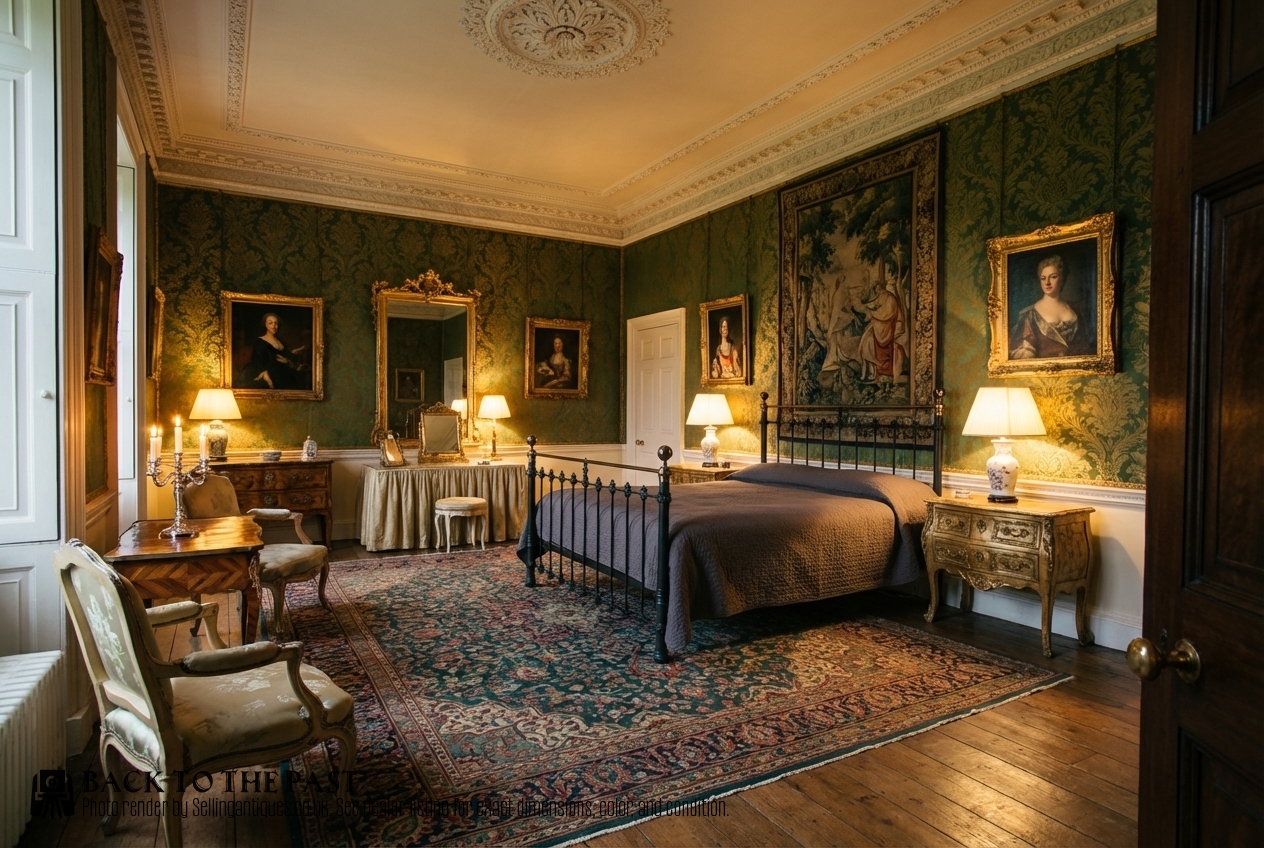
Vintage Brass Iron Bedstead
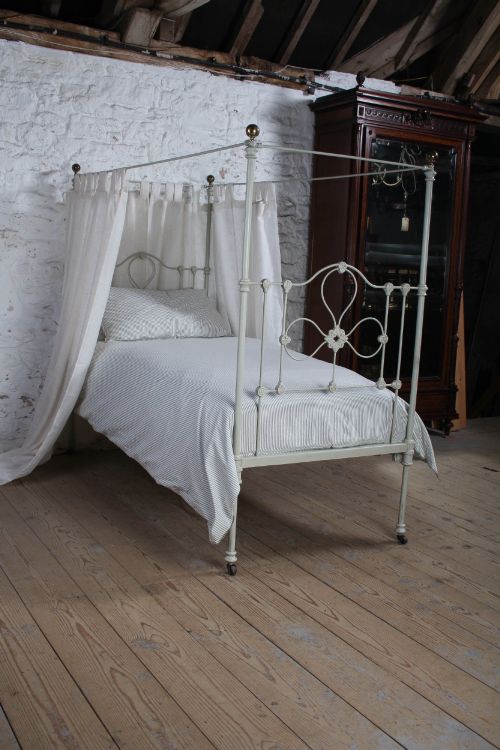
A vintage brass iron bedstead represents a sturdy piece of sleeping furniture constructed primarily from cast iron or wrought iron, paired with decorative brass components. Buyers seeking this phrase encounter formats ranging from single sizes and small doubles to large king sizes and half tester frames.
The majority of these pieces originate from the Victorian and Edwardian periods, spanning the nineteenth and early twentieth centuries. French provincial styles and Austrian variants also appear alongside domestic British designs, often featuring slot-in frames set on castors for mobility.
Forms include standard beds with footboards, no end beds designed for restricted visual weight, and occasional cots or cradles. The combination of black or painted iron frameworks with polished brass tubing defines the visual character of the category.
How they were made
Makers cast iron components in sand moulds to create rigid structural frames and decorative junctions, while brass sheeting and tubing formed the prominent rails and finials. Workers joined these disparate metals using mechanical joints, screw threads and detailed castings.
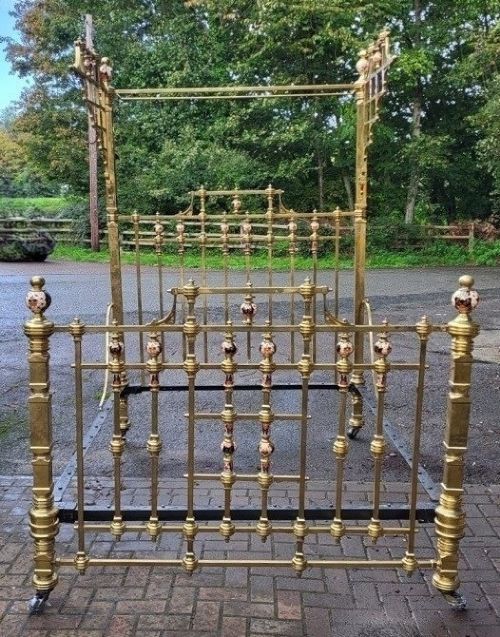
Surface finishes relied on dark paint, toleware coatings or japanning for the iron sections, contrasted against polished or lacquered brass. Some examples integrated ceramic discs, mother of pearl inlays or painted panels into the metal framework for added decoration.
Rocking brass cots from the Victorian era let infants sway to sleep surrounded by surprisingly heavy ornamental metalwork.
What varies in quality
The refinement of the brass castings and the crispness of the iron detailing separate standard production models from exhibition quality pieces. Finer examples display elaborate ornamentation, tapered posts and robust original castors that integrate smoothly into the frame.
Structural integrity depends on the precision of the slot-in joints and the thickness of the metal tubing used in the headboards and foot rails. Original components and makers' marks contribute significantly to the standing of an individual bedstead.
Winfield·R W Winfield
The Vintage Brass Iron Bedstead Glossary
- Bedstead
- A framework of a bed supporting the mattress and springs. It encompasses the headboard, footboard and side rails.
- Half Tester
- A type of bed with a canopy that extends only partway over the length of the bed. It usually fixes to the wall or the headboard.
- Toleware
- Metalware painted and lacquered, often in japanned finishes, popular on nineteenth-century household objects.
- Japanning
- A type of durable European finish that emulated Asian lacquer work. It was commonly applied to iron bed frames.
- Dip Rail
- A headboard or footboard rail that curves downwards in the centre. This style was favoured during the Edwardian period.
Vintage Brass Iron Bedstead: Frequently Asked Questions
How do I assemble these beds?
Most pieces utilise a slot-in frame system where the side rails wedge directly into the cast iron sockets of the headboard and footboard. Tightening the integrated joints secures the structure without requiring complex tools.
Once the main rectangle is formed, the rails hold firm under the weight of modern mattresses and standard bed bases.
Will a standard mattress fit?
Sizes vary between nineteenth-century dimensions and modern standards, including single, double, queen and king configurations. Checking the internal length and width between the side rails ensures contemporary mattresses drop securely into place.
Some older frames require custom or slightly modified mattress widths to sit flush within the iron framework.
How do I clean the brass?
Gentle dusting with a soft cloth preserves the original protective lacquer on vintage brass components. Avoid harsh metal polishes unless the historic lacquer has already worn away entirely.
Painted iron sections require only a dry cloth to remove surface dust without disturbing the underlying finish.
How do I date these frames?
Victorian examples often feature heavier cast iron components, elaborate brass castings and distinct aesthetic movement details. Edwardian versions tend towards simpler dip rail profiles and lighter proportions.
Castors, maker stamps and construction methods provide further clues for determining the decade of manufacture.