

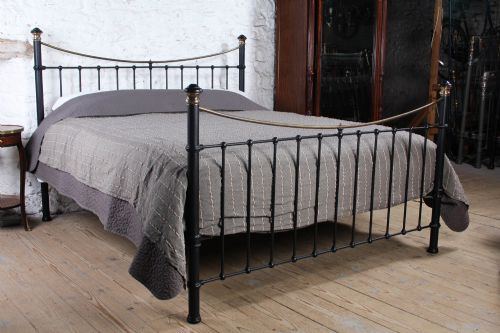


Black Metal King Bedstead
A black metal king bedstead brings substantial presence and period character to a bedroom.
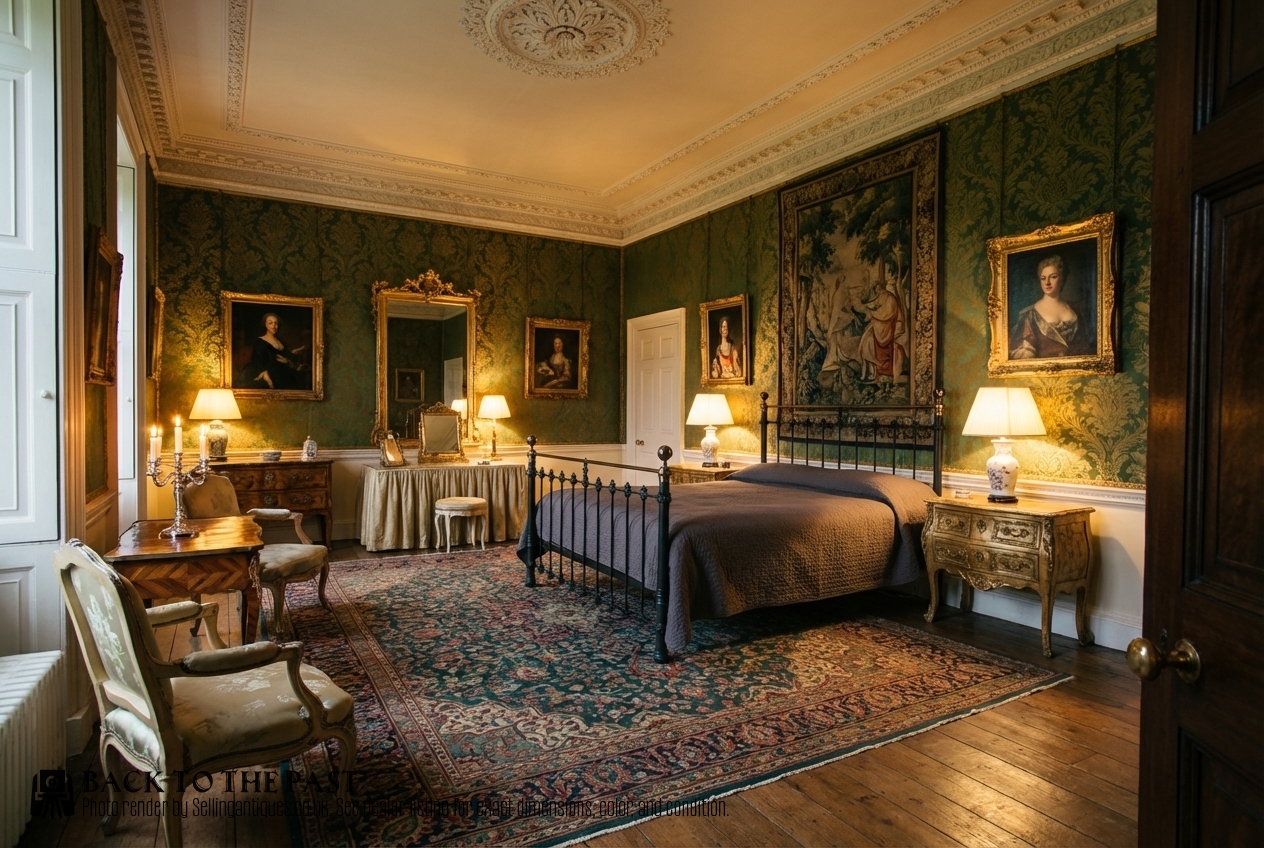
Black Metal King Bedstead
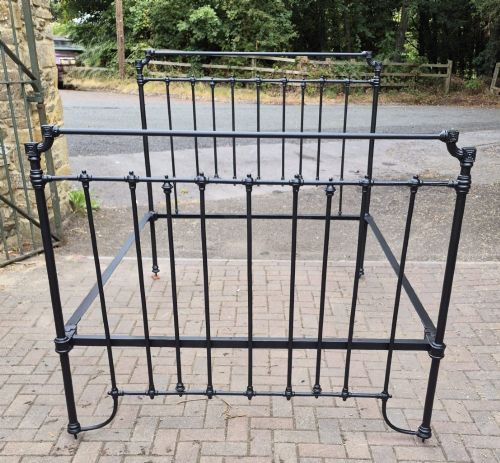
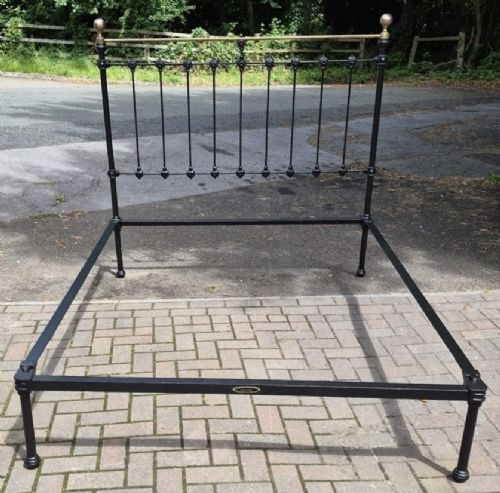
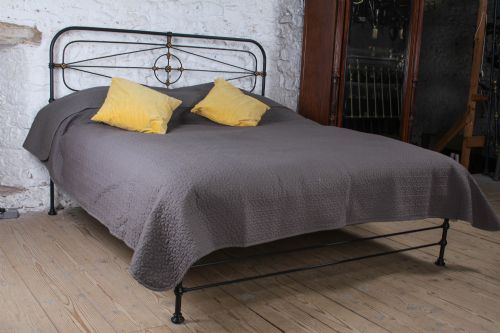
A black metal king bedstead unites generous proportions with durable construction, offering a commanding centrepiece for the bedroom. When searching for a black metal king bedstead, buyers encounter robust examples spanning the Victorian, Edwardian and early twentieth century periods. These frames accommodate modern king and super king mattresses while retaining historical form.
The selection ranges from simple low end and no end formats to elaborate designs with brass mounts, arched rails and tapering posts. Many pieces reflect regional characteristics, including Irish and French stylistic influences.
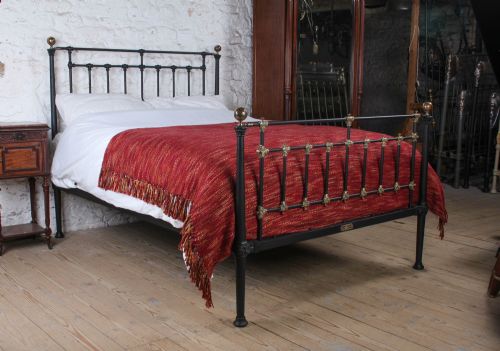
Victorian and Edwardian workshops produced the majority of these frames, blending cast iron structural elements with decorative wrought iron work. Buyers frequently find combinations of black painted iron paired with polished brass finials and spindles.
Materials and construction
Construction relies upon a combination of cast iron, wrought iron and sheet metal, often assembled with sturdy dovetail joints and secured by iron side rails. Metal components were traditionally cast in moulds or forged by hand before receiving protective surface finishes.
Surface treatments include original black paint, japanned lacquer and applied gilding, which protected the underlying metal while providing a smooth sheen. Brass elements such as finials, scrolls and mounts were polished and attached to contrast with the dark iron frames.
Some nineteenth century hospital style beds were given a black finish to disguise heavy daily use in institutional wards.
Quality variations
Quality rests upon the crispness of the iron castings, the integrity of the structural joints and the retention of original surface finishes like japanned lacquer. Finer pieces demonstrate careful attention to detail in the decorative spindles, brass mounts and overall symmetry of the arch or dip rail.
Substantial weight, maker marks from established foundries and well-preserved brass components distinguish superior examples from standard production pieces of the period.
Winfield·Maple & Co.
The Black Metal King Bedstead Glossary
- Japanned lacquer
- A European imitation of Asian lacquerwork that produces a hard, glossy black finish on metal or wood. This durable coating was frequently applied to nineteenth century iron beds to protect against rust.
- Dip rail
- A headboard or footboard rail that curves downward towards the centre. This configuration offers a softer silhouette than straight top rails.
- No end
- A bedstead configuration featuring a headboard but lacking a high footboard. This open design creates a sense of space in smaller bedrooms.
- Tapered posts
- Bed posts that gradually narrow towards the top. This detail lightens the visual weight of heavy metal frames.
- Finial
- A decorative terminal ornament mounted on the top corners of a bedstead. They are commonly cast in brass to contrast with black iron frames.
Black Metal King Bedstead: Frequently Asked Questions
Will a standard modern mattress fit?
Most antique king and super king metal bedsteads accommodate standard modern mattress sizes, though exact dimensions can vary slightly depending on the specific nineteenth century frame.
It is advisable to check the internal width and length measurements of the specific bedstead against modern mattress standards before purchase.
How do I assemble an antique metal bed?
These bedsteads typically utilise a knockdown system where the headboard and footboard slot directly into iron side rails using wedge or dovetail joints.
No complex tools are usually required, as gravity and the weight of the mattress lock the structural joints securely into place during assembly.
How do I clean japanned lacquer?
Cleaning requires only a soft, dry microfiber cloth to remove dust without abrasive action.
Avoid chemical polishes and water, as moisture can compromise historic japanned surfaces and underlying iron.
How do I date a metal bedstead?
Dating relies upon stylistic indicators such as Art Nouveau motifs, brass mount designs, and structural elements like dip rails or low end formats.
Victorian and Edwardian examples often display distinct casting techniques and maker marks that help narrow the period of manufacture.