
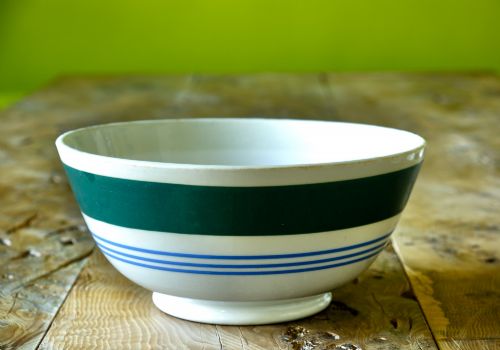


Vintage Blue Stoneware
Vintage blue stoneware brings robust utility and deep cobalt tones to domestic spaces through vessels shaped across the Victorian and later eras.
Vintage Blue Stoneware
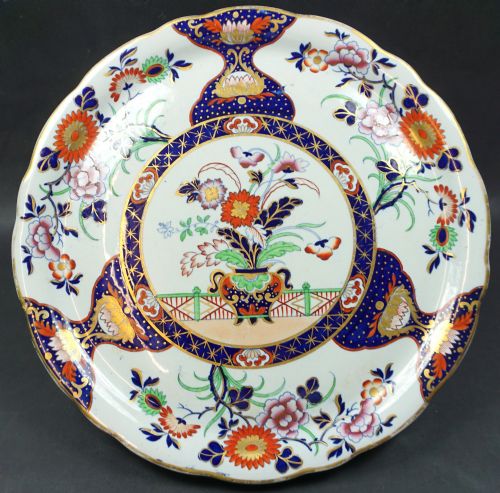
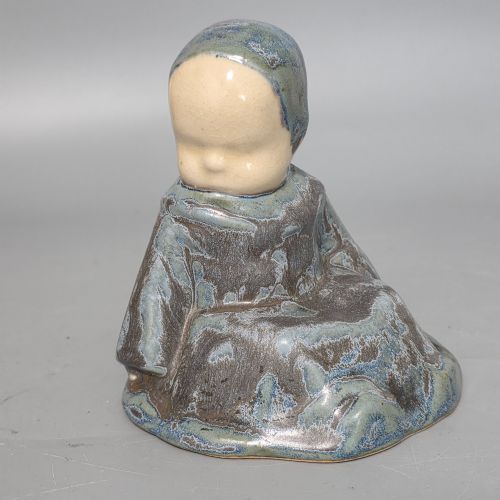
When you search for vintage blue stoneware, you encounter heavy functional and decorative vessels rooted primarily in the nineteenth and early twentieth centuries. The selection spans utilitarian kitchen pieces alongside ornate parlour items produced by major British and continental potteries.
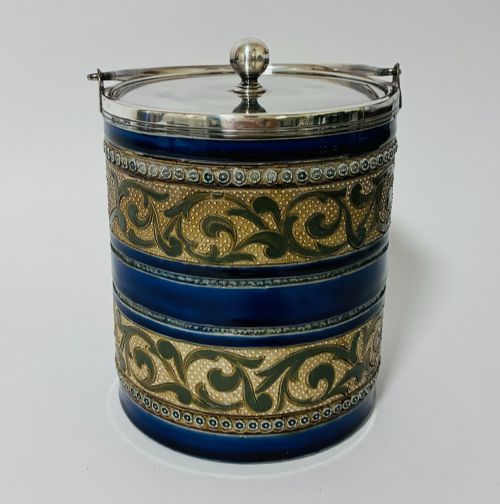
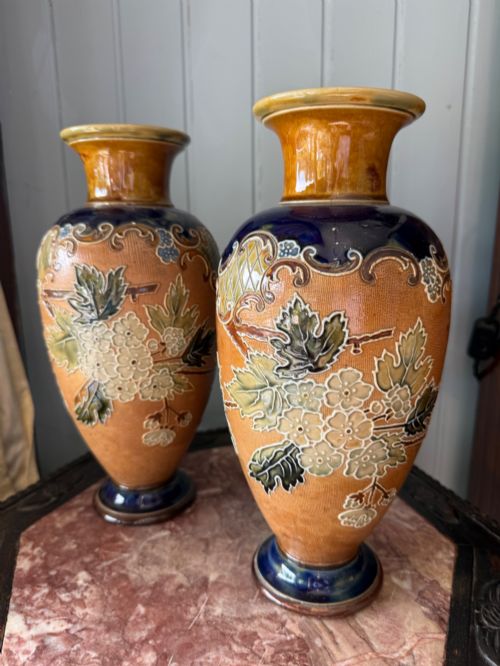
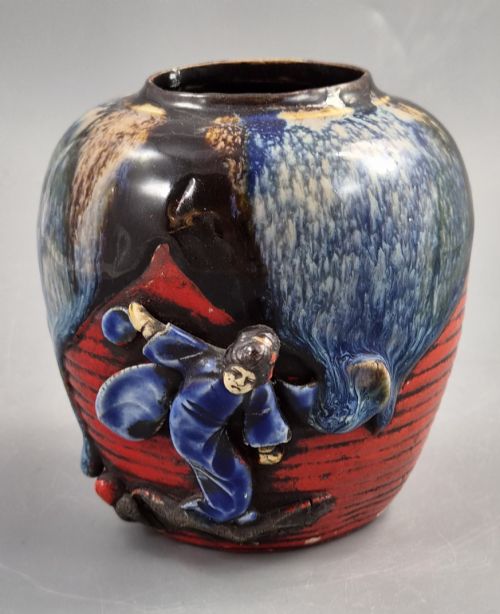
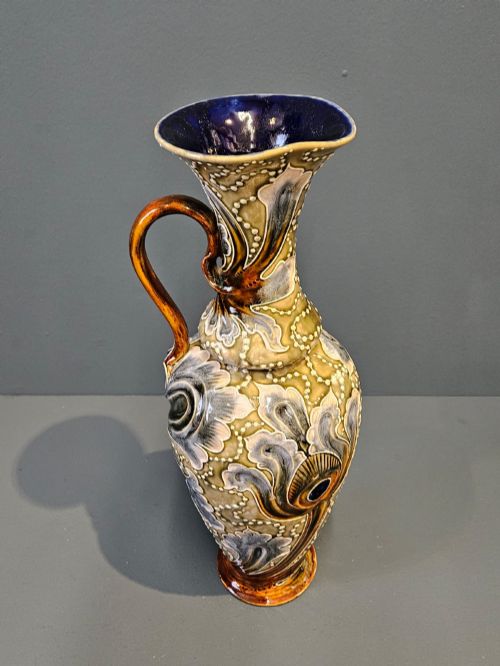
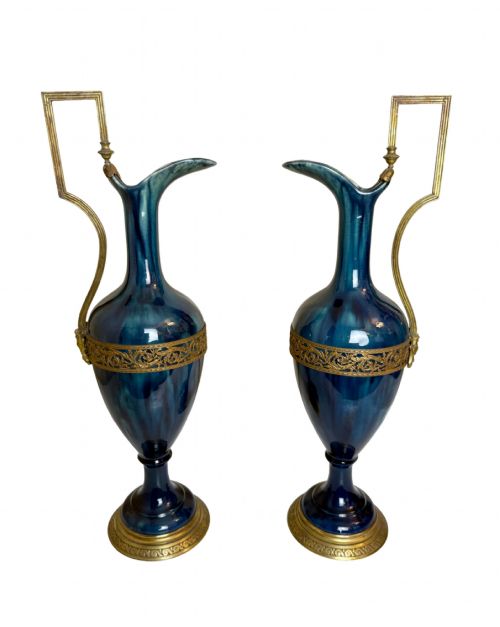
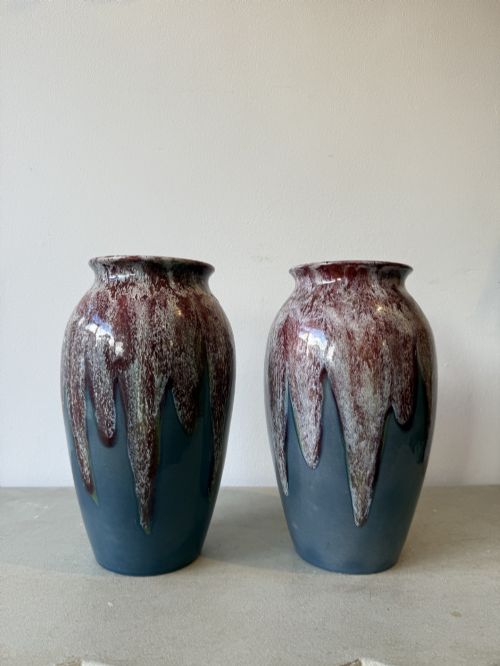
Vessels most commonly met on this page include robust jugs, jardinières, biscuit barrels, and vases carrying distinctive blue glazes or applied decoration. These objects reflect both domestic service traditions and the later rise of artistic pottery movements.
How they were made
Potters shaped dense clay bodies on the wheel or in moulds before firing them to vitrification, creating a hard, impermeable ceramic that resists moisture without relying entirely on interior glazing. Artisans applied salt during the kiln firing to produce a pitted, orange-peel texture on select salt-glazed pieces.
Surface ornamentation involved cobalt washes, slip-trailed patterns, moulded sprigs in contrasting colours, and enamel floral decoration added over the fired glaze. Metal elements such as silver-plated mounts or collars were frequently added to finish biscuit barrels, ewers, and teapots.
At least one meticulous Victorian school kept strict track of its beer consumption by commissioning a pint tankard marked with a specific ward number.
What varies in quality
The distinction between standard commercial output and exceptional work lies in the crispness of the moulded relief, the depth and evenness of the blue coloration, and the skill of individual decorators. Pieces bearing specific artist monograms or attribution to prominent designers demonstrate superior hand-finishing.
Proportion and structural integrity define the higher tiers of these wares, where handles, rims, and applied metal collars integrate seamlessly with the ceramic body. Mass-produced items often display simpler, repetitive stamping, whereas top-tier examples showcase deliberate artistic execution.
Doulton Lambeth·Royal Doulton·Wedgwood·Minton·Hicks and Meigh·Mason's
The Vintage Blue Stoneware Glossary
- Stoneware
- A heavy, dense ceramic fired at high temperatures until vitrified and rendered waterproof. It forms the structural foundation for many durable kitchen and decorative vessels.
- Jasperware
- A fine-grained, unglazed stoneware developed to display delicate white moulded reliefs against a coloured ground. It is frequently associated with neoclassical designs and classical figures.
- Jardiniere
- An ornamental ceramic pot designed to hold a potted plant or floral arrangement. These larger vessels often feature prominent relief decoration or textured glazes.
- Salt Glaze
- A glossy, slightly textured finish achieved by throwing common salt into the kiln during high-temperature firing. The sodium reacts with the silica in the clay to form a durable glass skin.
- Biscuit Barrel
- A covered ceramic container historically used for storing dry biscuits or crackers at the table. Many examples incorporate hinged metal lids and swing handles made of silver plate.
Vintage Blue Stoneware: Frequently Asked Questions
How do I clean vintage stoneware?
Wash these pieces gently by hand using warm water and mild soap, avoiding harsh scouring pads that might scratch the glaze or delicate enamel decoration.
Dry them thoroughly with a soft cloth, taking extra care around any attached metal collars or silver-plated mounts to prevent moisture retention.
Were these vessels used daily?
Many items were made for regular household service, including jugs, tankards, salad bowls, and kitchen crocks designed to withstand heavy daily handling.
Other forms, such as highly decorated jardinières or cabinet vases, served primarily as ornamental furnishings within Victorian and Edwardian parlours.
How can I date these pieces?
Examine the base for impressed factory marks, registration numbers, or artist ciphers that provide specific clues regarding the manufacturer and production era.
The stylistic indicators, such as Victorian aesthetic movement motifs or later Art Nouveau curves, also help narrow down the manufacturing window.
Can converted lamps be restored?
Tobacco jars and vases that were drilled and turned into lamps retain their ceramic bodies, though the original drilling alters the structural integrity of the piece.
Restoring them to a non-lamp state depends on professional ceramic repair for the base, though many collectors choose to display them with the conversion intact.