
Vintage Bedside Stand
When you select a vintage bedside stand, you acquire a practical bedroom piece rooted in styles spanning the Georgian, Victorian, and Edwardian periods.
Vintage Bedside Stand
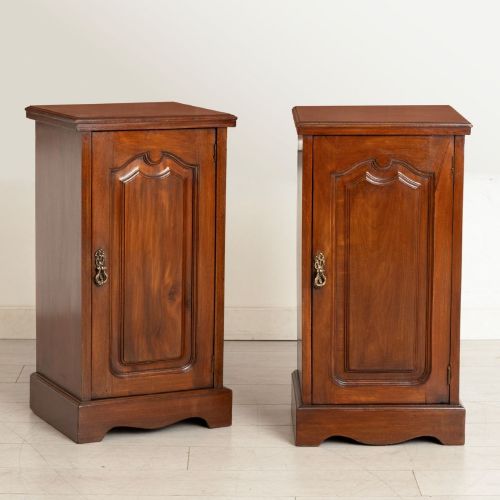
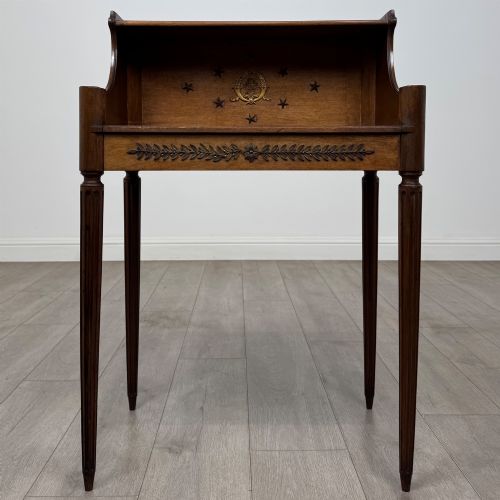
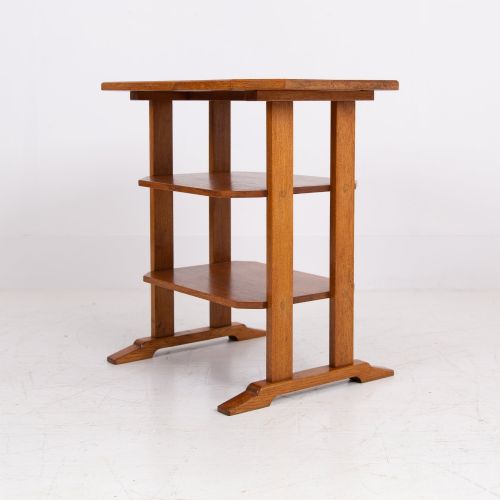
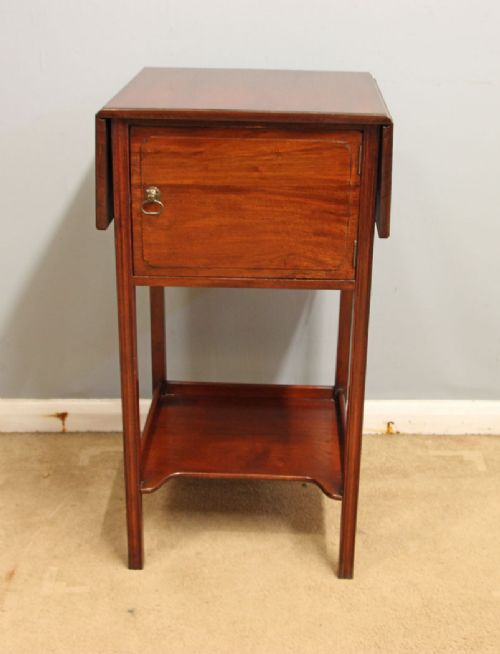
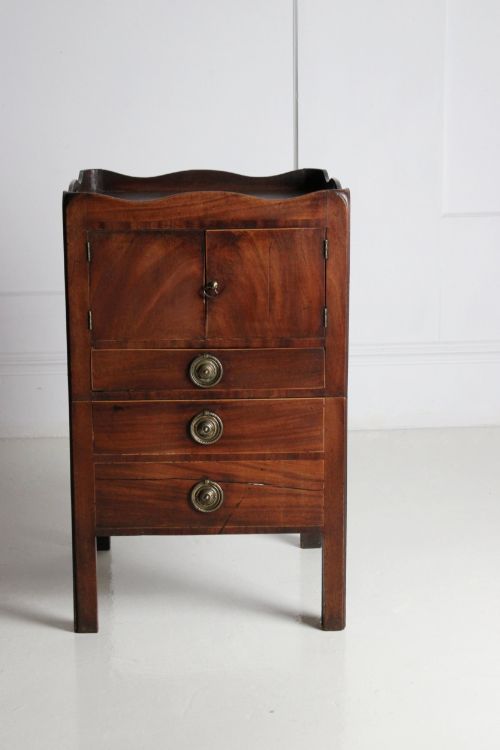
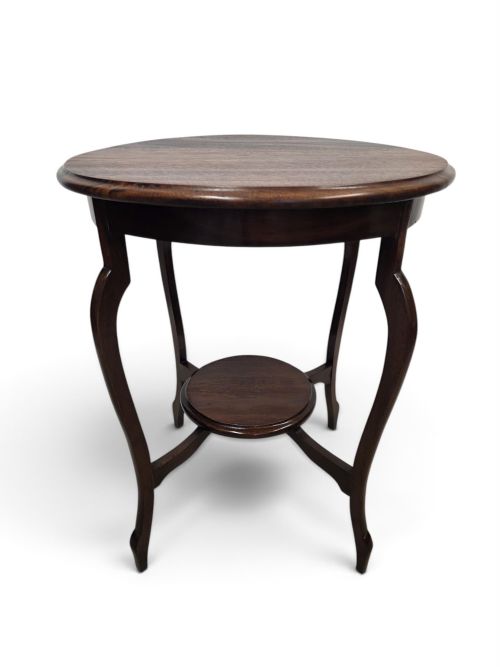
A vintage bedside stand encompasses a range of compact bedroom furniture, including bedside cabinets, pot cupboards, and small occasional tables designed to sit beside a bed. The selection here draws from diverse eras such as the Georgian, Victorian, and Edwardian periods, alongside early twentieth-century examples.
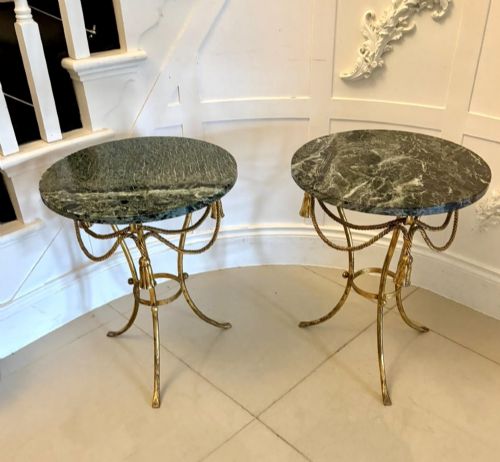
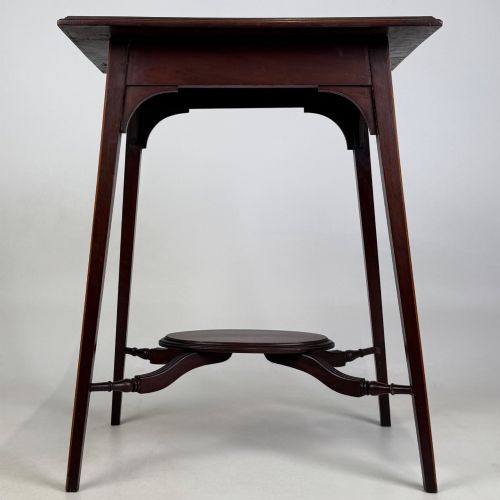
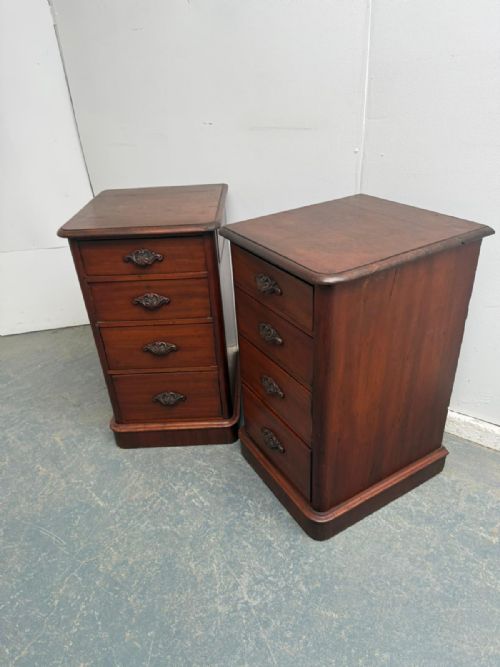
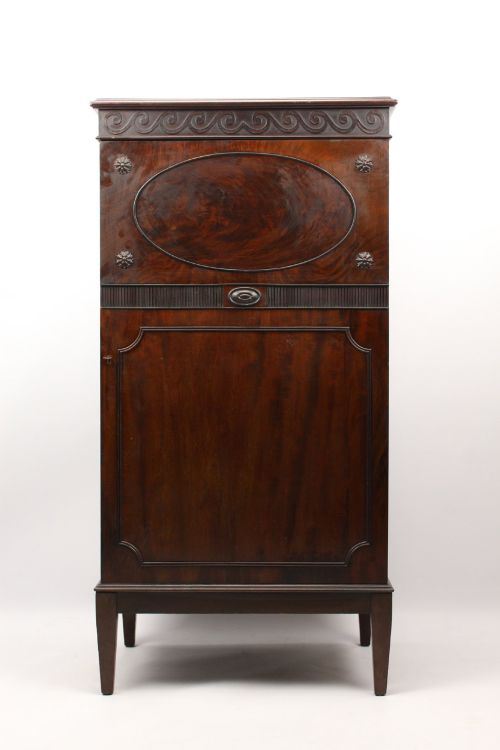
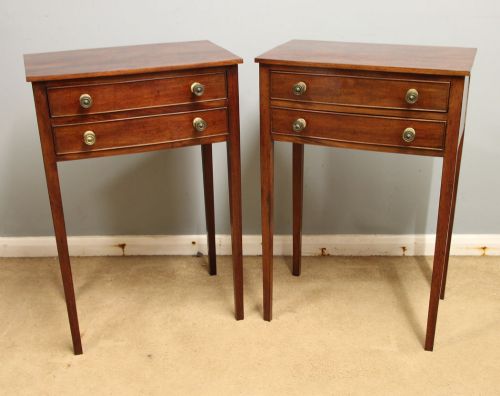
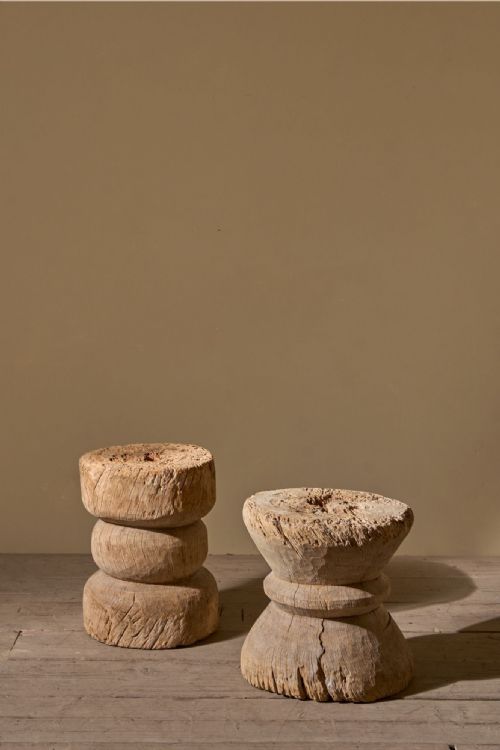
Mahogany and oak dominate the forms seen on this page, often appearing as enclosed cabinets with doors or drawers alongside open side tables. Buyers frequently encounter matched pairs or single stands originating from British, French, and Italian workshops.
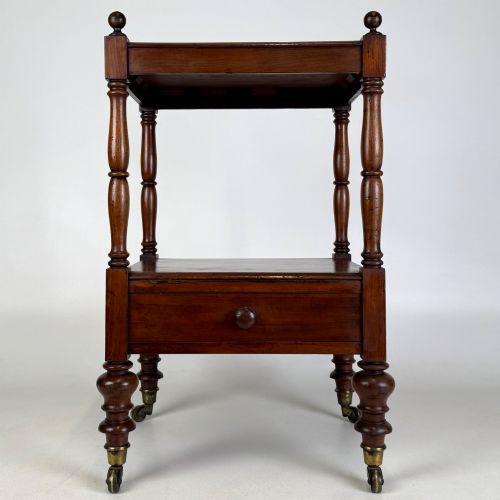
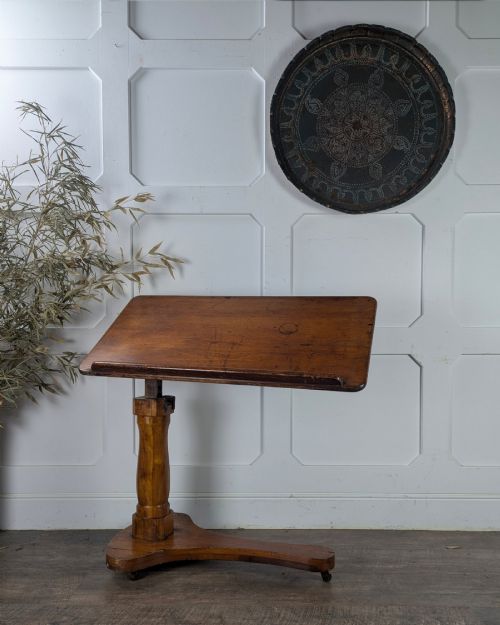
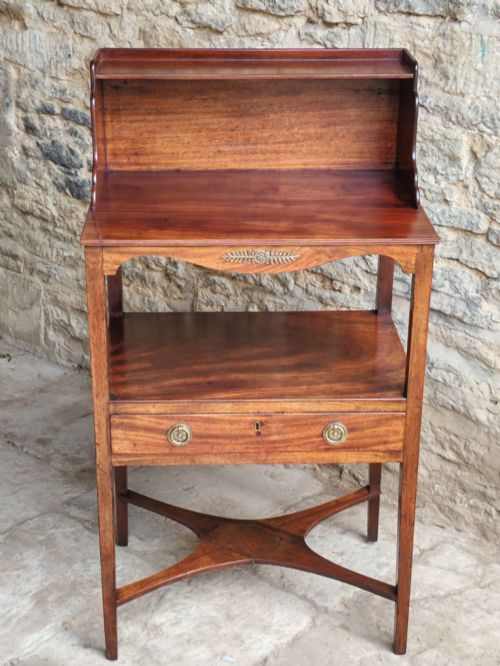
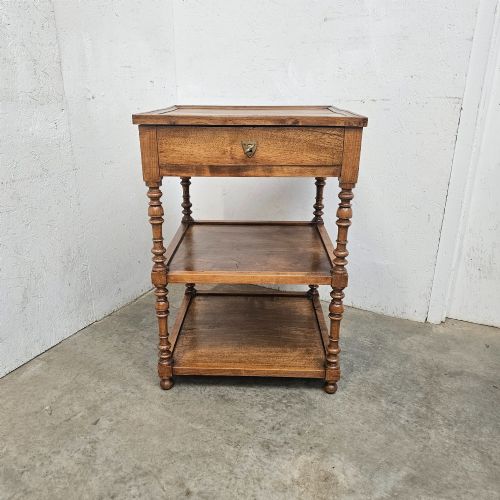
The assortment also includes specialised pieces like night stands, lecterns, and etageres, reflecting how bedroom storage evolved from eighteenth-century pot cupboards into the varied occasional tables of the 1920s and 1930s.
Materials and Construction Methods
Cabinetmakers relied heavily on solid timber and veneers, utilising mahogany, walnut, oak, and pine to construct carcases and table frames. Joinery methods varied from traditional dovetailed drawers in Georgian cabinets to turned legs and panelled doors on later Edwardian and 1920s pieces.
Surface treatments range from wax-polished mahogany and polished marble tops to applied green paint and faux bamboo detailing. Metal accents in brass or gilt metal appear on handles, galleries, and framework, complementing the primary wood structures.
Keep an eye out for faux bamboo bedside cabinets, where wood was painstakingly carved to mimic tropical grass.
Distinctions in Quality
Quality rests upon the selection of timber and the integrity of the original construction, where figured mahogany or burr walnut veneers demonstrate superior craftsmanship compared to simpler pine or secondary woods. The crispness of carved details, the neatness of dovetailing, and the retention of original brass hardware separate standard utility pieces from finer cabinetwork.
The presence of matched pairs significantly alters the character of a room, requiring uniformity in timber grain, height, and patination that single items lack. Original surfaces, whether waxed, polished, or painted, retain more integrity than pieces stripped or refinished in later decades.
Denby & Spinks·Mappin & Webb
The Vintage Bedside Stand Glossary
- Pot cupboard
- A small bedside cabinet originally designed to enclose a chamber pot. These pieces usually feature a single door above a cupboard space.
- Etagere
- A set of open shelves for displaying small objects or books. They appear in wood and metal variations across the nineteenth and twentieth centuries.
- Tambour
- A sliding door constructed from narrow vertical strips of wood glued to a canvas backing. This mechanism allows access to compact cabinet interiors.
- Marquetry
- The art of applying decorative veneer pieces to a structure to form intricate designs. It appears frequently on continental European tables.
- Parquetry
- A geometric mosaic of wood pieces used for surface decoration on tabletops. This technique creates repeating patterns like squares or triangles.
Vintage Bedside Stand: Frequently Asked Questions
What is a bedside stand?
A bedside stand is a small piece of furniture placed next to a bed to hold lamps, books, or personal items. They range from open side tables to enclosed cabinets with doors and drawers.
Historical examples include pot cupboards and night stands designed to keep bedroom necessities neatly out of sight.
How do I date a bedside cabinet?
Dating relies on identifying the primary wood, construction techniques, and stylistic influences. Georgian pieces often show dense mahogany and fine dovetails, while Edwardian examples display lighter inlay and varied painted finishes.
Hardware styles and secondary woods inside drawers also provide clear indicators of the period of manufacture.
Are bedside tables always sold in pairs?
Bedside tables appear as both individual pieces and matched pairs on this page. Single stands frequently turn up as occasional tables or freestanding cabinets.
Pairs require careful matching of height, timber, and proportion, making them desirable for placement on both sides of a bed.
What woods were used for these stands?
Mahogany and oak form the backbone of these listings, accompanied by walnut, pine, fruitwood, and exotic hardwoods. Cabinetmakers selected these timbers for their durability and grain pattern.
Decorative elements occasionally incorporate brass, marble tops, and lacquered finishes to enhance the appearance of the piece.