
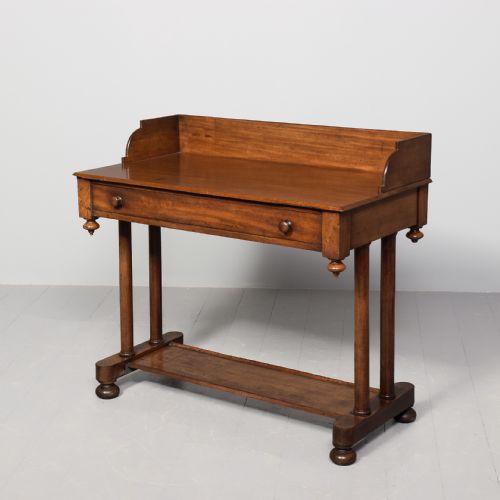


Regency Washstand
A regency washstand brings the functional elegance of the early nineteenth century into modern bedrooms, offering clever compartments and timeless mahogany or painted frames.
Regency Washstand
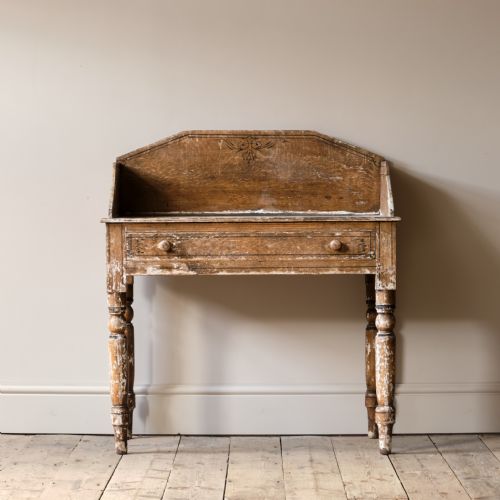
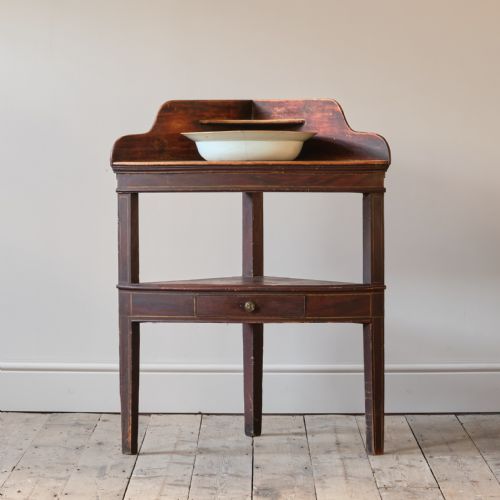
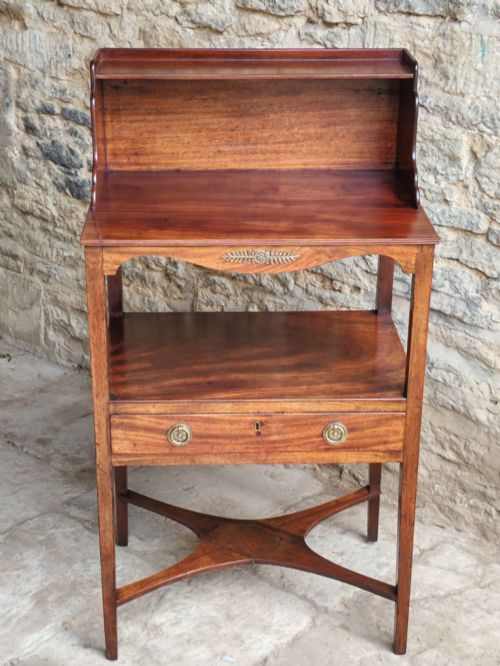
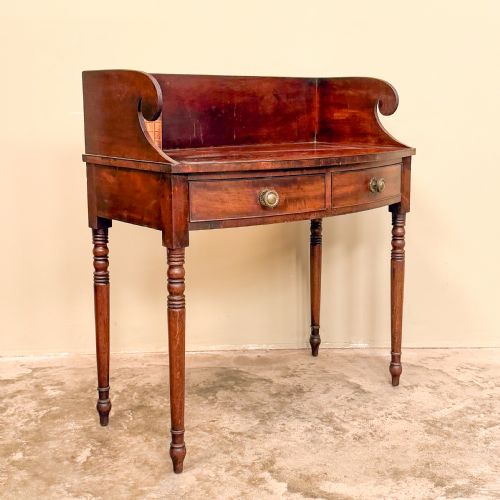
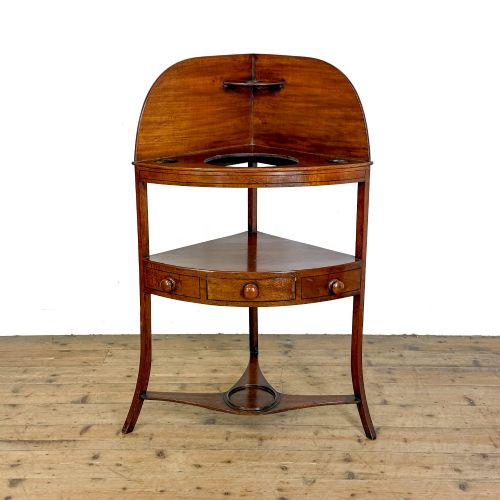
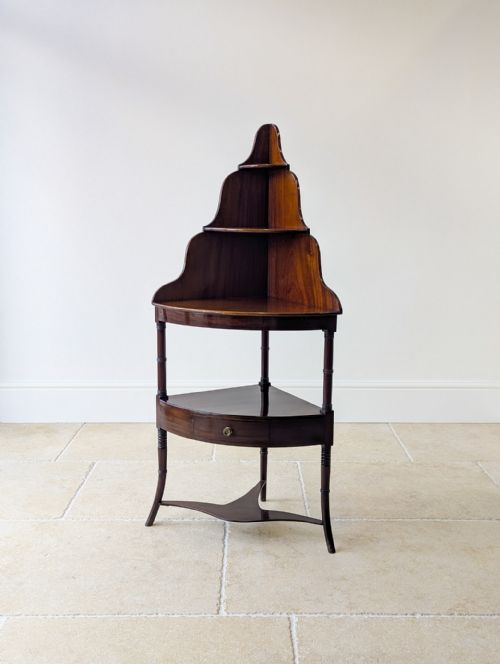
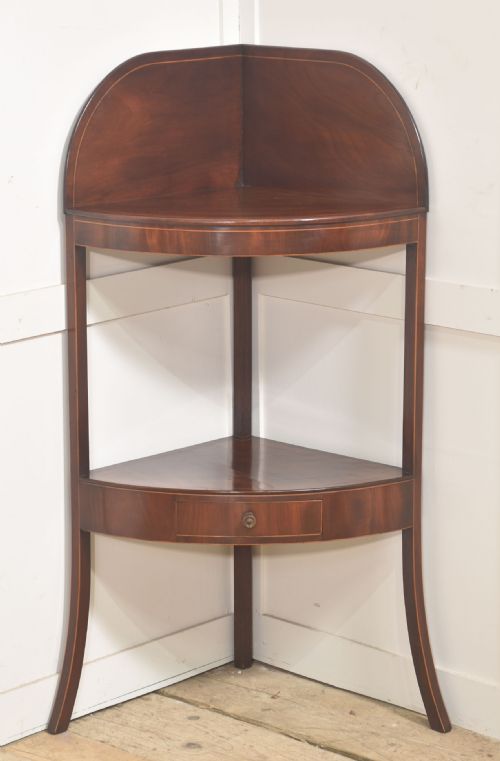
A regency washstand is a piece of antique bedroom furniture designed to hold washbasins, jugs, and toiletries before the installation of indoor plumbing. The pieces seen on this page appear in various forms, including freestanding square tables, bow-front or corner units, and cabinet washstands with enclosed storage.
What Varies in Quality
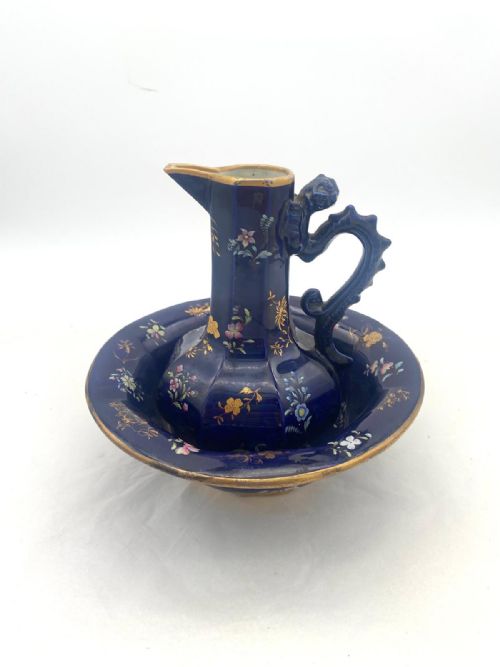
The standard of a regency washstand depends heavily on the integrity of the timber and the survival of original surface finishes like paint or polish. Pieces retaining their matching glazed ceramic jugs and basins or original marble tops command greater attention from collectors.
Fine construction details distinguish workshop production from standard commercial output, particularly in the precision of boxwood inlay, the crispness of turned supports, and the retention of maker stamps.
Forms span from corner stands and cabinet chests to dressing tables and children's scale pieces.
Gillows Lancaster·Masons
The Regency Washstand Glossary
- Gallery
- A raised wooden border surrounding the top of a table or washstand to prevent items from rolling off. This feature is often pierced or shaped in early nineteenth-century examples.
- Corner Washstand
- A specialised triangular form designed to fit neatly into the corner of a room. These pieces maximise bedroom space while providing tiered surfaces for washing equipment.
- Boxwood Stringing
- A narrow line of contrasting light-coloured wood inlaid into darker timber surfaces such as mahogany. Cabinetmakers utilised this technique to define panels and edges.
- Bow-Front
- A convex curved front contour popular in furniture design during the Regency period. This shape softens the angles of dressing tables and washstands.
- Marble Top
- A stone slab fitted to the upper surface of a washstand to resist water damage during personal grooming. These surfaces appear in white or grey varieties on select pieces.
Regency Washstand: Frequently Asked Questions
What was a regency washstand used for?
These items served as the primary washing station in bedrooms before plumbed bathrooms became common. They held basins, pitchers, and soap dishes for morning routines.
Today, buyers repurpose them as plant stands, occasional tables, or distinctive bathroom sink surrounds in modern homes.
How do I identify a true regency washstand?
Look for specific structural indicators such as turned wooden legs, tiered corner framing, and three-quarter galleries designed to contain washing basins. Timber choice, typically mahogany or painted pine, also points directly to the period.
Examining the joinery and underside construction helps confirm nineteenth-century origin rather than later reproduction.
Did these washstands come with basins?
Many original pieces were sold alongside ceramic jugs, basins, and footbaths glazed in blue and white transferware. Surviving matched sets are particularly valued by collectors.
Some surviving frames have lost their original pottery over the decades, though compatible nineteenth-century earthenware can still be paired with them.
Where should I place a corner washstand?
Triangular corner units fit efficiently into unused wall angles, making them practical for smaller rooms or hallways. Their shaped tiers provide display space without blocking floor traffic.
They function well as lamp tables or decorative plant stands in living spaces.