
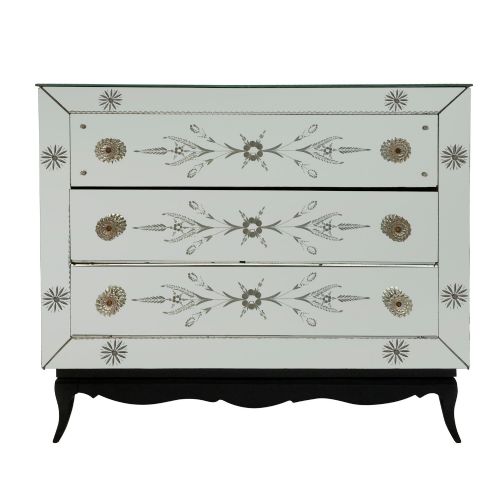
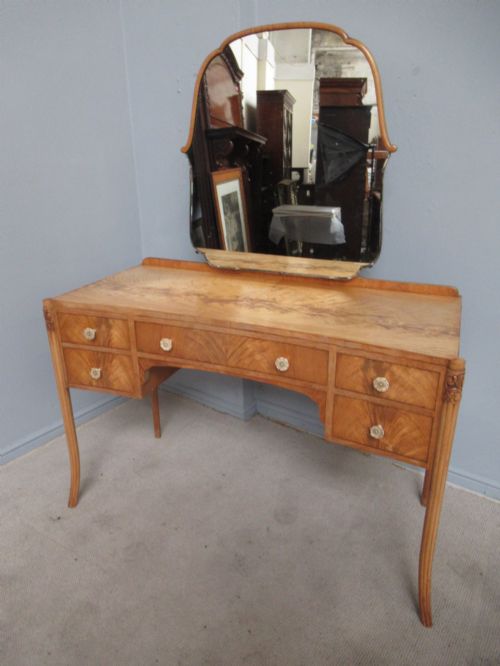
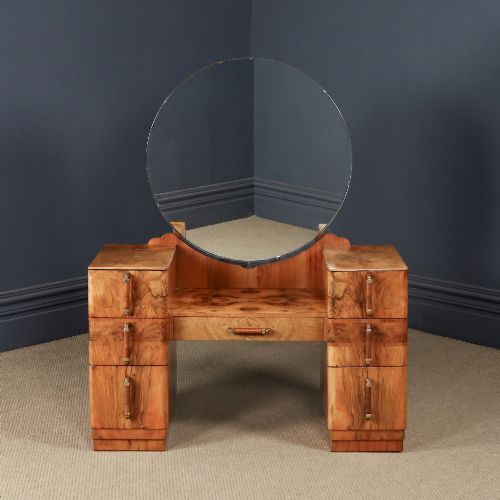
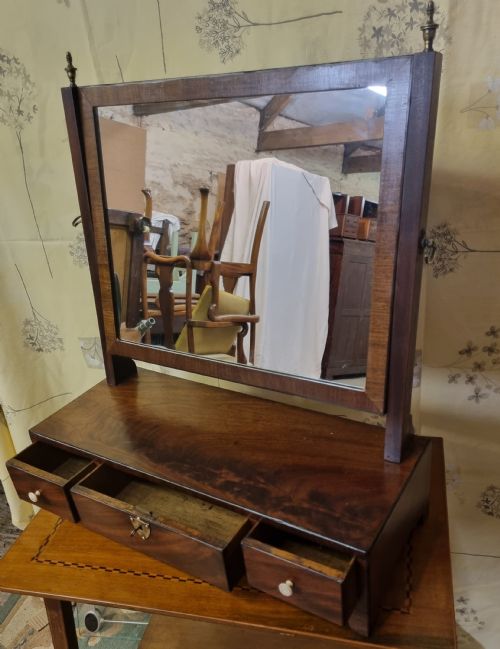
Vintage Bedroom Vanity Mirror
A vintage bedroom vanity mirror brings practical reflection and period character to a dressing space, spanning styles from Georgian mahogany to Art Deco walnut.
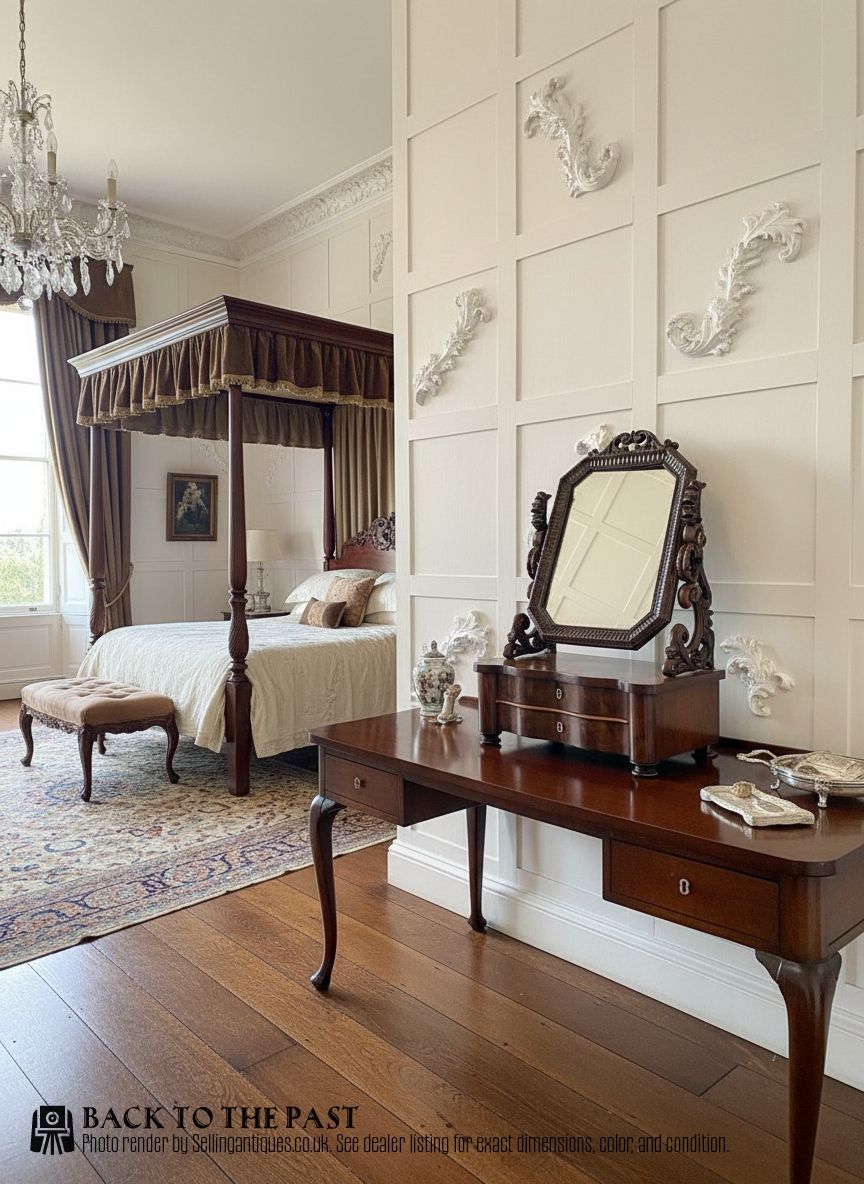
Vintage Bedroom Vanity Mirror
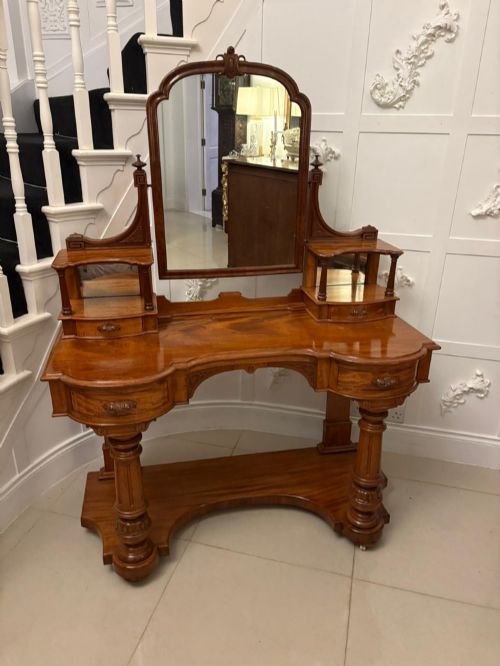
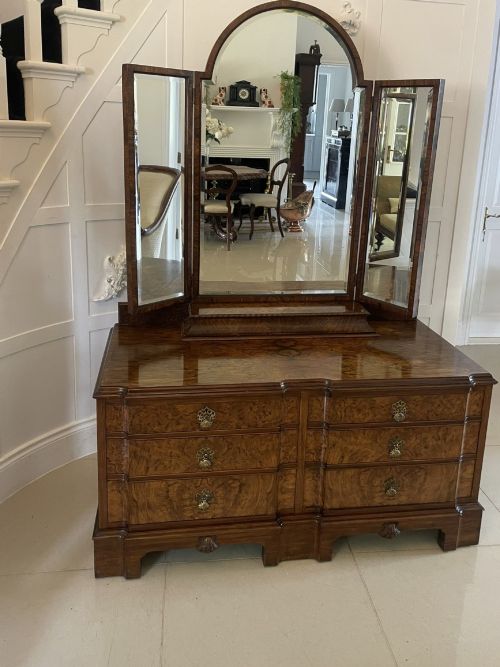
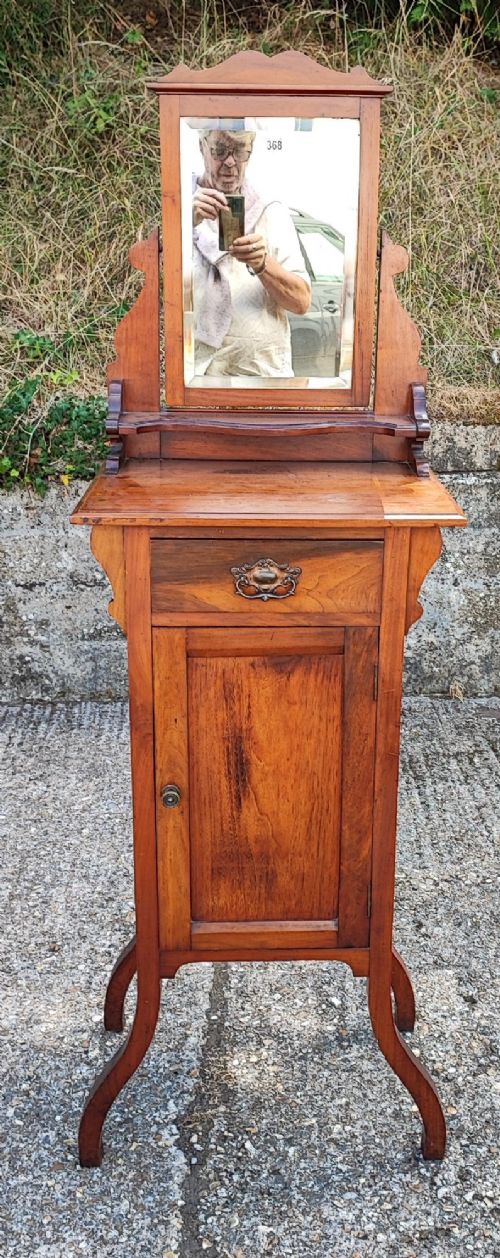
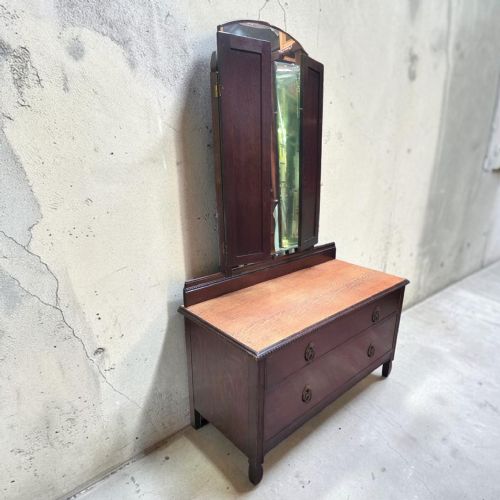
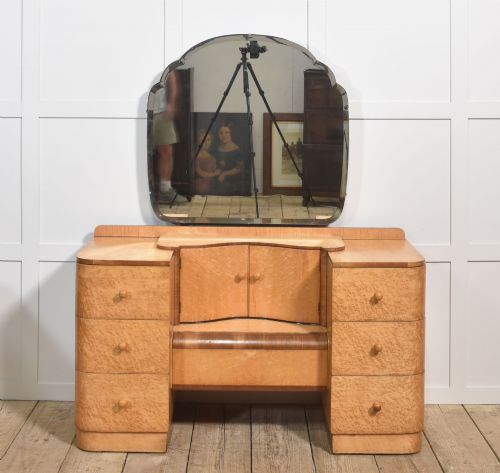
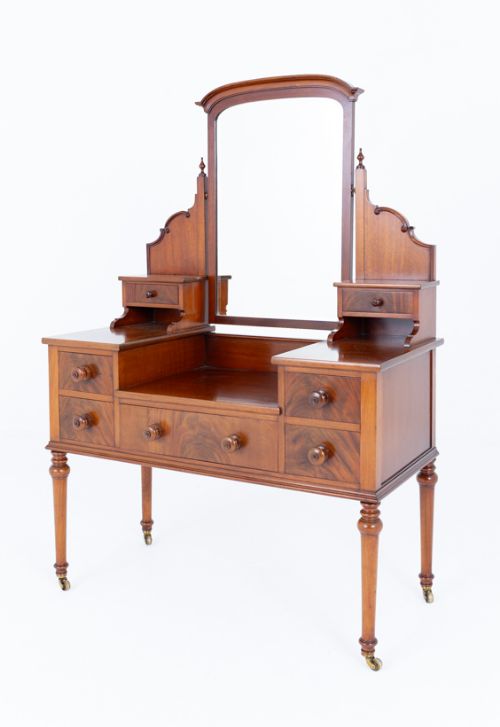
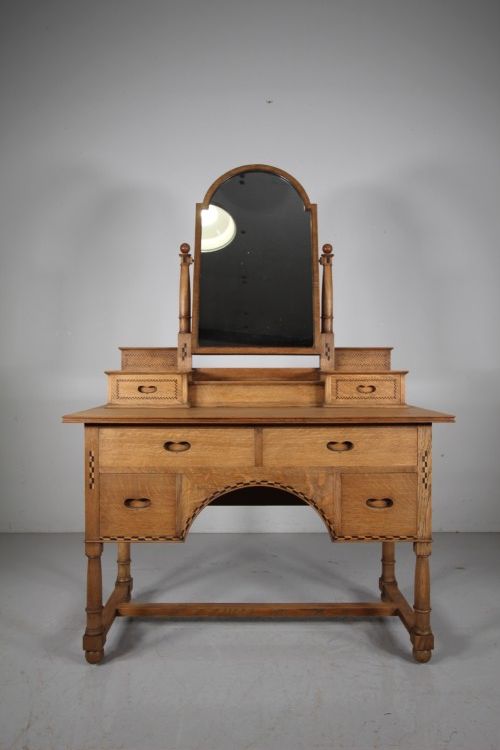
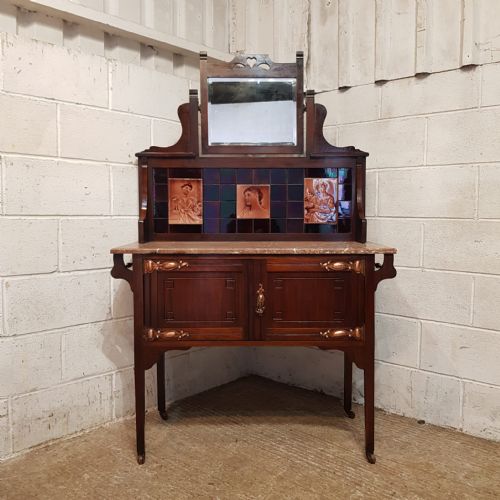
When you search for a vintage bedroom vanity mirror, you encounter everything from compact swing glasses on miniature drawers to large triple-plate mirrors integrated into dressing chests. The pieces recorded here range across Victorian, Edwardian, and 1930s periods, reflecting diverse domestic habits of past centuries.
You are most likely to meet mahogany and oak dressing table mirrors or larger chest-top vanity glasses dating from the Edwardian era and the 1930s. These items often arrive paired with dressing chests, washstands, or complete bedroom suites.
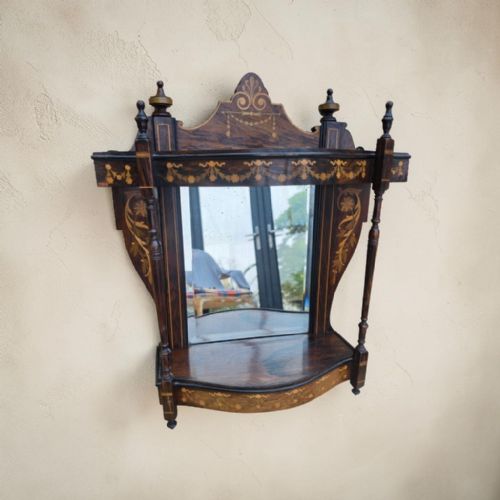
The physical format varies significantly, incorporating cheval mirrors, wall mirrors, and adjustable shield mirrors. Makers utilise brass fittings and inlaid woods to frame the glass, placing functionality alongside decorative presence.
Materials and construction
Cabinet makers constructed these frames using solid timbers and veneers such as mahogany, oak, burr walnut, and maple. Workshops selected these woods for their grain patterns and structural stability, often applying polished or limed finishes.
The mirror glass itself is typically bevelled and set into adjustable frames supported by brass pivots or wooden arms. Joinery techniques range from traditional dovetailing in the accompanying drawers to specialised framing for triple-plate arrangements.
Materials represented across the selection include brass, metal, glass, oak, mahogany, walnut, and burr walnut.
Judging the standard
Quality in a vanity mirror rests upon the selection of timber figures, such as burr walnut or figured mahogany, and the crispness of any applied carving or inlay. Superior pieces exhibit harmonious proportions between the glass frame and the supporting chest or base.
The integrity of the original mirror glass and the precision of the brass or wooden adjustment mechanisms separate standard regional items from high workshop production. Maker attribution, through labels or distinctive regional styles, elevates the standing of a piece.
Maples of London and Paris·Heals·Lamb of Manchester·Shapland and Petter·Maurice Adams
The Vintage Bedroom Vanity Mirror Glossary
- Cheval mirror
- A freestanding full-length mirror hung on a vertical frame with pivots that allow it to tilt. This form emerged in the eighteenth century and remained popular through the Edwardian period.
- Triplate dressing table
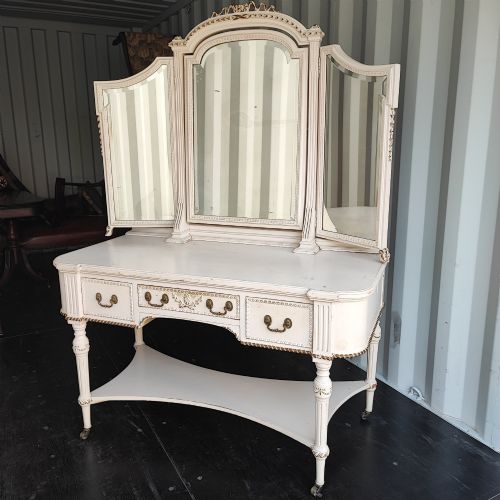
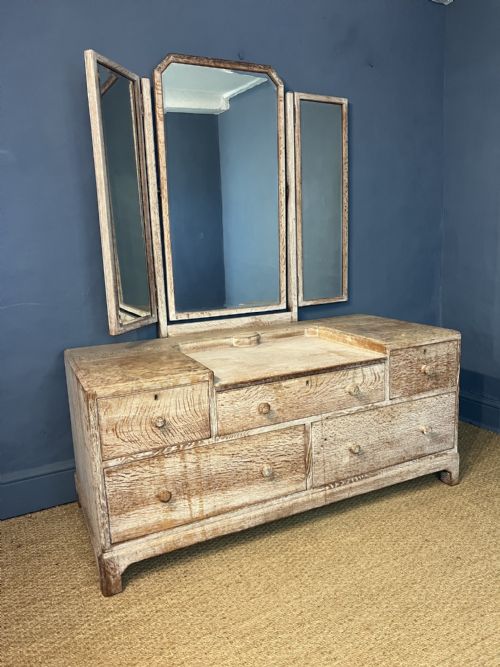
- A vanity mirror featuring three panels, typically with a larger central glass and two smaller adjustable side wings. This arrangement allowed the user to view angles from the side.
- Limed oak
- A wood finish created by applying a white pigment or lime to oak to lighten its tone and highlight the grain. This technique gained prominence during the Art Deco period.
- Chinoiserie
- European decorative style inspired by Chinese art, typically involving painted or lacquered motifs on a dark background. It appears on occasional ebonised Victorian dressing mirror frames.
Vintage Bedroom Vanity Mirror: Frequently Asked Questions
How do I date a vanity mirror?
Dating relies on identifying the underlying wood species, construction methods like dovetailing, and stylistic markers such as Edwardian inlay or Art Deco geometry.
Matching the mirror style to recorded periods like Victorian or Georgian helps confirm the approximate decade of manufacture.
Were these mirrors originally attached to tables?
Many vanity mirrors were manufactured as integral components of dressing chests or tables, fixed with support arms.
Others functioned as standalone table top pieces with small drawers or portable frames designed to sit upon a washstand or chest.
How do I integrate one into a modern room?
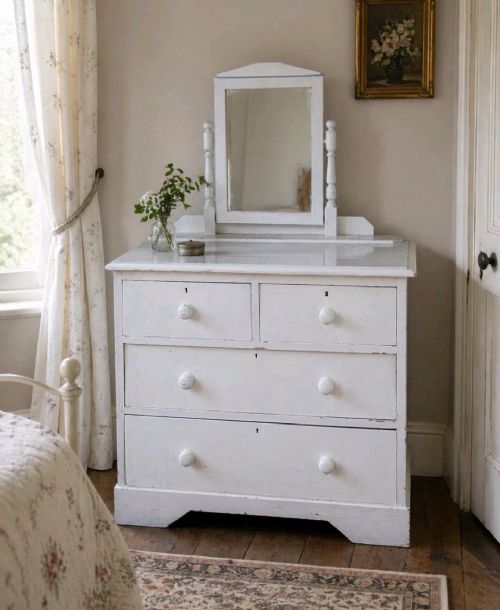
Placing a vintage vanity mirror atop a modern chest of drawers or using a cheval mirror introduces warm wood tones and historic texture to a contemporary interior.
Ensure the scale of the mirror balances proportion with the surface or floor space it occupies.