






Vintage Barware Glassware
Vintage barware glassware brings decades of drinking culture to the table, offering everything from Victorian spirit decanters to Art Deco cocktail sets.
Vintage Barware Glassware
When you search for vintage barware glassware, you encounter a wide selection of functional drinking vessels and serving pieces spanning the Victorian, Edwardian, and Art Deco periods. These items range from single spirit decanters and whiskey tumblers to matched sets of champagne coupes and cordial glasses.
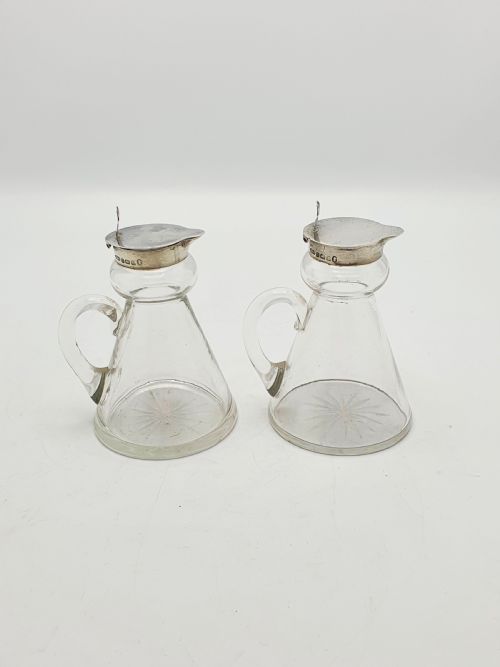
The objects appearing on this page originate predominantly from British and European workshops, featuring distinct forms such as personal champagne ice buckets, silver-mounted whiskey noggins, and liqueur sets complete with trays. Edwardian cut glass decanters and Art Deco enamel sets represent the core of what is available.
Buyers will find both individual serving pieces and larger coordinated suites designed for entertaining. The selection covers everyday glassware alongside formally decorated crystal intended for display and special occasions.
How vintage barware glassware was made
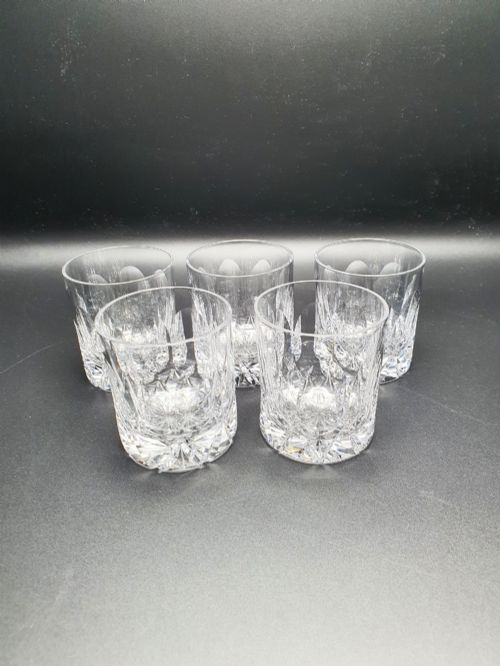
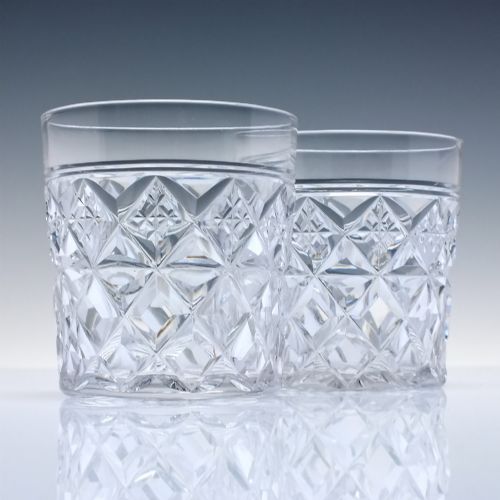
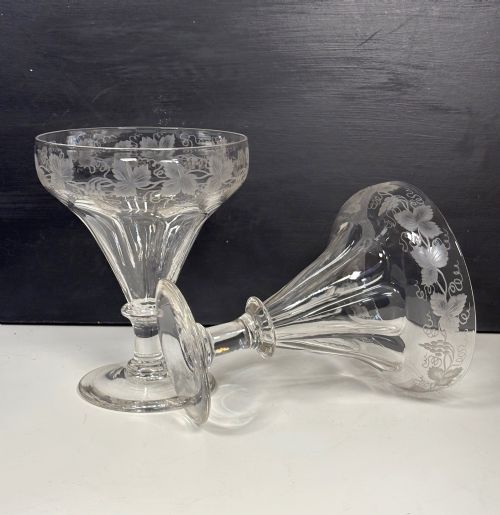
Makers utilised clear and coloured glass, lead crystal, and cut glass, frequently combining them with silver plate mounts and enamel decorations. Vessels were often optically blown or heavily cut to catch the light, while others received intricate surface engraving with floral or geometric motifs.
Specialised techniques included acid etching, over-crystal casing, and hand-painting with enamel colours or gold leaf. Silver elements were hallmarked to record the assay office and year of manufacture.
Vintage Barware Glassware Retail Price Guide 2026
Typical asking prices for vintage barware glassware among the pieces listed under this phrase on Sellingantiques today, from the lower quarter to the upper quarter. They describe what is for sale here now, not the wider market.
Listings span the Victorian, Edwardian, and Art Deco eras, featuring materials from simple clear glass to heavy cut crystal and silver plate.
What varies in quality in vintage barware glassware
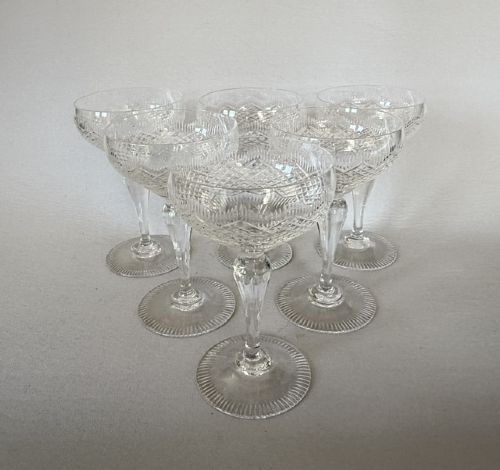
Quality rests on the depth and crispness of the glass cutting, the clarity of the crystal, and the precision of any surface engraving or enamel work. Superior pieces show sharp facets without wobbles and consistent wall thickness across matched sets.
The integrity of integrated elements, such as fitted silver collars on whisky noggins or the exact matching of glasses within a harlequin or full decanter set, distinguishes standard utility wares from finer workshop productions.
James Powell·Saint-Louis
The Vintage Barware Glassware Glossary
- Decanter
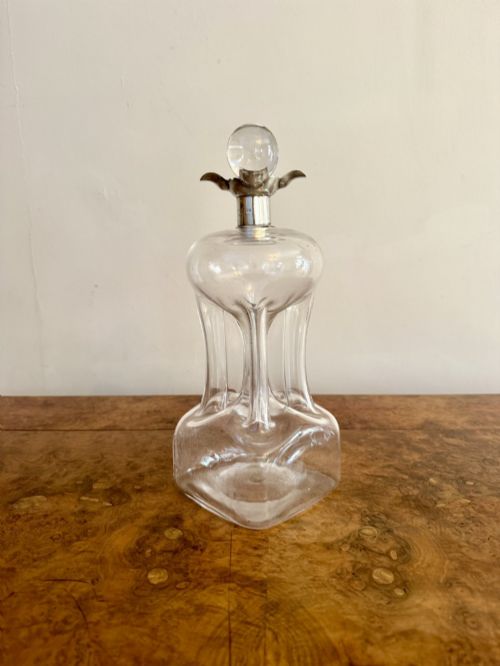
- A vessel used for holding and serving spirits or wine, usually fitted with a stopper. They appear in clear glass, coloured glass, and heavy cut crystal.
- Champagne coupe
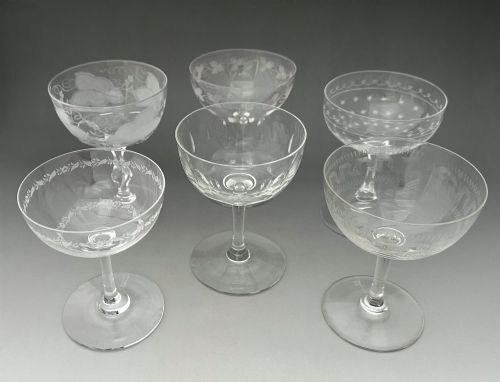
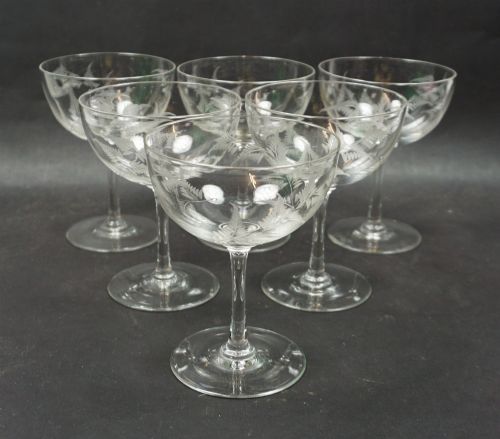
- A shallow, broad-bowled stemmed glass traditionally used for sparkling wine. These frequently feature wheel-engraved ferns, flutes, or gold trim.
- Whiskey noggin
- A small personal spirit decanter, often mounted with a sterling silver rim and handle. They were designed for individual use alongside a water jug.
- Over-crystal
- A technique where a layer of coloured glass is cased over a clear crystal body and partially cut away to reveal the contrast. This creates deep green or cranberry tones against clear interiors.
- Optically blown
- A glassblowing method that introduces ribs or patterns into the vessel wall by blowing the molten metal into a ribbed mould. It produces subtle light-refracting textures in the finished piece.
Vintage Barware Glassware: Frequently Asked Questions
How do I date vintage glassware?
Dating relies on stylistic markers, manufacturing methods, and occasional factory marks or silver hallmarks. Edwardian and Victorian pieces often display heavier lead content and hand-cut facets.
Later Art Deco examples shift towards geometric enamel decoration, Czech origins, or integrated matching trays.
Are decanter sets complete with glasses?
Many decanter sets include a matching group of six glasses designed for spirits, cordials, or liqueurs. Some listings also incorporate the original serving tray.
Individual decanters and assembled harlequin sets are equally common across different periods.
What is the difference between crystal and glass?
Crystal contains mineral additives like lead oxide, which increases the weight, refractive index, and clarity of the material. This allows for deeper, sharper facet cutting.
Standard glass is lighter and often relies on surface engraving, enamelling, or optical blowing for its visual effect.
How should I care for antique barware?
Hand washing in lukewarm water with mild detergent protects delicate enamel work, gold leaf, and sterling silver mounts. Avoid sudden temperature changes to prevent thermal shock in old glass.
Storing decanters with their stoppers slightly ajar helps prevent moisture retention inside the vessel.