
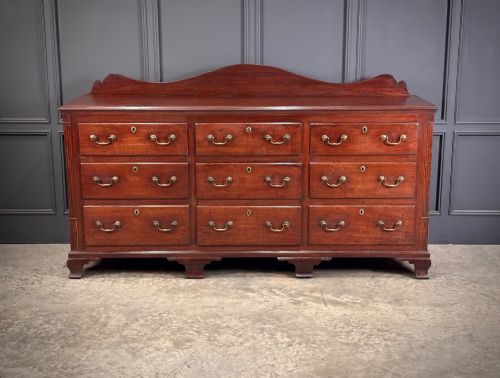
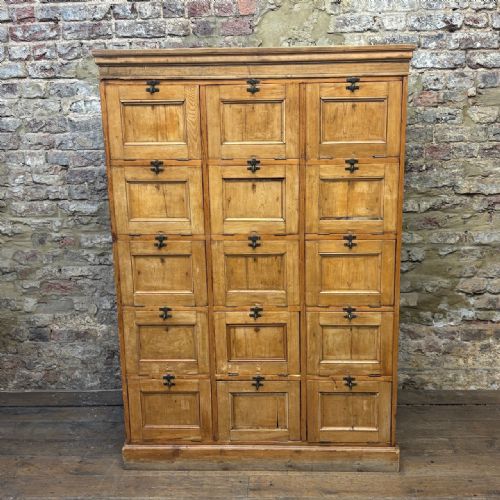
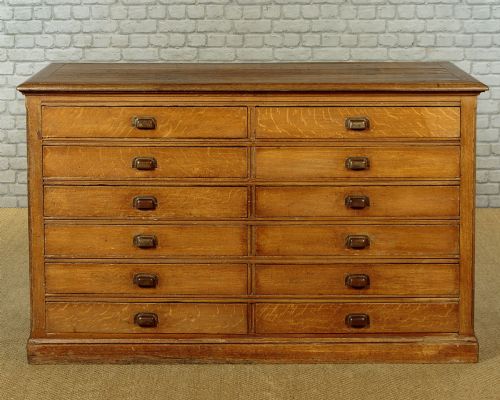
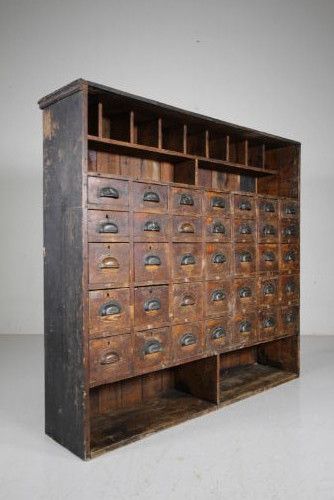
Vintage Bank of Drawers
A vintage bank of drawers offers utilitarian multi-drawer storage built for shops, offices and workshops.
Vintage Bank of Drawers
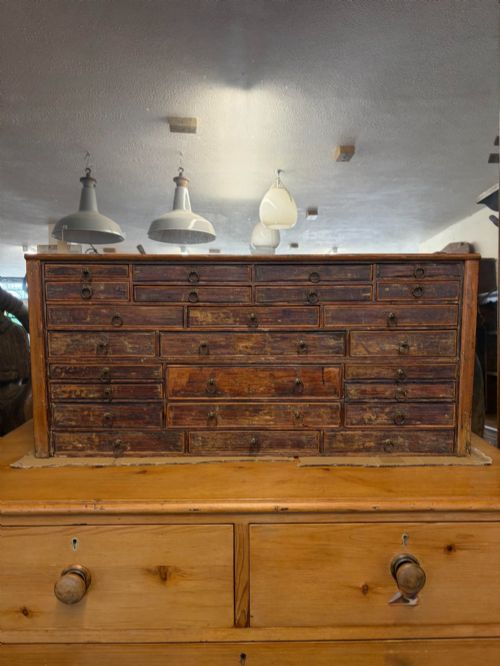
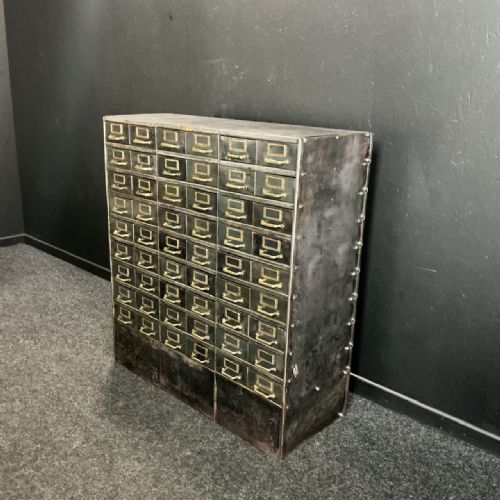
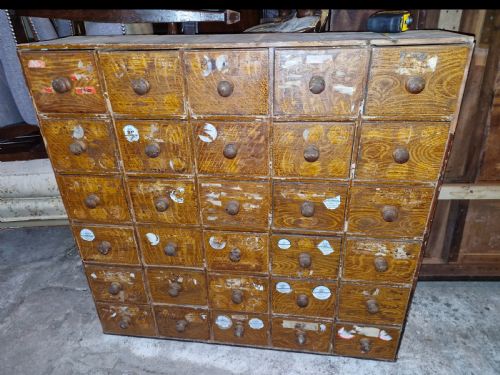
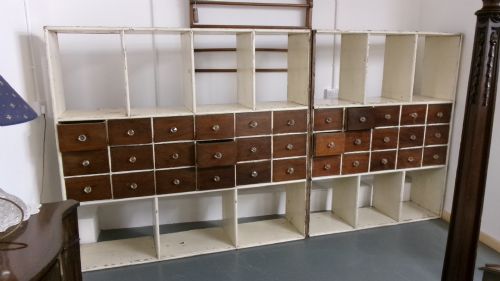
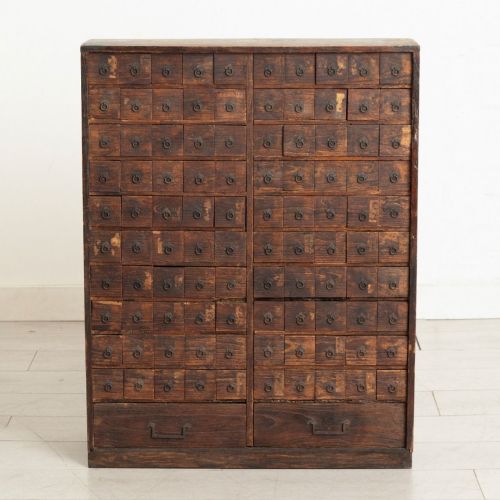
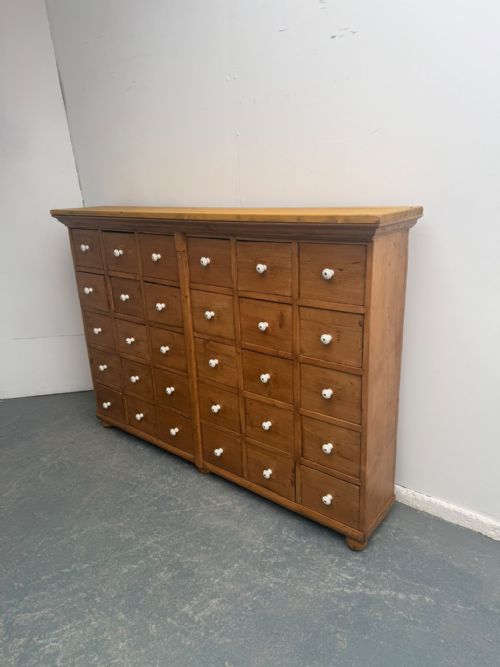
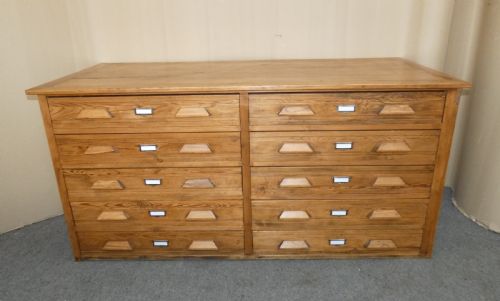
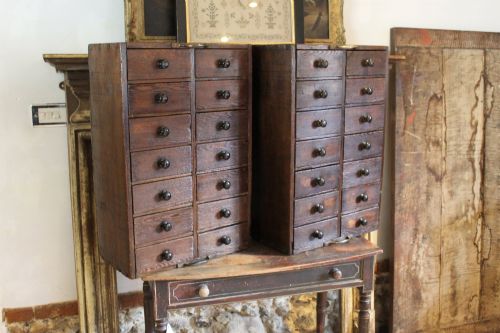
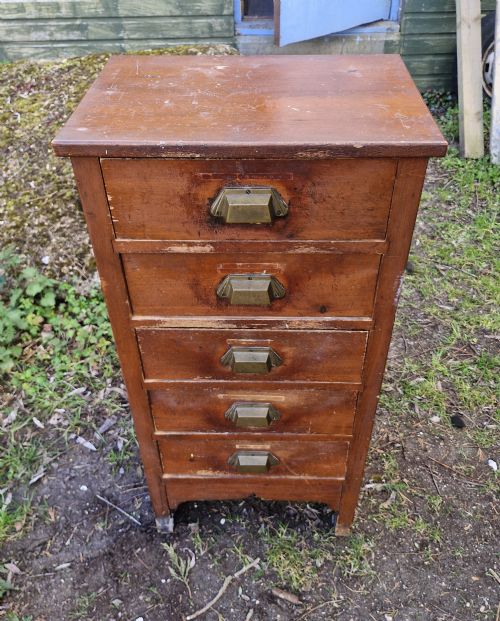
A vintage bank of drawers brings heavy-duty compartmentalised storage into domestic interiors, originating from chemist shops, haberdashers, offices and workshops. These multi-drawer units range from shallow filing banks to substantial fifty-drawer shop fittings.
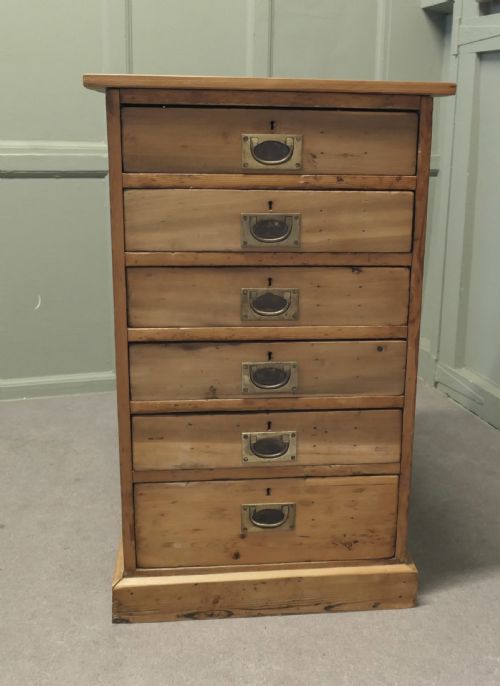
The versions most commonly met span the Victorian period through to the 1930s, constructed in woods like pine, mahogany, oak and walnut with industrial utility forms. Shoppers encounter tall apothecary cabinets, shallow filing sections and workshop chests equipped with numerous small compartments.
Materials and construction methods
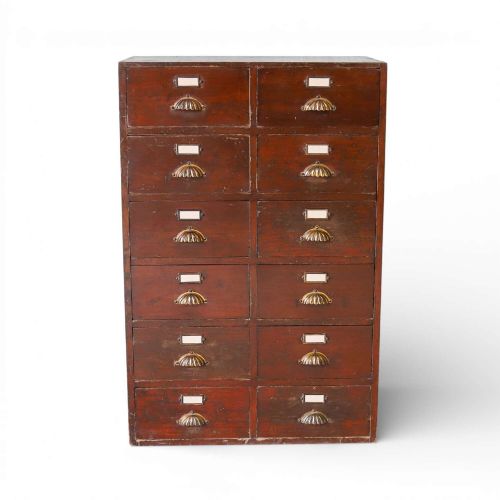
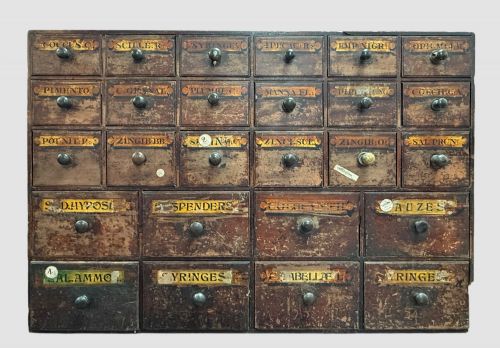
Construction relies heavily on solid pine, mahogany and oak, frequently paired with robust brass and iron hardware. Many pieces retain original painted finishes, shell pulls and integrated label holders suited to intensive daily use in commercial settings.
Cabinetmakers joined heavy carcases using traditional housing and dovetail methods to support dense banks of drawers. Industrial variants incorporate ironmongery and locker doors alongside timber frameworks designed to carry substantial weight.
Listings feature pieces spanning the Victorian era through the 1920s, constructed in pine, mahogany, oak and walnut.
Distinctions in quality and finish
Quality rests upon the scale of the timber framework, the integrity of the original hardware such as brass shell pulls and label holders, and the complexity of the internal configuration. Substantial multi-drawer units from chemist shops and haberdashers display finer cabinet work than standard office filing furniture.
Original painted surfaces or untouched patinated wood finishes elevate the standing of a piece. Retaining unblemished original ironmongery and matching drawer tallies separates standard utility items from exceptional workshop fittings.
D Napier and Sons
The Vintage Bank of Drawers Glossary
- Shell pull
- A pressed metal or brass handle shaped like a half-dome, frequently incorporating a label holder for categorising contents. These fittings appear routinely on apothecary and filing cabinets.
- Haberdashery cabinet
- A multi-drawer display unit originally utilised in drapery and cloth shops to organise small goods and ribbons. They often feature glass-fronted sections or numerous shallow drawers.
- Chemist shop fitting
- Commercial storage furniture built for nineteenth-century pharmacies to house dry and liquid medicines. These tall units contain extensive rows of narrow drawers.
- Dovetail
- A traditional wood joint interlocking wedge-shaped fingers to secure drawer corners. This method ensures lasting durability in heavily loaded storage units.
- Patina
- The surface sheen and colour acquired by wood and metal through decades of handling and ageing. Untouched surfaces display this characteristic depth.
Vintage Bank of Drawers: Frequently Asked Questions
What is a vintage bank of drawers used for?
These multi-compartment units served commercial and administrative purposes in chemists, haberdashers, workshops and offices. They organised small stock, documents and tools efficiently.
Today, homeowners utilise them for sorting paperwork, kitchen storage or bedside organisation while retaining historic character.
How do I date a vintage bank of drawers?
Dating relies on timber selection, handle styles, construction methods and recorded periods ranging from the Victorian era to the 1930s. Mahogany and heavy pine point to nineteenth-century origins.
Hardware details like brass shell pulls and patent metal label holders offer precise chronological markers for pieces built around nineteen-ten.
Are these drawers suitable for modern office use?
Shallow filing banks and dedicated office cabinets integrate smoothly into contemporary workspaces for stationery and document storage. Their numerous small compartments suit desktop organisation.
Robust construction ensures these historic pieces withstand daily operational demands.