


Commercial Shop Display Counter
A commercial shop display counter organises trade and frames goods through glass and timber.
Commercial Shop Display Counter
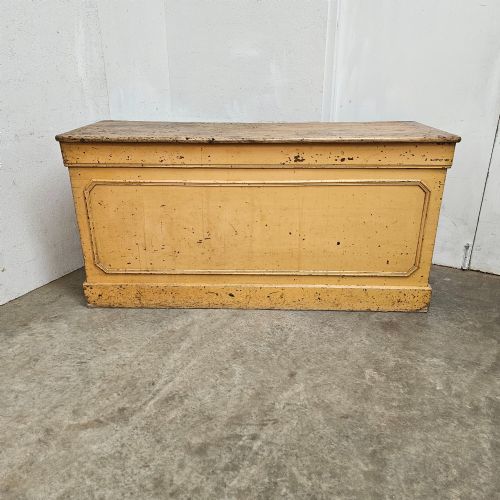
A commercial shop display counter serves as the functional anchor of a retail interior, designed to present merchandise to customers while keeping stock secure. These pieces range from substantial timber serving units to glazed table-top cabinets intended for specialised goods.
The selections on this page span the Victorian era, the Edwardian period, and the interwar years, reflecting the changing needs of chemists, drapers, and confectioners. Visitors will frequently encounter large mahogany or oak counters alongside smaller countertop glass cases.
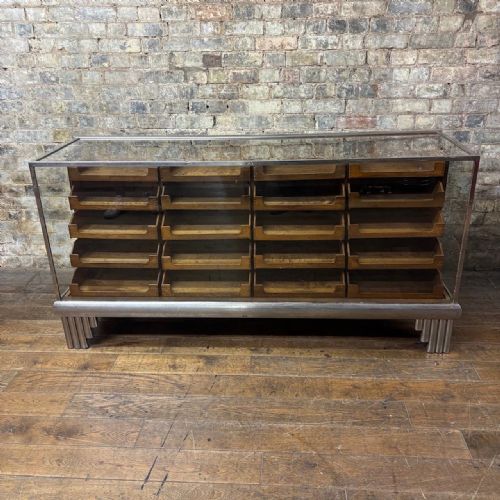
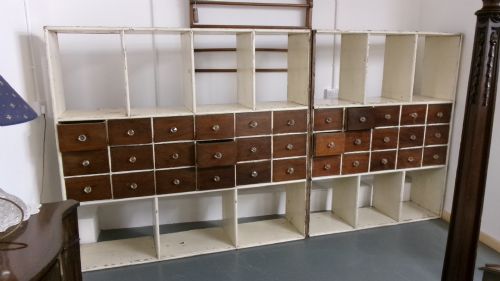
Forms include bow-end display units, banks of drawers for haberdashery, and specialised brand-specific cabinets for chocolate or sewing cottons. Each type illustrates how shopkeepers engaged the public before the era of self-service retail.
Materials and construction
Makers relied on durable timbers such as mahogany, oak, and pine to construct the foundational frames and cabinetry of these units. These hardwoods and softwoods were frequently combined with large panes of glass to maximise visibility for the goods inside.
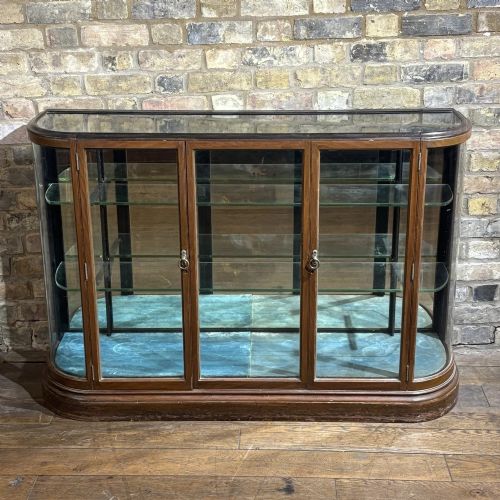
Metal elements including brass, aluminium, bronze, and chrome appear across later examples, reinforcing corners and framing sliding doors. Interiors often incorporated mirrored panels to reflect light and make the displayed contents appear more abundant.
Specialised fixtures such as velvet linings, brass-framed display cases, and original painted finishes show the functional attention paid to retail interiors. Joinery techniques ensured these heavily used pieces could withstand daily public interaction.
Listings feature oak, mahogany, pine, and brass across pieces spanning the Victorian period through the 1930s.
Quality variations
The distinction between standard utility fittings and exceptional retail furniture lies in the ambition of the design and the grade of timber selected. Mahogany framing and sophisticated glazing shapes, such as bow ends or pentagonal geometry, indicate a higher tier of shopfitting.
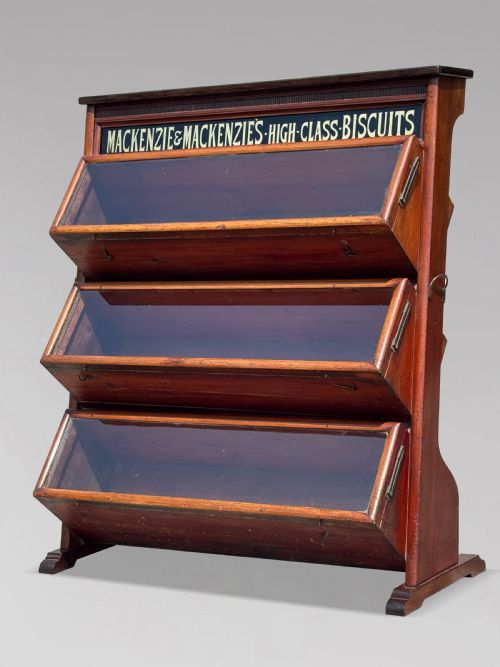
Maker attribution elevates certain examples, particularly those produced by established architectural joinery firms and specialist outfitters. The presence of original branding, whether etched glass or sign-written advertising for confectioners and chemists, adds specific historical interest.
The integrity of original elements, including glass panels, mirrored interiors, and functioning hardware, defines the condition and preservation of each piece. Alterations or replacements to the structural framing shift an example away from its original commercial context.
Dudley & Co·John Stow Ltd of Bradford·Manoah Rhodes & Sons Ltd·F. Sage & Co·Saml. Elliott & Sons·Pollards
The Commercial Shop Display Counter Glossary
- Haberdashery cabinet
- A set of shallow drawers, frequently fitted with glass fronts, originally used in drapery shops for ribbons and threads. These units allowed shopkeepers to sort small goods efficiently.
- Bow-end
- A curved glass or timber termination at the end of a counter or cabinet. This shape softened the corners of retail spaces and improved viewing angles.
- Toleware
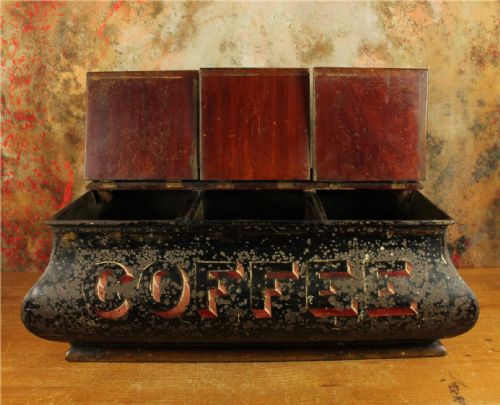
- Painted or japanned metalware produced in tin, often found in cafe and tea room storage boxes. The technique involved applying lacquers and pigments to metal substrates.
- Chemist shop fitting
- Specialised cabinetry and drawer banks designed for pharmacies and apothecaries. These pieces often feature numerous small compartments for dry ingredients and medicines.
- Advertising cabinet
- A glazed display case bearing manufacturer branding for confectioners or tobacco brands. Retailers used these to promote specific commercial products on their counters.
Commercial Shop Display Counter: Frequently Asked Questions
What were commercial shop display counters used for?
These counters functioned as the primary barrier and presentation surface in Victorian and Edwardian retail spaces. Shopkeepers used them to keep delicate or valuable goods visible to customers while preventing handling.
Different trades required specific designs, from drapers needing shallow drawer banks for ribbons to confectioners using glazed table-top cabinets for chocolates.
How do I date a shop display counter?
Dating relies on observing the prevailing timber choices, hardware materials, and structural styles associated with different decades. Victorian pieces frequently utilise heavy mahogany with traditional joinery, while 1930s examples introduce aluminium frames and Art Deco legs.
Maker plaques and branded advertising panels also provide specific chronological markers that link the furniture to known retail suppliers.
How can I integrate a shop counter at home?
A shop counter provides practical surface space and enclosed storage suited to domestic interiors such as kitchens, hallways, or living rooms. The glazed sections allow for the display of collections, ceramics, or books away from dust.
Larger freestanding counters work well as kitchen islands or room dividers, while smaller countertop cabinets sit easily on sideboards or tables.
What is a haberdashery cabinet?
A haberdashery cabinet is a specialised storage unit featuring multiple shallow drawers, often with glass panels inset into the pulls or fronts. They were built for drapers to organise small sewing items, buttons, and textiles.
Collectors prize these cabinets for their modular organisation and the visual rhythm of the repeating drawer fronts.