



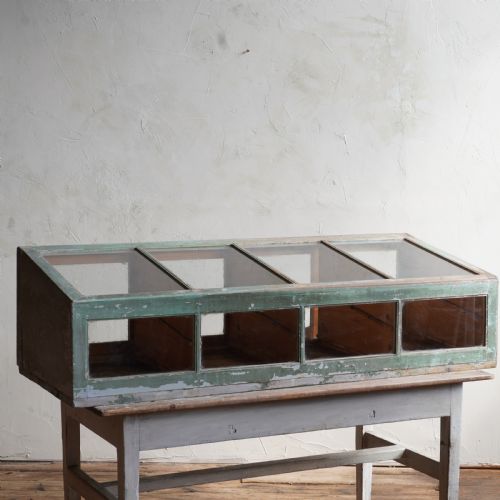


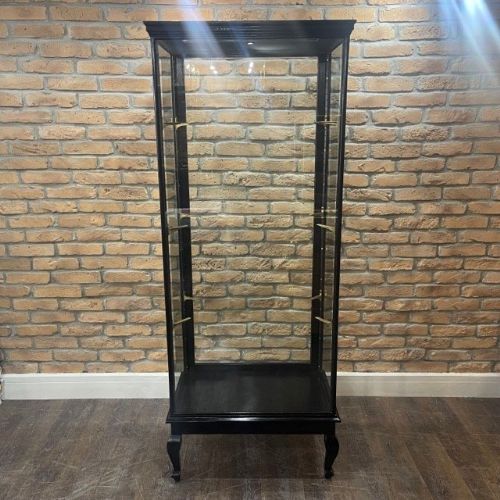


Glazed Haberdashery Cabinet
These glazed haberdashery cabinet pieces bring commercial shop utility into domestic spaces with glass panelling and timber frames.
Glazed Haberdashery Cabinet
A glazed haberdashery cabinet brings the practical display methods of nineteenth and early twentieth century retail spaces directly into a room. These pieces span periods from the Victorian era and Edwardian years through to the 1920s and 1930s, taking the form of countertop cases, tall towers, multi-drawer units and shop counters.
The versions most commonly met on this page include tabletop display cabinets and mahogany shop counters with glazed panels, originally utilised in commercial environments such as tailors, apothecaries and sweet shops.
Materials and Construction
Makers constructed these cabinets using sturdy timbers such as mahogany, oak, walnut and teak, paired with large glass panes to maximise visibility for merchandise.
Brass hardware, mirrored interiors and occasional painted finishes or hand sign-written lettering complete the construction, reflecting the durable requirements of commercial shop fittings.
Glazed Haberdashery Cabinet Retail Price Guide 2026
Typical asking prices for glazed haberdashery cabinet among the pieces listed under this phrase on Sellingantiques today, from the lower quarter to the upper quarter. They describe what is for sale here now, not the wider market.
Listings feature mahogany, oak, teak, and walnut timbers alongside brass hardware and glass.
Craftsmanship and Proportion
The distinction between tiers of quality rests on the selection of timber, the integrity of the joinery in heavy frames, and the original purpose of the fittings. Pieces produced by established shopfitters display finer detailing in the mouldings and cabinetry.
Proportion and scale also separate standard utility counters from substantial display cases or multi-drawer units designed for prominent placement in commercial premises.
F. Sage & Co.·E. Pollard & Co. Ltd.·Siegel·Jenners of Edinburgh
The Glazed Haberdashery Cabinet Glossary
- Haberdashery cabinet
- A storage unit originally built for retail textile sales, typically featuring multiple shallow drawers or glazed display sections.
- Countertop display cabinet
- A smaller glass-fronted case designed to sit upon a shop counter to showcase small goods to customers.
- Vitrine
- A glass display case or cabinet used for presenting objects or collections while protecting them from dust.
- Shop fitting
- Fixtures and furniture built specifically for commercial retail environments during the nineteenth and twentieth centuries.
- Ebonised
- Timber treated with a dark finish to imitate the appearance of ebony wood.
Glazed Haberdashery Cabinet: Frequently Asked Questions
What were glazed haberdashery cabinets used for?
These cabinets served in retail shops to display small merchandise like ribbons, threads, and accessories while keeping stock clean and organised.
Merchants placed them on counters or arranged them along shop walls so customers could view items clearly through the glass panels.
How do I date an antique shop cabinet?
Dating relies on observing construction methods, timber choices, and specific hardware styles associated with Victorian, Edwardian, or later twentieth century design.
Sign-writing, maker plaques, and stylistic influences such as Art Deco or Adam Revival also help narrow the period of manufacture.
Are these cabinets suitable for modern homes?
Their glass panels and timber frames allow them to function effectively in domestic spaces for displaying collections, books, or tableware.
Countertop versions sit on sideboards, while larger multi-drawer units and towers provide standalone storage in living areas or kitchens.
What is the difference between a vitrine and a haberdashery cabinet?
A vitrine generally focuses on open glass display for decorative items or collectibles, often featuring shelves and mirrored backs.
A haberdashery cabinet specifically incorporates multiple shallow drawers alongside glazed compartments, reflecting its origins in textile retail.