
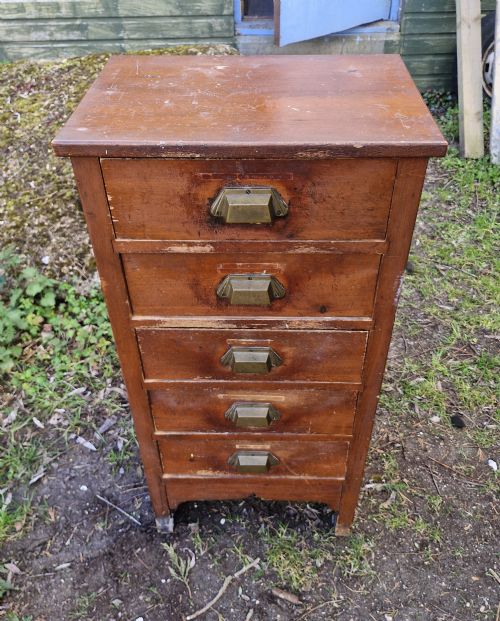
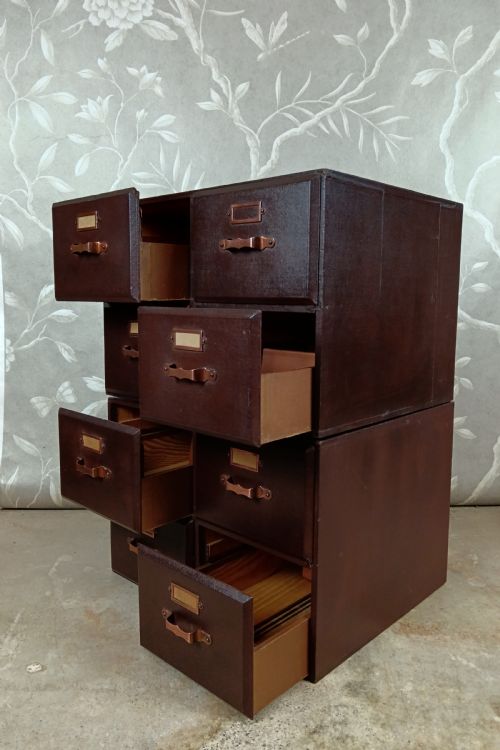


Edwardian Office Drawer Unit
These edwardian office drawer unit examples are purposeful pieces of period workspace furniture designed for organisation, offering robust utility and characterful timber construction.
Edwardian Office Drawer Unit
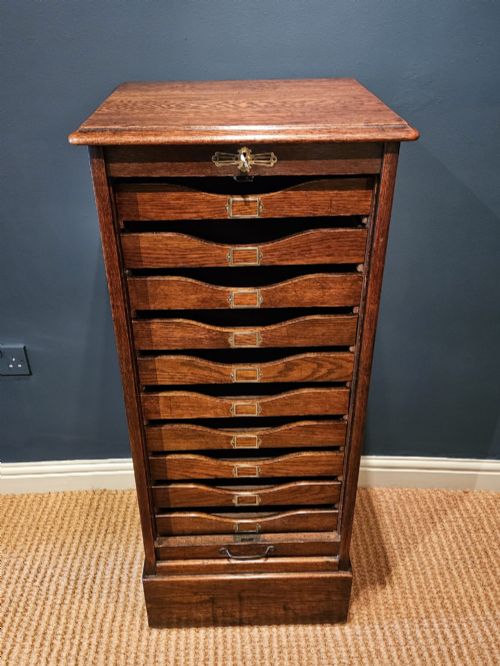
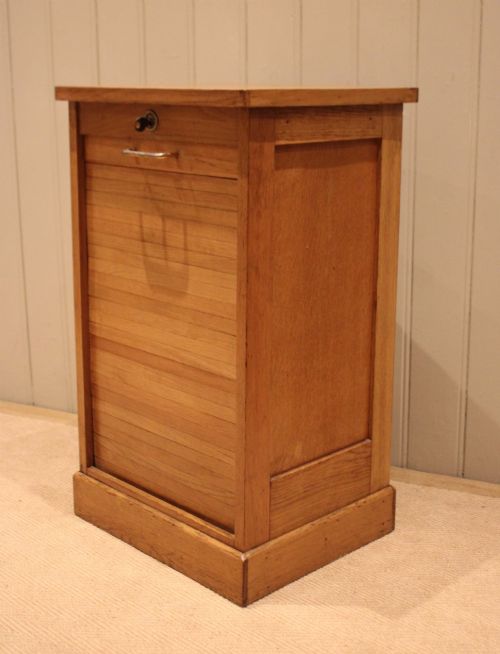
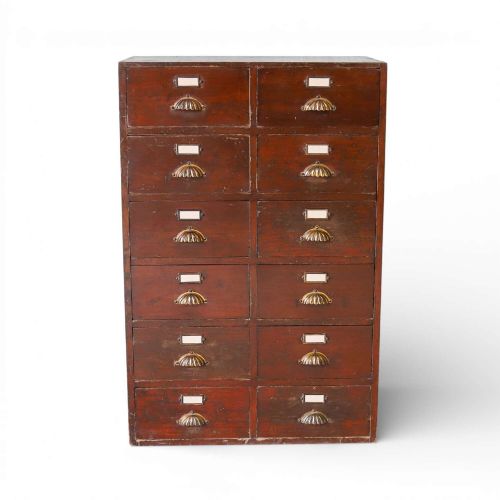
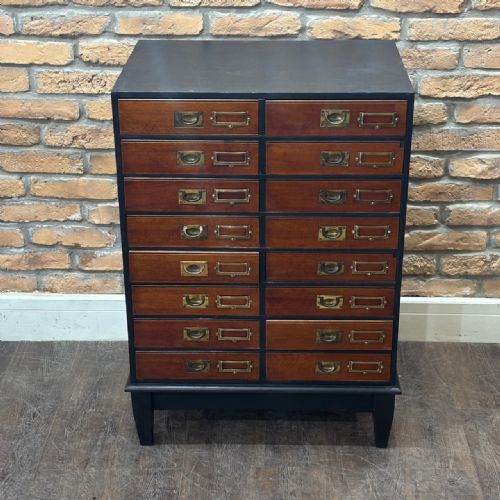
When searching for an edwardian office drawer unit, collectors encounter practical workspace forms ranging from banks of small drawers and library card files to patent letter files and tambour front filing cabinets. These items originate predominantly from the Edwardian era, alongside pieces spanning the 1900s, 1910s, 1920s, and late nineteenth century.
The versions most frequently met on this page include oak and mahogany filing cabinets, haberdashery cabinets, and multi-drawer units equipped with brass handles and label holders. They reflect the administrative requirements of early twentieth-century offices, libraries, and commercial businesses.
Materials and construction
The construction relies heavily on solid hardwoods and softwoods such as oak, mahogany, satin walnut, pine, and painted wood, often paired with structural metal and steel elements. Cabinetmakers built these pieces to withstand heavy daily office use.
Detailing includes functional brass hardware, original shell pulls, and patent mechanisms like tambour fronts and letter file systems. Surfaces display the natural grain of the timber alongside period finishes.
Listings feature oak, mahogany, satin walnut, and pine, complemented by brass and steel hardware.
Assessing quality in period office furniture
Quality rests on the selection of timber and the preservation of original hardware, such as brass handles and dedicated label holders. Finer examples retain their working patent mechanisms, smooth-sliding drawers, and intact tambour doors.
Proportion and scale also distinguish the range, from small proportioned light oak cabinets and pairs of satin walnut fronted drawer banks to larger multi-drawer filing units. The integrity of the original wood finish completes the distinction between utilitarian storage and refined office furniture.
Amberg·Shannon
The Edwardian Office Drawer Unit Glossary
- Tambour front
- A flexible sliding shutter door formed of narrow wooden slats running in grooves, commonly found on early filing cabinets to conceal the interior shelves or drawers.
- Shell pull
- A stamped or cast brass handle shaped like a stylized seashell, frequently incorporating a slot for a paper label on office furniture.
- Patent letter file
- A specialised mechanical filing system designed to hold and organise correspondence alphabetically or numerically, associated with makers such as Amberg.
- Haberdashery cabinet
- A multi-drawer retail or office unit featuring numerous shallow drawers originally intended for storing small goods or documents.
Edwardian Office Drawer Unit: Frequently Asked Questions
What is an edwardian office drawer unit?
An edwardian office drawer unit is a period storage piece built for business or institutional organisation, typically featuring multiple timber drawers or filing compartments.
These items encompass library card files, letter cabinets, and haberdashery units designed for early twentieth-century workspaces.
How were these cabinets used originally?
Businesses and institutions utilised these units to organise letters, documents, library cards, and small office supplies systematically.
Dedicated label holders on the drawers allowed clerks to categorise contents quickly and maintain efficient daily administration.
What woods were used for these units?
Cabinetmakers primarily used oak and mahogany, alongside satin walnut, pine, and painted wood surfaces.
Hardware components incorporated brass handles, steel mechanisms, and metal fittings to ensure durability under daily use.
How do I identify an Edwardian piece?
Edwardian office pieces are identified through their characteristic timber selection, functional brass hardware, and construction methods typical of the early twentieth century.
Details like original shell pulls, patent filing mechanisms, and label holders help distinguish pieces from the Edwardian era and the 1920s.
How do I live with a drawer unit?
These cabinets integrate easily into modern home offices, studies, or living spaces as practical storage for stationery, paperwork, or collections.
Their compact proportions and warm timber tones suit both traditional interiors and contemporary workspaces.