


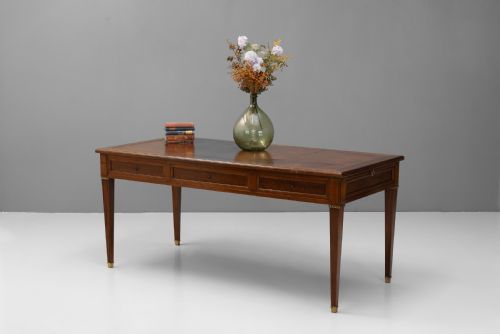

Brown Wooden Office Drawers
Brown wooden office drawers provide functional storage with period character, ranging from pedestal desks to filing cabinets.
Brown Wooden Office Drawers
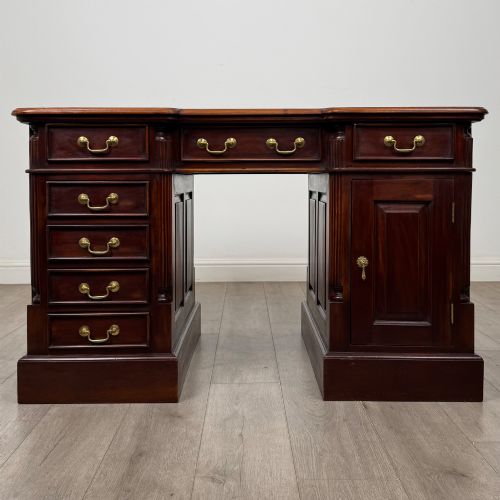
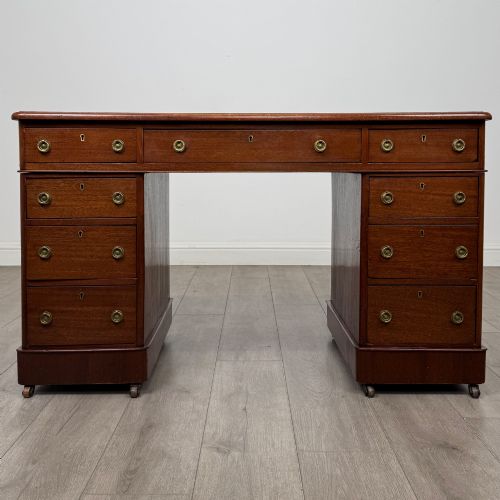
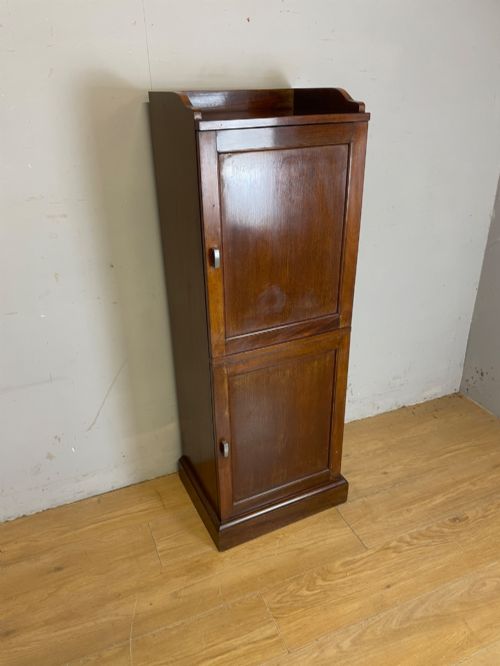
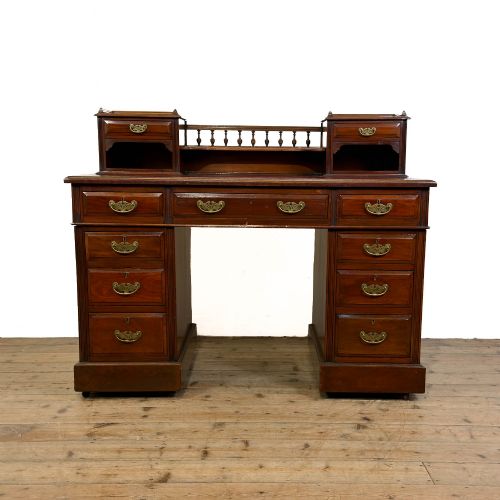
Brown wooden office drawers encompass a range of functional workspace furniture designed for storage and writing. The selection centres on pedestal desks, writing tables, filing cabinets, and chests of drawers originating from the nineteenth and early twentieth centuries.
Victorian and Edwardian examples predominate, alongside pieces from the Art Deco period and Georgian styles. Buyers encounter solid mahogany, walnut, and oak constructions equipped with banks of drawers or fitted writing compartments.
How they were made
Cabinet makers utilised dense hardwoods such as mahogany, walnut, and oak to construct the main bodies and drawer carcases. Secondary timbers appear in drawer linings, while brass hardware provides functional handles and pulls.
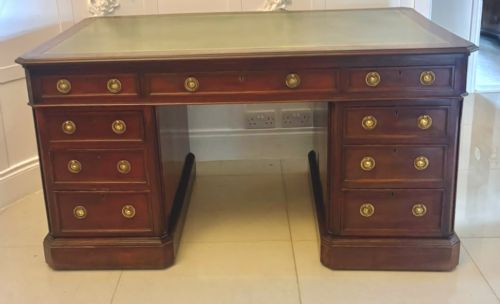
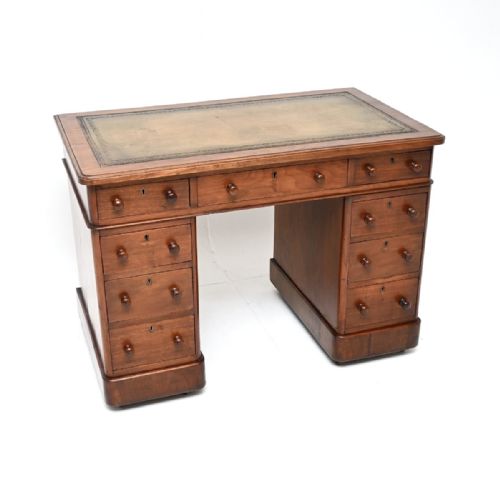
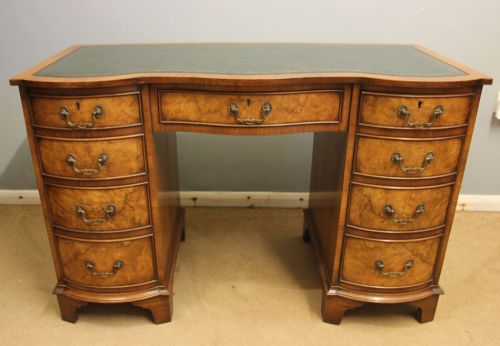
Many writing surfaces incorporate inset leather tops tooled with gilt borders. Construction techniques range from traditional cabinet making with dovetailed drawer joints to patent filing mechanisms and industrial iron fittings.
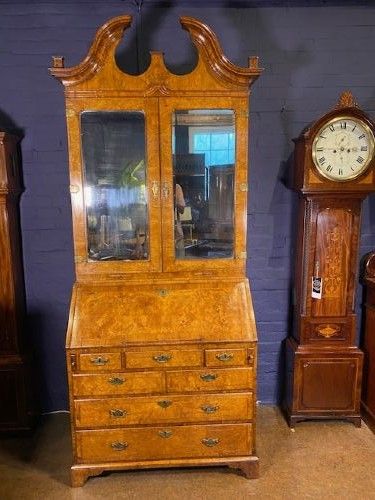
Form variations include partners desks, Davenport desks, music cabinets, bureau bookcases, and patent card filing sets.
What varies in quality
Quality separates through the selection of timber veneers, such as burr walnut or figured mahogany, and the precision of the cabinet work. Maker attribution to firms like Maple & Co or Hobbs & Co elevates a piece.
The integrity of original brass handles, working locks with keys, and unaltered leather writing surfaces distinguish superior examples from standard utility office furniture.
Hobbs & Co·Maple & Co·Maurice Adams
The Brown Wooden Office Drawers Glossary
- Pedestal desk
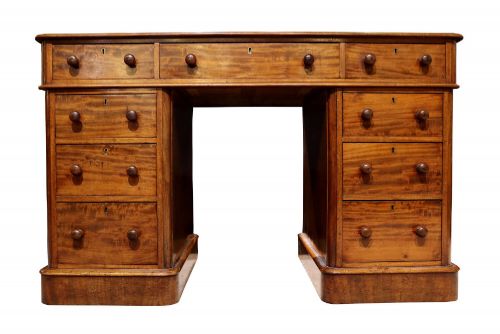
- A heavy office desk featuring two separate banks of drawers that support the main writing surface. These freestanding pieces often include central drawers and modesty panels.
- Kneehole desk
- A compact pedestal desk design featuring a central recessed space for the user's legs beneath the writing surface. This form typically contains a smaller single drawer above the opening.
- Partners desk
- A large double-sided desk designed for two people to work opposite one another. These pieces feature drawers and cupboards accessible from both sides of the base.
- Bureau bookcase
- A writing cabinet featuring a sloping fall-front flap that opens to reveal internal stationery compartments. Shelved or glazed bookcase sections sit above the bureau body.
- Filing cabinet
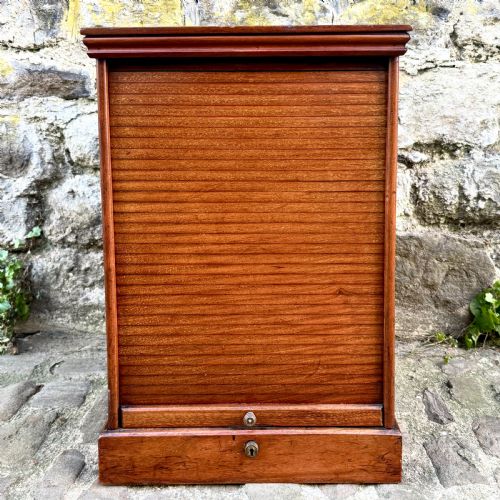
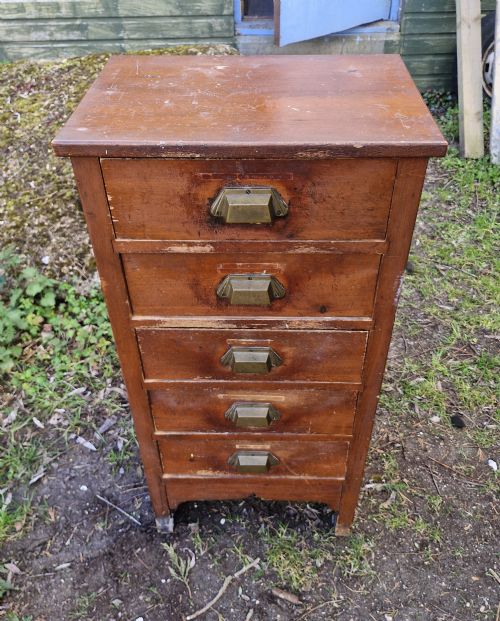
- A vertical or horizontal piece of office furniture designed to organise documents in dedicated drawers. Early examples utilise patent locking mechanisms and index systems.
Brown Wooden Office Drawers: Frequently Asked Questions
What is a pedestal desk?
A pedestal desk is a heavy freestanding office table supported by two vertical columns of drawers. The central section remains open for seating.
These pieces emerged in various sizes during the nineteenth century to serve administrative and writing tasks in private studies and offices.
How do I care for leather desk tops?
Leather writing surfaces require gentle cleaning with a soft, dry cloth to remove dust. Specialised leather dressings prevent drying and cracking over time.
Avoid placing hot cups or liquids directly onto the hide to preserve the original gilt tooling and surface sheen.
What distinguishes Victorian from Edwardian desks?
Victorian desks generally feature heavier proportions, dark mahogany or walnut timbers, and elaborate brass or ceramic handles. Construction focuses on robust solidity and deep drawer configurations.
Edwardian pieces often display lighter satinwood inlays, cleaner geometric lines, and occasional influences from Georgian revival styles.
How were old filing cabinets used?
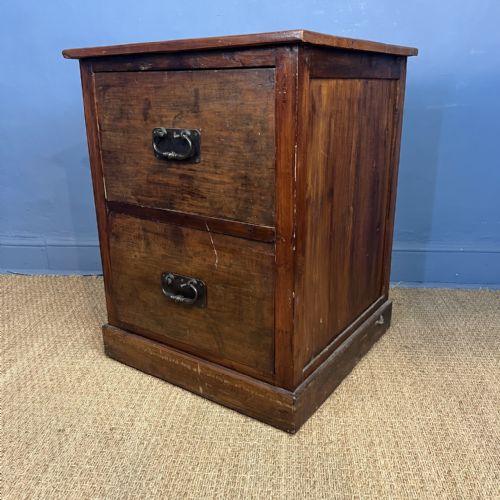
Older filing cabinets stored correspondence, library cards, and business documents within specialised wooden drawer systems. Many utilised patent mechanisms to secure confidential files.
Offices and institutions relied on these robust units before modern metal storage became standard.