



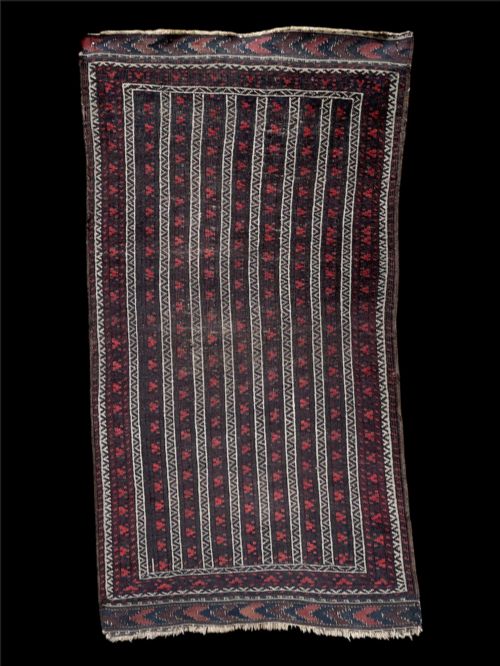


Vintage Baluch Weave
Vintage baluch weave pieces are nomadic tribal textiles carrying deep geometric patterns and rich natural colour palettes woven by weavers across Persia and Afghanistan.
Vintage Baluch Weave
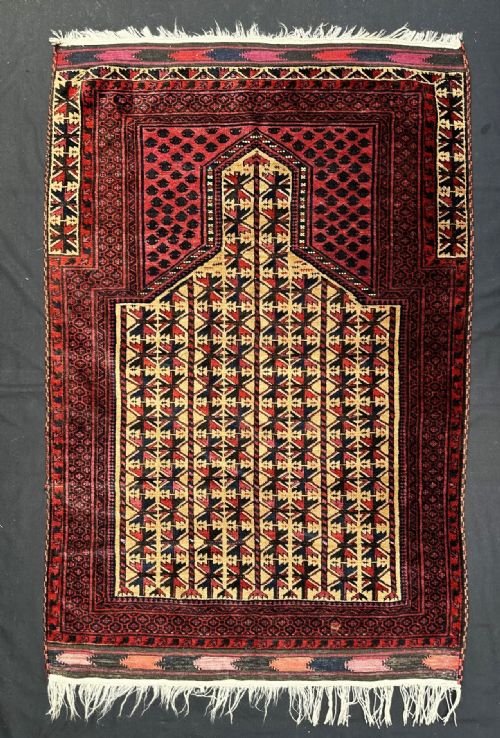
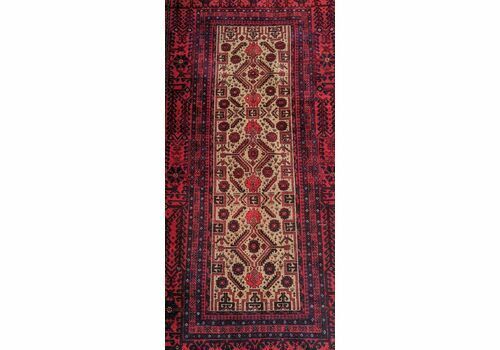
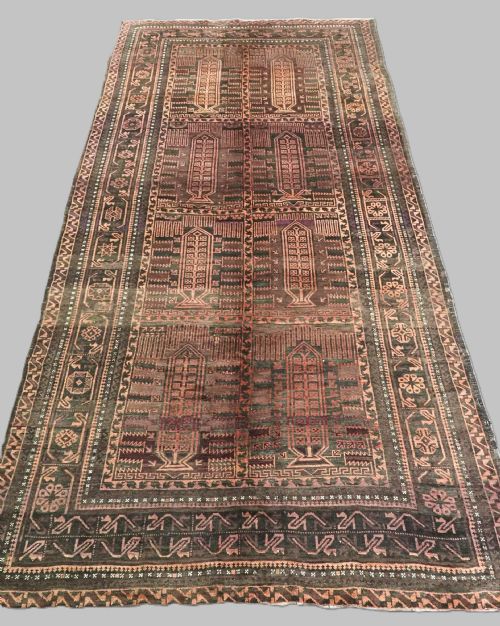
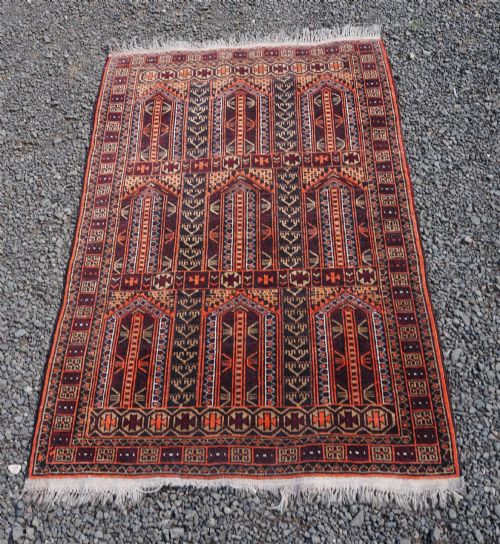
When you search for vintage baluch weave, you encounter hand-knotted rugs, flatwoven kilims, and utilitarian tribal bags created across nineteenth and twentieth century Afghanistan and Persia. The pieces appearing most frequently on this page are floor rugs and utilitarian storage bags bearing traditional motifs like the pencil box design or repetitive mihrabs.
Nomadic tribes and village weavers produced these textiles for personal utility rather than external export markets. They range from small prayer rugs and Sofreh eating cloths to substantial main carpets woven to withstand daily nomadic life.
Materials and construction methods
Weavers utilised hand-spun wool, cotton foundations, and occasional camel hair or goat hair for durability, binding the pile tightly against the elements. Natural dyes provided the deep tones foundational to the aesthetic, sourced from local plants and minerals.
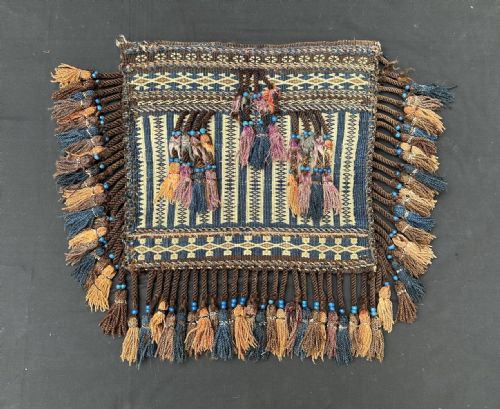
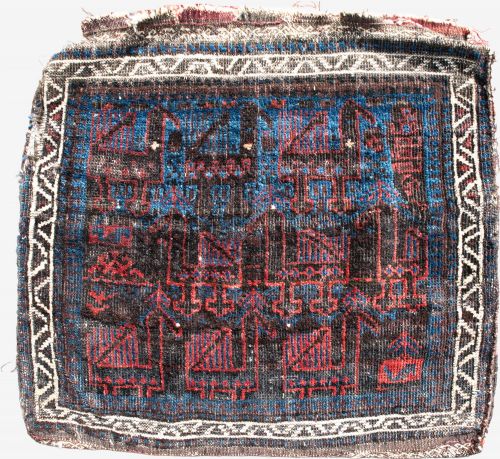
Structure varies between knotted pile rugs and flatwoven kilims or functional storage bags featuring banded weft work design. Artisans incorporated details like glass beads or double-sided construction to enhance specific utilitarian forms.
Vintage Baluch Weave Retail Price Guide 2026
Typical asking prices for vintage baluch weave among the pieces listed under this phrase on Sellingantiques today, from the lower quarter to the upper quarter. They describe what is for sale here now, not the wider market.
The listings span from the late nineteenth century through to the 1930s, featuring wool, cotton, and natural dyes.
Evaluating quality and execution
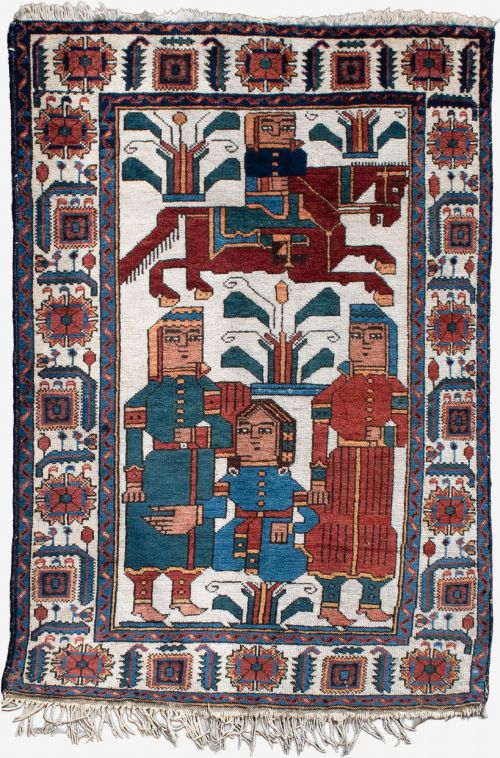
Quality rests in the precision of the tribal motifs and the depth of the natural dyes utilised across the surface. Finer examples display intricate repeat star designs, clear pencil box medallions, or well-executed pictorial elements without muddy colour transitions.
The integrity of the original weave, survival of complete borders, and retention of original backings on storage bags elevate certain pieces above standard utility grades. Execution of complex geometric structures demonstrates the skill of the individual weaver.
The Vintage Baluch Weave Glossary
- Sofreh
- A woven spread or eating cloth used by nomadic groups for daily meals and food preparation. These textiles often feature minimalist geometric fields suited to domestic utility.
- Kilim
- A flatwoven textile produced without a raised pile surface by tightly interweaving warp and weft strands. This technique creates lightweight pieces utilised for floor coverings and storage bags.
- Mihrab
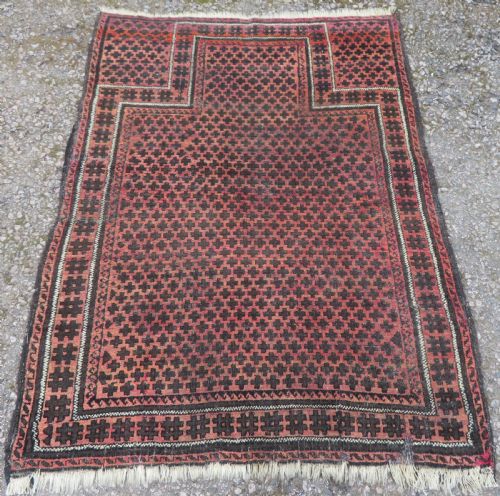
- An architectural prayer niche motif pointing toward Mecca, frequently repeated in tribal prayer rugs. Variations include single, double, or triple mihrab arrangements.
- Timuri
- A tribal grouping closely associated with Baluch weaving traditions along the borders of Persia and Afghanistan. Their carpets often share overlapping design structures and colour palettes.
- Gul
- A medallion or repeating octagonal design element originating in tribal carpet weaving. These forms serve as primary structural anchors within the field of the rug.
Vintage Baluch Weave: Frequently Asked Questions
What is a Baluch prayer rug?
A Baluch prayer rug is a smaller format textile featuring a distinct mihrab niche design intended for daily devotions. These pieces were woven by nomadic or village makers using hand-spun wool and natural dyes.
They often incorporate repeated lotus leaf patterns or geometric borders alongside the central niche. Collectors value them for their portable scale and concentrated symbolic imagery.
How were tribal storage bags used?
Tribal storage bags served practical functions inside nomadic tents for grain, bedding, and personal possessions. They were woven flat or in pile, often featuring secure backs and band weft work.
Surviving examples demonstrate the robust construction required for nomadic migration. Many retain original backings and double-sided vanity compartments.
What is the pencil box design?
The pencil box design, also known as Kalam Donneh, is a repeating geometric motif found on nineteenth and early twentieth century carpets. It arranges compartmentalised stacked patterns resembling traditional boxes across the field.
This pattern is particularly characteristic of Timuri and Baluch main carpets from the borderlands. It creates a dense, architectural rhythm across the woven surface.
Where were these textiles woven?
These textiles originated across the borderlands of South-West and West Afghanistan, Khorasan, and the Sistan province of South-East Persia. Nomadic groups and village weavers moved across these regions carrying their specific knotting traditions.
Local access to specific sheep wool types and dye plants influenced the regional variations found in the surviving pieces. Geographic markers help attribute specific design groups to particular tribal traditions.