

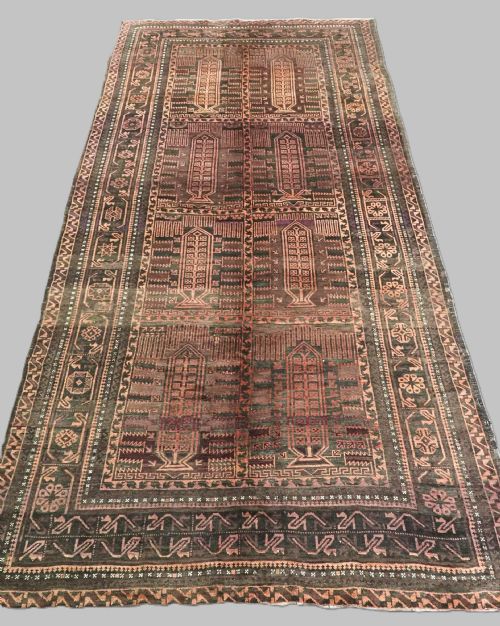


Baluch Main Carpet
A baluch main carpet brings the rich geometric patterns of tribal weavers from western Afghanistan and border regions directly into your home.
Baluch Main Carpet
A baluch main carpet is a large floor covering woven by nomadic and semi-nomadic groups, particularly Timuri and Mushwani makers, across western Afghanistan and adjacent areas. These textiles are designed for principal domestic use rather than as small bags or trapping pieces, possessing a scale that commands a room.
Most examples encountered here originate from the nineteenth century, stretching from the eighteen-seventies through to about nineteen-twenty. They frequently display classic repeat patterns or distinct regional identifiers like the pencil box design.
The aesthetic is rooted in tribal traditions, utilising darker palettes and geometric motifs that reflect generations of nomadic craftsmanship. Buyers seek these pieces for their authentic, unhurried execution and deep historical connection to the borderlands.
How They Were Made
The foundation and pile rely heavily on hand-spun wool, often accompanied by goat hair utilised in the outer selvages for structural resilience. This local wool contains natural lanolin, which contributes to a supple handle and enduring strength.
Weavers depended entirely on natural dyes to colour their fleece, achieving rich tones that deepen gracefully over time. Certain dark browns, created with iron-mordant dyes, naturally corrode at a faster rate than other colours, creating a characteristic low relief on the surface.
Baluch Main Carpet Retail Price Guide 2026
Typical asking prices for baluch main carpet among the pieces listed under this phrase on Sellingantiques today, from the lower quarter to the upper quarter. They describe what is for sale here now, not the wider market.
Listings span four distinct decades from eighteen-seventy to nineteen-twenty, reflecting sustained production across the late nineteenth century.
What Varies in Quality
The distinction between ordinary and exceptional examples rests in the handling of the wool and the vibrancy of the dyestuffs. Superior pieces display lustrous, high-grade hand-spun wool that retains its resilience, alongside deep, saturated natural colours with notable visual depth.
Execution of the design also separates the tiers, with finer carpets demonstrating precise control over complex geometric repeats and balanced proportions. Secondary materials like goat hair and the integrity of the original borders further distinguish the finer weaving output.
The Baluch Main Carpet Glossary
- Pencil box design
- A repeating geometric motif resembling stacked rectangular boxes, frequently seen in Timuri and Baluch weaving.
- Main carpet
- A large-format floor rug produced for central domestic use within a tribal tent or dwelling, distinct from smaller saddle bags or scatter rugs.
- Natural dyes
- Colourants derived from plants, insects, and minerals rather than synthetic chemical agents, yielding complex and harmonious tones.
- Hand-spun wool
- Fleece prepared manually using a drop spindle, producing an irregular yarn with variable thickness that absorbs dye with rich tonal nuances.
- Timuri
- A tribal group of western Afghanistan whose weaving traditions overlap closely with those of Baluch makers.
Baluch Main Carpet: Frequently Asked Questions
Where were baluch main carpets made?
These carpets were produced by nomadic and tribal groups operating across western Afghanistan and the southeastern border regions, including the Chakhansur area.
Weavers lived a pastoral lifestyle, moving with their flocks, which supplied the local wool used in every piece.
How old are these antique carpets?
The pieces available generally date from the mid-nineteenth century through to the early decades of the twentieth century.
Earlier examples often display a more relaxed handling of traditional motifs and deeper, unrestrained natural palettes.
What is a pencil box design?
It is a classic tribal motif featuring stacked rectangular compartments filled with repeating geometric symbols across the field.
This pattern is a hallmark of specific regional groups working within western Afghanistan.
How do I care for an antique wool carpet?
Vacuum gently using a suction-only attachment without a rotating brush bar to protect the hand-spun wool pile and delicate edges.
Keep the carpet out of direct, prolonged sunlight to preserve the stability of the natural dyes used by the original makers.