








Traditional Geometric Carpet
A traditional geometric carpet brings floor-bound symmetry and enduring craft into a room, offering patterned warmth rooted in centuries of weaving.
Traditional Geometric Carpet
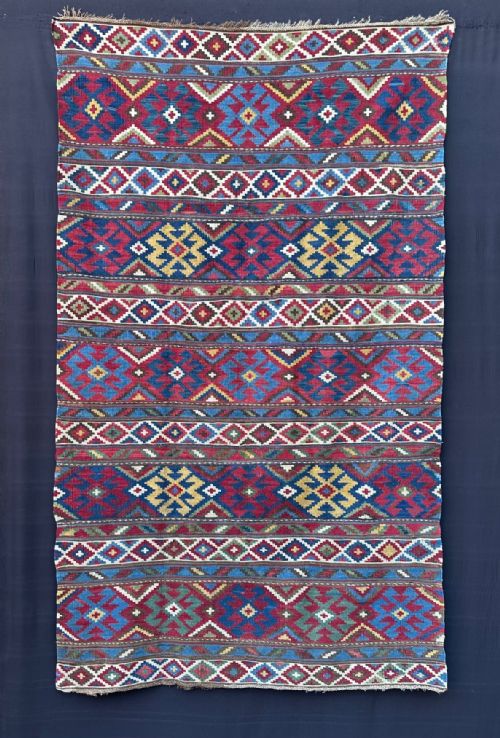
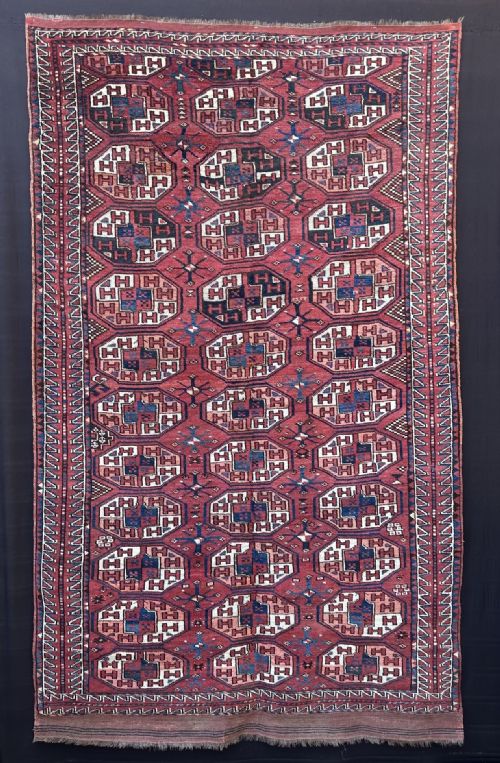
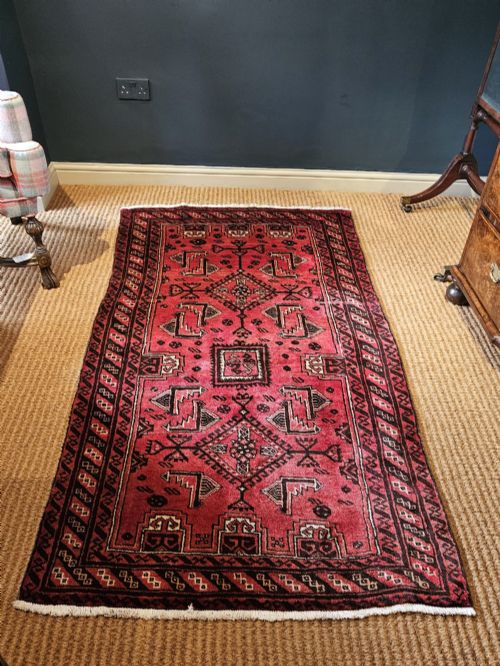
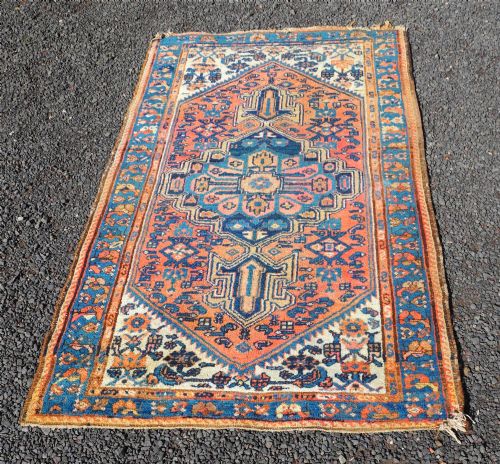
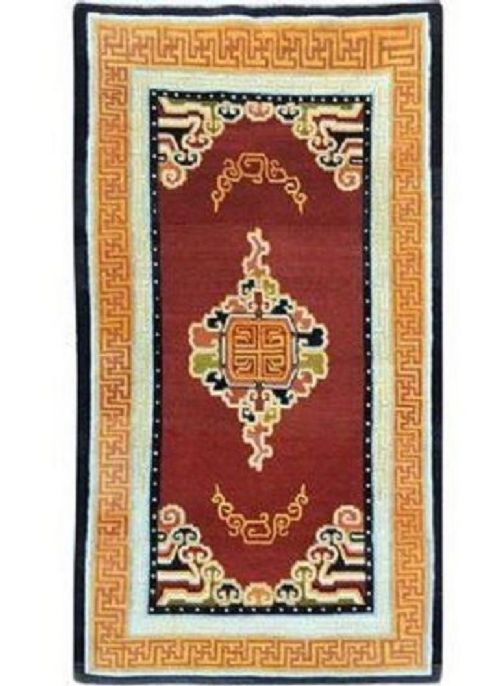
A traditional geometric carpet comprises hand-knotted floor coverings defined by rectilinear motifs, tribal medallions, and angular field patterns originating from Persia, the Caucasus, Anatolia, and Central Asia. These textiles arrive in formats ranging from small prayer rugs and square formats to long runners and room-sized carpets.
The pieces seen here span the nineteenth century through the early twentieth century, encompassing village and tribal outputs from regions such as Heriz, Kazak, Hamadan, and Shirvan. Buyers encounter diverse regional expressions, including Kurdish country house weaves, Baluch prayer rugs, and Turkmen tribal carpets.
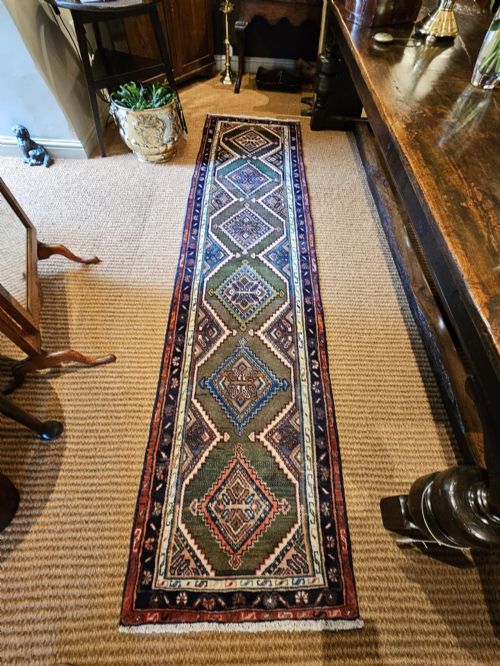
These floor coverings suit spaces requiring structural pattern underfoot, bringing historical depth and repeated motifs to an interior. Their formats include dedicated runner rugs for hallways and area rugs suited to living spaces.
How they were made
Makers utilised wool, cotton, and pure hand-spun wool for the foundations and pile of these textiles, combining durability with tactile depth. The employment of natural dyes imparts saturated tones of warm red, olive green, and mellow background hues that age with steady character.
Weavers constructed these pieces by hand knotting wool onto cotton or wool warps and wefts, executing complex lattice designs, prayer arches, and repeating guls from memory or traditional local pattern cards. The density of the weave and the preparation of the yarn dictate the weight and flexibility of each finished carpet.
Some carpets feature deliberate minor pattern asymmetries, left by weavers who believed only divine creation could be entirely without flaw.
What varies in quality
Quality in a traditional geometric carpet rests upon the precision of the knotting, the crispness of the angular design execution, and the stability of the foundation materials. Tightly packed wool piles and well-balanced proportions separate finer village and workshop outputs from simpler rustic makes.
The depth and vibrancy of the natural dyes used in the wool influence the visual success of the piece, as well-dyed yarns develop a rich patina over decades of use. The integrity of the original borders and selvedges also defines the retention of the weaver's intended geometry.
The Traditional Geometric Carpet Glossary
- Mihrab
- A niche design found on prayer rugs, indicating the direction of prayer towards Mecca. It often appears as an arched motif at one or both ends of the rug.
- Gul
- An octagonal or medallion-like repeating motif frequently utilised in Turkmen and Baluch tribal carpets. These motifs act as clan or tribal identifiers.
- Runner
- A long, narrow carpet format designed primarily for hallways, corridors, and staircases. These pieces provide linear geometric pattern across restricted floor spaces.
- Lattice
- An open network pattern formed by intersecting diagonal lines that create repeating geometric compartments across the field of the rug. This design structures the background space.
- Selvedge
- The reinforced edge binding running along the long sides of a carpet, protecting the foundation threads from fraying. Original selvedges indicate unaltered preservation.
Traditional Geometric Carpet: Frequently Asked Questions
How do I clean a wool rug?
Regular gentle vacuuming without a beater bar removes loose grit from the wool pile. Professional specialist cleaning is necessary for deep washing to protect natural dyes.
Water saturation and household detergents must be avoided to prevent wool shrinkage and dye bleeding.
Where were these carpets woven?
Weaving centres span village and nomadic communities across Persia, the Caucasus, Anatolia, and Turkmenistan. Specific regions include Heriz, Kazak, Shirvan, and Hamadan.
Each area developed distinct colour palettes and geometric vocabulary passed down through generations.
What is a prayer rug?
A prayer rug is a smaller format textile featuring a distinct mihrab arch at one end. Historically, these pieces served an individual devotional function.
Their portable size and concentrated symbolic designs make them adaptable as wall hangings or accent floor pieces.
How do I date an old rug?
Dating relies on material analysis, dye characteristics, structural construction, and stylistic markers specific to nineteenth and early twentieth-century production. Natural hand-spun wool and traditional palette shifts offer primary chronological clues.
Comparative study of tribal motifs across regions helps narrow the period of origin.