

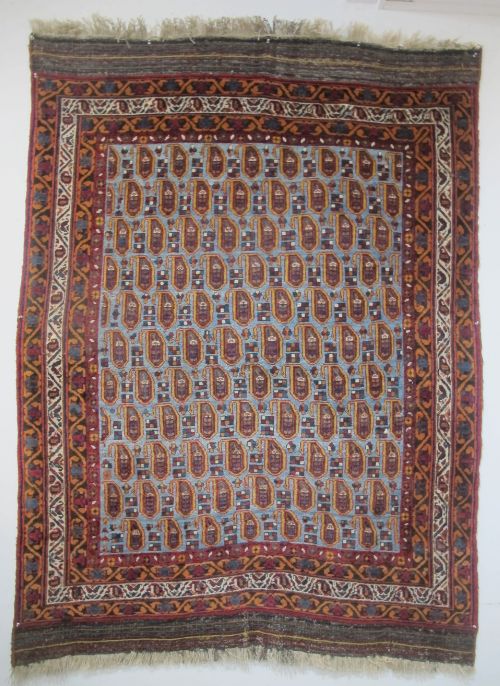


Late Victorian Tribal Carpet
These late victorian tribal carpet examples bring genuine nomadic and village character into a room through rich woolwork and traditional dye colours.
Late Victorian Tribal Carpet
Buyers encounter various formats here, ranging from small prayer rugs and area rugs to larger main carpets and corridor runners. Each piece reflects the specific tribal heritage and visual vocabulary of its makers, utilising traditional motifs that have passed down through generations.
Materials and construction
These textiles rely on hand-spun wool for their durable pile and foundation, often supported by cotton warps and wefts in specific regional traditions. Artisans utilised natural dyes to achieve deep palettes of blue, yellow, and red that hold their character over decades of use.
The hand-knotting process allows for intricate geometric and floral patterns, from prayer mihrabs to all-over shrub and repeat leaf designs. Each carpet is built to withstand heavy floor traffic while retaining the pliability characteristic of nomadic weaving.
Late Victorian Tribal Carpet Retail Price Guide 2026
Typical asking prices for late victorian tribal carpet among the pieces listed under this phrase on Sellingantiques today, from the lower quarter to the upper quarter. They describe what is for sale here now, not the wider market.
Some weavers snuck tiny zig-zag amulets into the borders to ward off the evil eye, ensuring your rug comes with built-in spiritual insurance.
Assessing the craftsmanship
Quality in a late victorian tribal carpet rests upon knot density, the precision of the geometric or floral layout, and the depth achieved through natural dyes. Tightly packed knots provide a crisp definition to motifs like the kalam donneh pencil box design or star borders.
The handling of the wool and the consistency of the weave distinguish standard village production from finer tribal examples. A well-executed piece displays balanced proportions across the field and borders, reflecting the weaver's practiced skill.
The Late Victorian Tribal Carpet Glossary
- Prayer rug
- A small carpet featuring a mihrab or niche design used by Muslims for daily prayers. These rugs often display directional motifs meant to point towards Mecca.
- Natural dye
- Colourants derived from plant, insect, or mineral sources rather than synthetic chemicals. These dyes produce complex, harmonious tones that age gracefully.
- Warp
- The vertical threads stretched lengthwise on the loom that form the structural foundation of the carpet. Wefts are then interwoven across these stationary threads.
- Main carpet
- A large-scale floor covering traditionally used in the primary rooms of a tribal tent or dwelling. They require significantly more labour and time to produce than smaller scatter rugs.
- Runner
- A long, narrow carpet format designed for corridors, hallways, or narrow spaces. They often feature continuous repeat patterns along their length.
Late Victorian Tribal Carpet: Frequently Asked Questions
How do I care for my carpet?
Vacuum your rug regularly using suction only without a rotating brush roll to protect the wool pile. Keep the carpet out of direct, harsh sunlight to preserve the natural dye colours.
Rotate the rug periodically to ensure even wear across high-traffic areas. Consult a professional specialist experienced in antique textiles for any washing or deep cleaning needs.
Where were these carpets made?
These textiles originate from nomadic tribes and village communities across regions such as Persia, the Caucasus, Anatolia, and Central Asia. Weavers belonged to specific confederations and ethnic groups including the Baluch, Khamseh, and Kurdish peoples.
Production took place within domestic or tribal settings rather than large commercial factories. Each weaving group maintained distinct regional patterns and colour preferences.
What materials make up these rugs?
The pile is almost exclusively composed of hand-spun wool, valued for its natural lanolin content and resilience. Foundations frequently combine wool and cotton threads for structural stability.
Colour comes from natural dye sources that yield nuanced shades across the field and borders. The interaction of these organic materials gives antique tribal rugs their tactile warmth.
How are different tribal styles told apart?
Distinguishing styles depends on examining the specific border arrangements, structural materials, and geometric or pictorial motifs used in the field. For instance, Caucasian pieces often feature sharp geometric medallions, while Baluch works lean towards deep indigo fields and repeat leaf patterns.
Palettes also vary by region, with certain confederations utilising distinct combinations of blue grounds, yellow highlights, and rich reds. Comparing knotting techniques helps narrow down the probable weaving origin.