




Vintage Baluch Carpet
When you search for a vintage baluch carpet, you are looking at tribal nomadic floor coverings woven across Iran, Afghanistan, and Central Asia.
Vintage Baluch Carpet
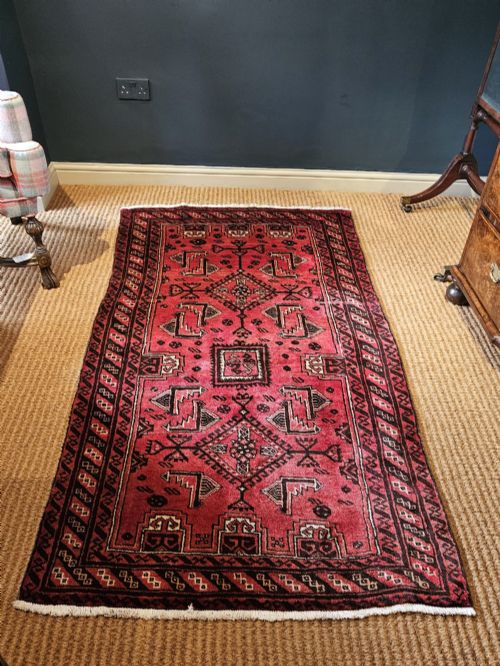
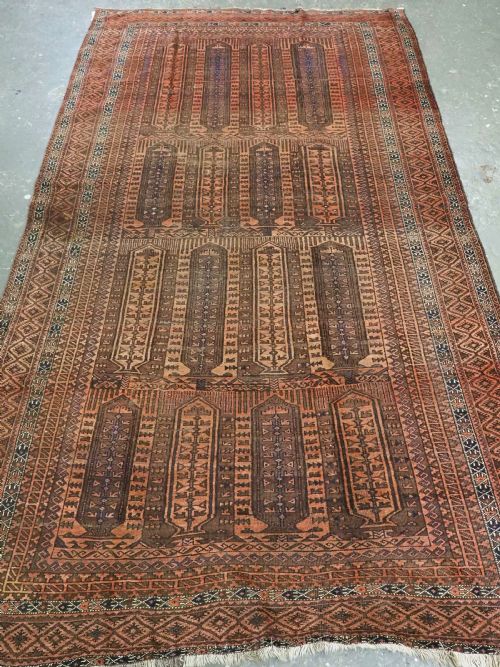
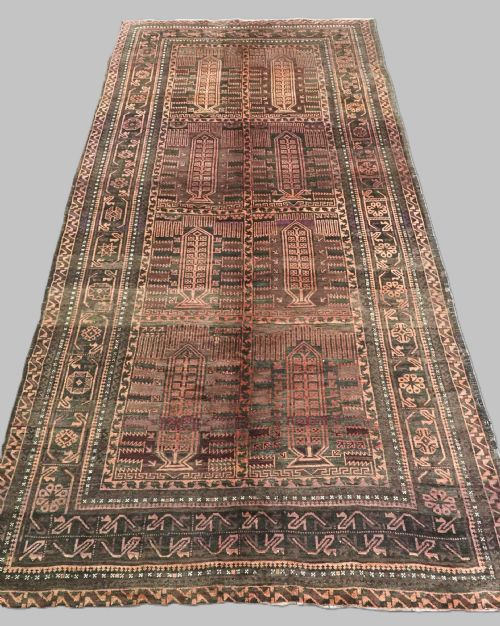
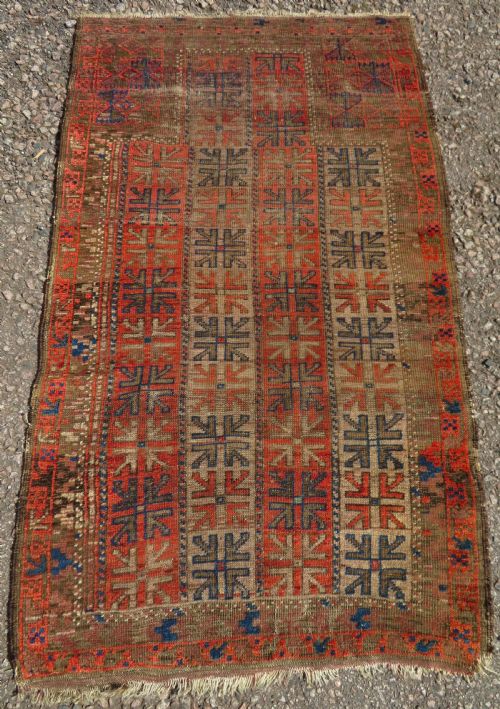
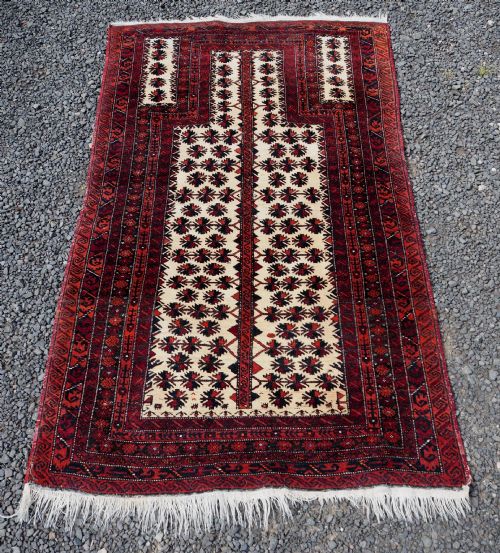
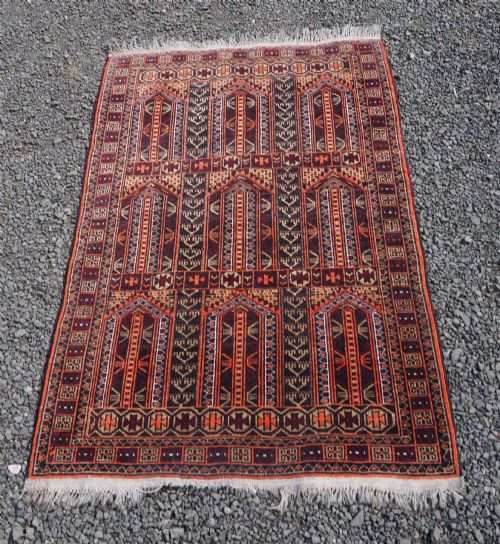
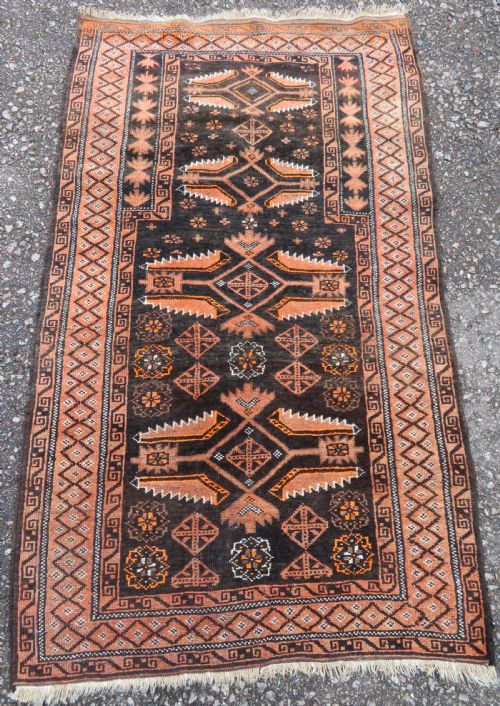
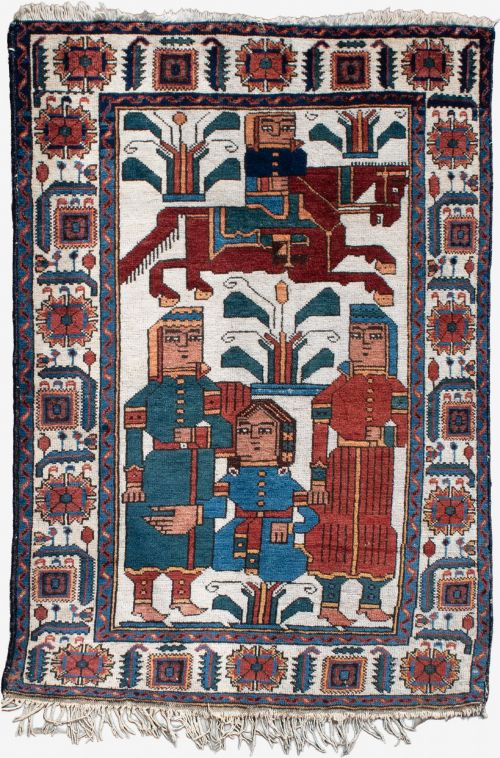
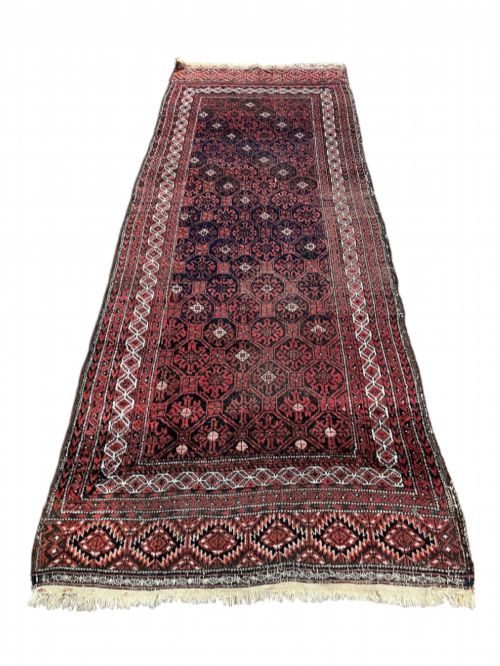
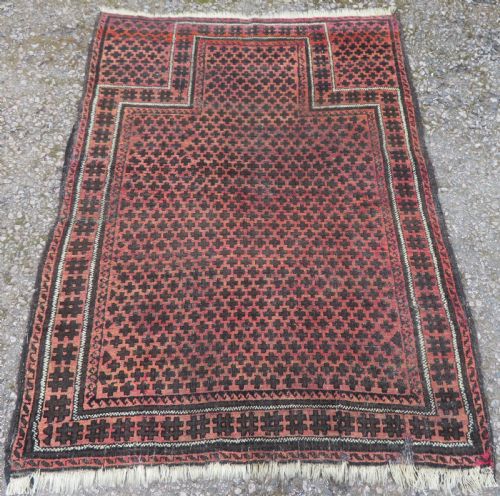
When you search for a vintage baluch carpet, you are looking at utilitarian textiles produced by nomadic and village weavers, often taking the form of smaller format rugs, prayer rugs with mihrab designs, runners, or utilitarian eating cloths known as sofreh. These pieces display distinct tribal motifs such as pencil box patterns, Kalam Donneh designs, and latch hook medallions derived from weaving traditions passed down through generations.
On this page, you are most likely to encounter pieces originating from the late nineteenth century through to the 1930s, encompassing Afghan, Timuri, Taimani, Mushwani, and Khorasan tribal sub-groups. The surviving examples typically show traditional formats ranging from compact prayer rugs to longer runners and flatwoven kilims.
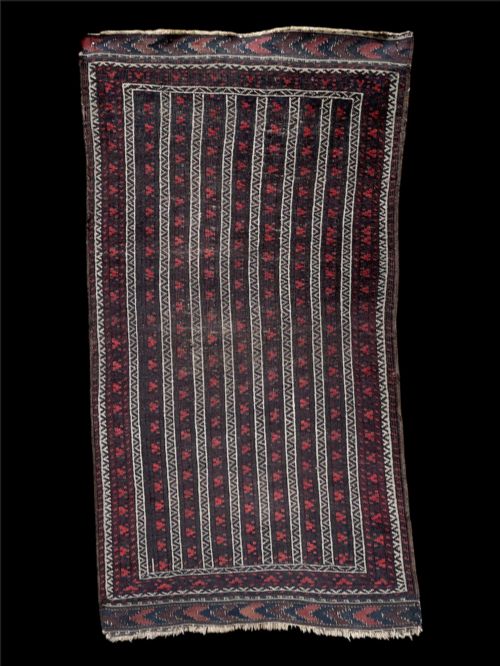
The aesthetic of a vintage baluch carpet relies heavily on deep, saturated dark tones contrasted with geometric field patterns, shrub motifs, and border bands. These floor coverings reflect the specific cultural iconography and nomadic lifestyle of the weavers who produced them for daily domestic use.
Materials and construction methods
The construction of these pieces relies primarily on hand-spun wool for the pile and foundation, frequently supplemented by cotton foundations in later village examples and occasional use of camel hair or goat hair for durability in border elements.
Weavers utilised natural dyes to achieve deep palettes, embedding rich colour within dense wool piles that were occasionally combined with flatweave kilim bands or mixed techniques in prayer rugs and sofreh cloths.
The listings span periods from the 19th Century up to 1930, utilising wool, cotton, camel hair, and natural dyes.
Factors of quality and distinction
Quality in these tribal weavings is determined by the fineness of the knotting, the complexity and clarity of the geometric or pictorial design, and the integrity of the wool foundation. Tighter, more even knot density allows intricate motifs like the pencil box or shrub patterns to appear sharper and more defined across the field.
The handling of natural dyes also dictates the visual depth of the piece, where subtle variations in tone add richness to the camel ground or field. Furthermore, the preservation of original selvedges and complete end finishes separates well-kept examples from heavily worn specimens.
The Vintage Baluch Carpet Glossary
- Mihrab
- A niche design symbolising a prayer arch, frequently found orienting the field on tribal prayer rugs. This architectural motif directs the worshipper during daily prayer.
- Sofreh
- A woven spreading cloth utilised for sharing communal meals or processing flour and dough within nomadic households. These functional textiles often feature bands of geometric pattern.
- Kilim
- A flatwoven textile produced without a pile by tightly interweaving warp and weft strands. These structures appear either as standalone rugs or as decorative bands on tribal pieces.
- Latch hook
- A hooked geometric polygon motif repeated across the field or borders of tribal carpets. It serves as a primary talismanic emblem in nomadic design.
Vintage Baluch Carpet: Frequently Asked Questions
How do I identify a prayer rug?
Prayer rugs are typically smaller in format and feature a distinct pointed arch, known as a mihrab, at one end of the field. This architectural motif was designed to be pointed towards Mecca during daily prayer.
These pieces also frequently incorporate specific repeating symbols such as lotus leaf or shrub designs within the central niche to denote their sacred function.
What is a pencil box design?
The pencil box design, sometimes referred to as Kalam Donneh, is a repeating elongated geometric motif arranged in diagonal rows across the field. It is characteristic of specific Timuri and Baluch tribal weaving groups.
This pattern creates an intricate, orderly texture that contrasts with the darker, saturated wool ground colours typical of these nineteenth and early twentieth-century pieces.
How should I care for a wool rug?
Wool and natural dye textiles require gentle maintenance, avoiding direct prolonged sunlight to prevent colour fading and chemical cleaners that damage organic fibres. Regular light vacuuming without a rotating brush roll helps clear dust from the pile.
Professional specialist cleaning is recommended for antique tribal carpets to preserve the integrity of the hand-spun wool and natural dye foundations.
Where were these rugs made?
These textiles were produced by nomadic and village tribes inhabiting the borderlands of modern-day Iran, Afghanistan, and Pakistan. Groups such as the Timuri, Taimani, and Mushwani adapted their regional motifs into these distinctive carpets.
The use of camel hair, hand-spun wool, and specific tribal layouts ties directly to the pastoral lifestyle of these weaving communities across Khorasan and Western Afghanistan.