


Baluch Floor Runner
A baluch floor runner brings tribal weaving into a room through rich wool and repeat medallion patterns.
Baluch Floor Runner
When searching for a baluch floor runner, you encounter tribal and nomadic textiles originating from regions across Afghanistan, western Afghanistan, and Khorasan. These pieces span from the nineteenth century into the early twentieth century, including items from periods around 1880, 1890, 1900, 1920, and 1930.
The objects take the form of rugs and carpets, often categorized under tribal, Persian tribal, or Afghan tribal styles. Specific subgroups include Timuri, Taimani Sistan, Mahdad Khani, Salar Khani, Bahluli, and Arab Baluch variations.
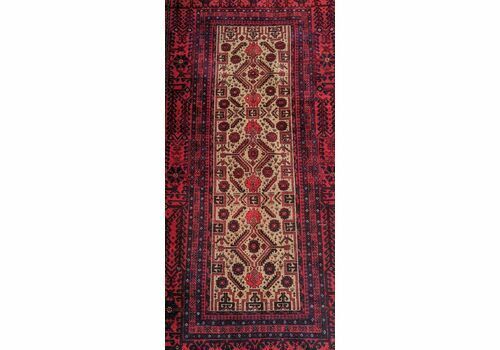
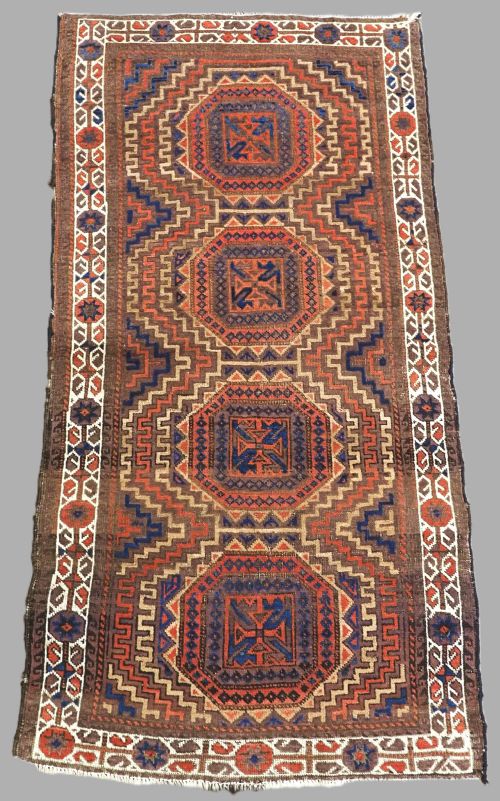
Designs on these floor coverings include large guls, box medallions, kalam donneh motifs, calyx lattice patterns, Herati repeats, and seh mihrab prayer layouts. The runner format serves narrow spaces, hallways, and functional floor areas with durable nomadic construction.
How they were made
These textiles rely primarily on hand-spun wool for the pile, providing a dense and durable surface that absorbs natural dyes effectively. Cotton and goat hair are also utilised in the construction, particularly for foundation warps and wefts.
Weavers employed traditional hand-woven techniques associated with tribal and nomadic workshops. The application of natural dyes yields deep rich colours and distinct contrasts across ivory borders and field patterns.
Listings feature wool, cotton, and goat hair combined with natural dyes across pieces dated from the nineteenth century to 1930.
What varies in quality
Quality in these floor runners depends upon the precision of the hand-spinning and the depth achieved by natural dyes. Finer examples display crisper execution in complex repeat motifs such as the calyx lattice or large guls.
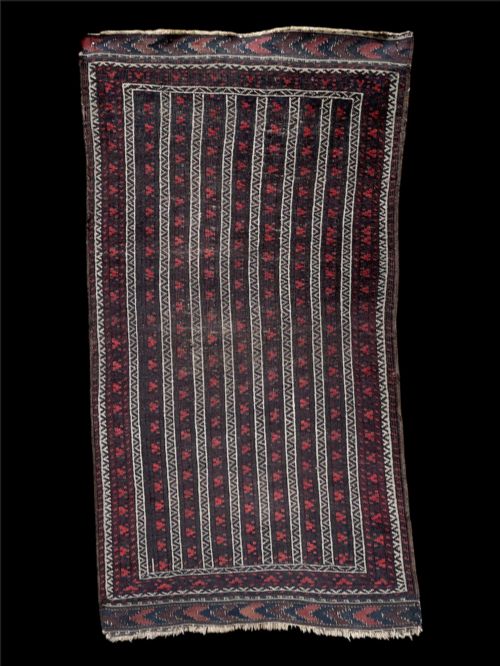
The integrity of the wool pile and the structural tightness of the hand-woven foundation determine longevity. Pieces with scarce or unusual designs, such as white ground stripe layouts or box medallions, often reflect greater artisan skill.
Mahdad Khani·Salar Khani·Taimani Sistan·Bahluli
The Baluch Floor Runner Glossary
- Gul
- A medallion motif frequently repeated across tribal rugs. It originates from nomadic design traditions and often identifies specific tribal groups.
- Kalam Donneh
- A stylised floral or paisley motif found in regional weaving. This pattern appears in various forms on nineteenth-century pieces.
- Seh Mihrab
- A prayer rug design featuring three arch mihrab niches. This layout holds specific religious and cultural significance in nomadic weaving.
- Herati
- A classic repeating floral pattern composed of a central rosette surrounded by leaves. It forms a continuous lattice across the carpet field.
- Timuri
- A tribal weaving group associated with the borderlands of Afghanistan and Iran. Their work frequently shares design elements with Baluch rugs.
Baluch Floor Runner: Frequently Asked Questions
What is a baluch floor runner?
A baluch floor runner is a hand-woven tribal textile originating from nomadic groups in Afghanistan and surrounding regions. These pieces utilise wool and natural dyes to create narrow, elongated rugs suited for hallways and corridors.
They are characterised by geometric motifs, guls, and rich colour palettes. The tradition spans from the nineteenth century into the twentieth century.
How do I care for a tribal runner?
Protect the hand-spun wool pile by placing a quality underlay beneath the runner to prevent slipping and friction. Vacuum gently without a rotating brush roll to avoid damaging the foundation.
Keep the textile out of direct sunlight to preserve the natural dyes. Professional cleaning should be undertaken by specialists familiar with antique tribal rugs.
How are different periods identified?
Periods are determined by examining the weave structure, wool quality, and dye palette used in the piece. Nineteenth-century examples often display older dye chemistry and hand-spun materials.
Design motifs also offer clues, as certain lattice patterns and prayer layouts correlate with specific decades. Comparing construction methods helps narrow down the era of production.
Where were these runners made?
These textiles were produced by nomadic and village groups across Afghanistan, western Afghanistan, and the Khorasan province. Weavers belonged to various tribal factions including the Timuri, Taimani, and Salar Khani.
Each region imparted distinct design traits and colour preferences to their weaving. The environment influenced the materials selected, such as local wool and goat hair.