


Vintage Asian Porcelain Vessel
These vintage asian porcelain vessel items bring hand-painted narrative scenes and rich ceramic traditions straight to your tabletop.
Vintage Asian Porcelain Vessel
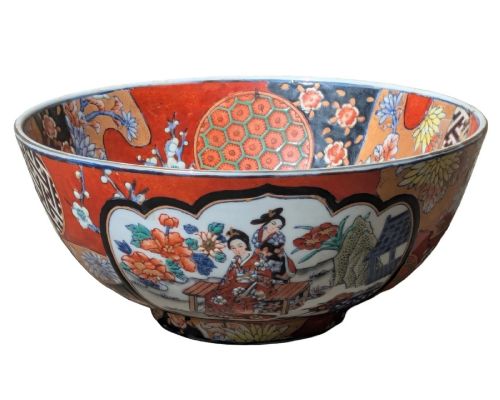
A vintage asian porcelain vessel encompasses a diverse range of decorative items, from miniature cabinet vases and lidded ginger jars to intricate snuff bottles and tea caddies. When exploring this selection, buyers frequently encounter Japanese Satsuma wares from the Meiji period, alongside robust Imari pieces and Chinese blue and white ceramics.
The objects span production dates from the late nineteenth century through the early twentieth century, including pieces originating during the Qing and Taisho periods. Forms vary significantly in scale, ranging from imposing decorative jars down to delicate miniature vases and miniature tea jars.
Materials and production methods
Makers shaped these vessels from high-fired porcelain, ceramic, and earthenware bodies before applying intricate hand-painted designs in colourful enamel palettes. Many pieces incorporate lavish additions of gold leaf and gilding to accentuate key motifs and borders.
Specialised regional workshops utilised techniques such as underglaze blue painting and overglaze enamel decoration to create detailed figural processions and floral arrangements. Artisans occasionally combined ceramic bodies with carved wooden elements or jade components to complete the functional lids and mounts.
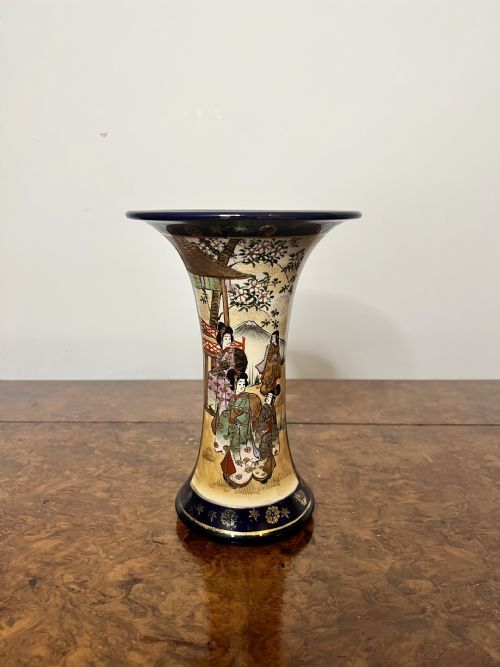
Miniature vases from the Meiji period prove that magnificent figural processions do not require expansive canvas.
Assessing craftsmanship and execution
Quality rests primarily upon the precision and delicacy of the hand-painted brushwork, distinguishing finely rendered figural processions from simpler repetitive patterns. The controlled application of gold leaf and vibrant enamels defines the visual success of Satsuma and Imari examples.
The crispness of the porcelain or ceramic moulding and the preservation of the original enamel surfaces dictate the overall desirability of each piece. Superior examples display careful balance in form and ornamentation across both vases and lidded jars.
Chosei·Tokyo Taizan
The Vintage Asian Porcelain Vessel Glossary
- Satsuma
- A type of Japanese earthenware featuring a crackled ivory glaze decorated with polychrome enamels and gold. It was widely produced for export during the Meiji period.
- Imari
- A traditional style of Japanese porcelain characterised by a palette of underglaze blue, iron red, and supplementary gold. These wares were created for both domestic use and international trade.
- Kamcheng
- A covered ceramic jar traditionally used in Southeast Asian households for storing food or personal items. They are frequently decorated with vibrant enamel designs.
- Snuff bottle
- A small miniature container designed to hold powdered tobacco. Chinese examples often feature intricate interior painting or carved overlay layers.
- Meiji Period
- The era in Japanese history spanning from eighteen sixty-eight to nineteen twelve, marked by extensive international trade and a surge in decorative arts production.
Vintage Asian Porcelain Vessel: Frequently Asked Questions
How do I clean a painted ceramic vase safely?
Dust the surface gently with a soft, dry brush to remove particles without disturbing delicate enamel or gold leaf details.
Avoid using water, chemical solvents, or abrasive cloths, as moisture can damage older ceramic bodies and vintage gilding.
Were these jars used for food or display?
Many lidded jars and ginger jars served practical storage functions originally, holding tea, spices, or household goods in period interiors.
Over time, collectors primarily utilised them as decorative cabinet pieces due to their elaborate hand-painted surface decoration.
How do I distinguish Satsuma from Imari ware?
Satsuma pieces typically exhibit a warm ivory crackled glaze finished with detailed figural scenes and raised gold highlights.
Imari wares rely on a hard porcelain body decorated with a distinct combination of cobalt blue underglaze and iron red overglaze.
What is the difference between a jar and a vase?
Vases are generally constructed with narrow necks intended for displaying floral stems or standing alone as sculptural decorative objects.
Jars feature wider openings accompanied by fitted lids, originally designed to contain dry goods or liquids.