



Antique Japanese Punch Bowl
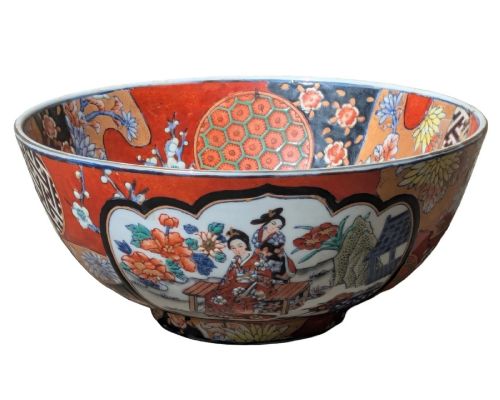
An antique japanese punch bowl brings centuries of ceramic artistry and bold decoration straight to the dining table.
Antique Japanese Punch Bowl
When you search for an antique japanese punch bowl, you are looking at substantial vessels made for serving, often featuring complex patterns and rich glazing. The pieces available here span several centuries, reaching from the seventeenth century Genroku period through to the Meiji and Showa eras.
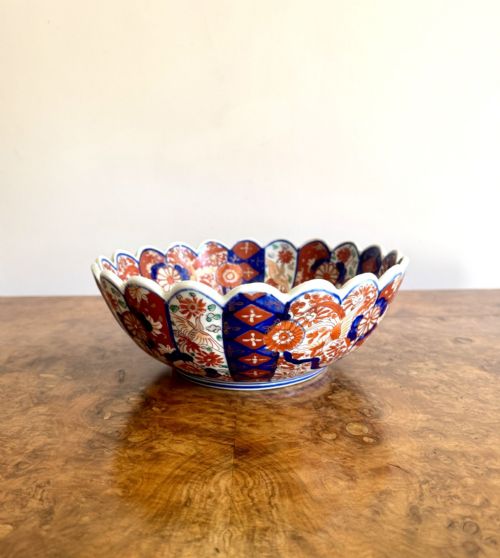
Imari porcelain forms the largest group on this page, recognisable by characteristic colour palettes and scallop shaped edges. Alongside these export wares, you will also find Satsuma earthenware bowls decorated with intricate patterns and detailed figural scenes.
Many of these large decorative bowls function as centrepieces, designed to command attention on a table or sideboard. Their origins stretch from traditional Japanese kilns created for export markets to European interpretations influenced by the Japonisme movement.
How they were made
Potters shaped these vessels from porcelain and earthenware before applying mineral glazes and underglaze cobalt blue. Artisans then built up complex surface designs using enamel pigments and gold leaf.
Kiln firing transformed the raw clay and metallic oxides into durable ceramics with deep gloss finishes. Skilled hands executed the hand-painted motifs that define both the Imari and Satsuma traditions.
One listed bowl survived a nineteenth century French glasshouse before finding its way here dressed in full Japonisme style.
What varies in quality
Quality rests in the crispness of the hand-painted brushwork and the control demonstrated during the high-temperature kiln firings. Superior examples display precise control over cobalt blue tones and generous application of gilt highlights.
The weight and balance of the porcelain body, alongside the complexity of scallop edges and decorative panels, separate standard production wares from exceptional centrepieces.
Ryuzan·François-Eugène Rousseau·Baccarat
The Antique Japanese Punch Bowl Glossary
- Imari
- A style of Japanese porcelain named after the port from which goods were shipped, typically decorated in cobalt blue, iron red and gold. This ware became immensely popular across Europe during the export periods.
- Satsuma
- A type of Japanese earthenware originating from Satsuma Province, known for a crackled ivory glaze and elaborate polychrome decoration. Pieces often feature detailed figural scenes and dense floral patterns.
- Meiji Period
- The era in Japanese history spanning from 1868 to 1912, marked by the opening of trade with Western nations. Ceramics from this time often catered specifically to international export markets.
- Japonisme
- A Western artistic movement in the late nineteenth century influenced by Japanese art and aesthetics. European makers and studios produced works directly inspired by these imported motifs.
- Genroku Period
- A Japanese era within the Edo period lasting from 1688 to 1704, associated with a flourishing of urban culture. Early export porcelains date back to this formative phase.
Antique Japanese Punch Bowl: Frequently Asked Questions
How do I date an antique Japanese bowl?
Dating relies on stylistic markers, materials, and documented periods such as the Meiji era or Genroku period. Cobalt blue tones and glaze characteristics often point towards specific centuries of production.
Examining the foot ring and any associated export marks provides further clues regarding the manufacturing date.
What is the difference between Imari and Satsuma?
Imari pieces are made from hard porcelain, typically featuring deep blue and iron-red designs accented with gold leaf. They often present ringing tones when struck and clear scallop shapes.
Satsuma bowls consist of a softer earthenware body covered in a finely crackled ivory glaze, which provides a textured ground for detailed enamel painting.
Were these bowls used for punch?
Many large vessels served as punch bowls or grand centrepieces on dining tables during the eighteenth and nineteenth centuries. Their deep basins accommodated generous quantities of liquid or fruit.
Over time, many transitioned into decorative display items rather than functional tableware.
How should I clean my antique bowl?
Dust the surface gently with a soft, dry cloth to prevent accumulation in recessed areas. Avoid harsh chemical cleaners or submersion in water, particularly for earthenware pieces with delicate gold leaf.
Display the bowl away from direct sunlight to protect the stability of the enamel colours.