




Vintage Porcelain Basin
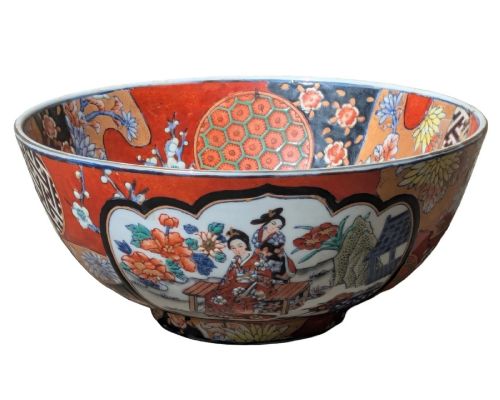
These vintage porcelain basin pieces encompass everything from grand wash sets to Japanese Imari bowls, offering both decorative presence and historical utility.
Vintage Porcelain Basin
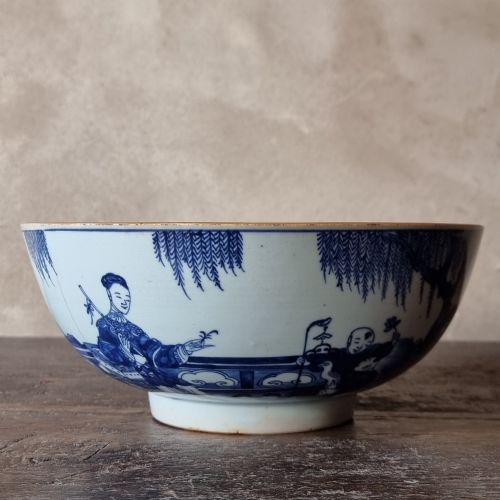
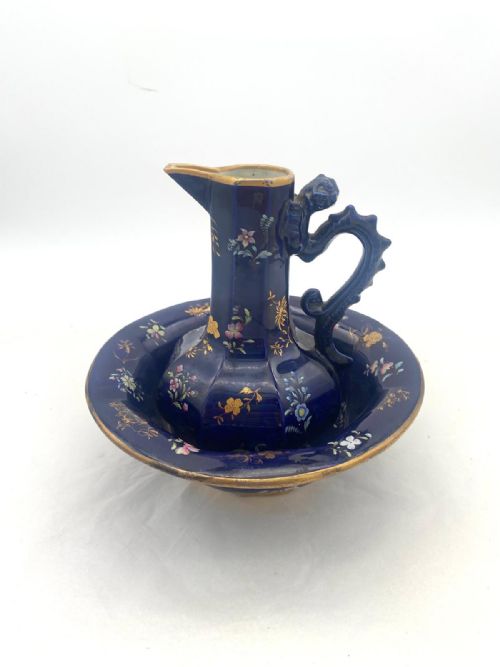
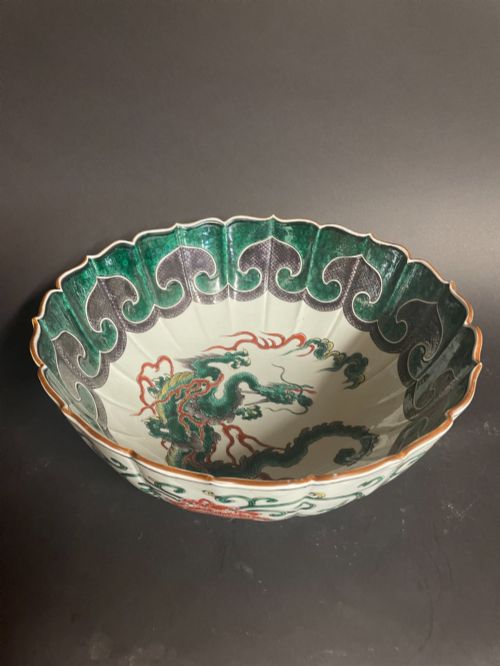
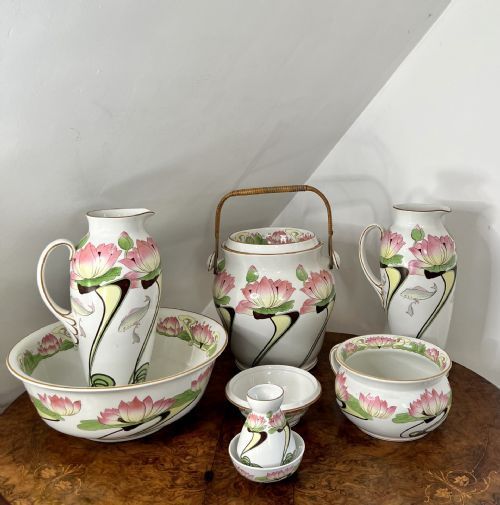
A vintage porcelain basin selection brings together varied forms, ranging from large Edwardian bathroom sets and footbaths to Chinese punch bowls and Japanese Imari vessels. Buyers searching for a vintage porcelain basin will encounter domestic washstand pieces alongside decorative bowls spanning several centuries.
The domestic wash sets unite jugs and basins designed for the bedroom, while the wider assortment includes punch bowls and sugar bowls in porcelain, earthenware, and ceramic. Pieces hail from Victorian and Edwardian periods as well as earlier Japanese Meiji and Edo contexts.
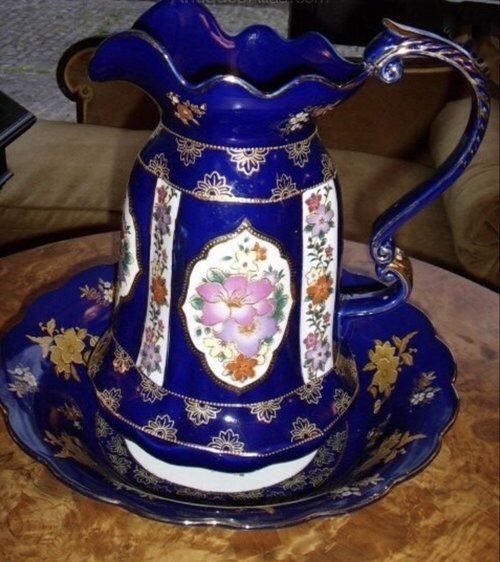
The selection reflects both European factory production and East Asian ceramic traditions. Each vintage porcelain basin carries the distinct aesthetic of its period, from transfer-printed blue and white to hand-painted cobalt motifs.
Assessing quality and execution
Quality rests in the precision of the hand-painted or transfer-printed decoration and the clarity of the glaze. Superior examples show careful brushwork on cobalt motifs and well-defined gilding.
The crispness of moulding in scallop edges, octagonal forms, and gallery details distinguishes finer productions from standard domestic wares. Maker execution is evident in the balance and weight of the porcelain body.
Listings feature porcelain, earthenware, and ceramic items spanning the 17th century to the 1930s, including Japanese Imari, Victorian, and Edwardian styles.
Royal Worcester·Wedgwood·Doulton Burslem·Masons Ironstone·Meissen
The Vintage Porcelain Basin Glossary
- Imari
- A style of Japanese export porcelain characterised by underglaze blue, iron red, and gold. It was widely produced in Arita from the Edo period onwards.
- Transfer-printed
- A decoration method where a design is engraved on a copper plate, printed on tissue paper, and transferred onto the ceramic surface before glazing.
- Footbath
- A large vessel designed for washing feet, often possessing substantial handles and deep sides suitable for containment.
- Sucrier
- A small covered sugar bowl intended for use on the tea table, frequently produced by major European porcelain manufactories.
- Lustre
- A type of ceramic glaze that imparts a metallic sheen through the application of metallic oxides fired in a reducing atmosphere.
Vintage Porcelain Basin: Frequently Asked Questions
How do I use a vintage basin today?
Wash sets and basins find modern utility as decorative planters, umbrella stands, or striking centrepieces in a hallway or bathroom. Their generous proportions make them practical for holding dried botanicals or rolled linens.
Care should be taken with older glazes and gilt highlights. Hand washing with mild soap protects the antique surfaces from modern detergents.
How do I tell Victorian from Edwardian pieces?
Victorian wash sets often display bolder colours and heavier transfer-printed patterns influenced by nineteenth-century revival styles. Edwardian examples tend towards lighter blue and white palettes or softer floral motifs aligned with early twentieth-century domestic tastes.
Maker marks on the underside provide the definitive guide to dating. Reference books matching backstamp ciphers resolve ambiguity between adjacent decades.
What is the difference between porcelain and earthenware?
Porcelain is fired at higher temperatures, resulting in a vitrified, non-porous body that often rings when struck and may appear translucent under strong light. Earthenware is more porous and opaque, requiring an applied glaze to become water-tight.
Basins made of porcelain withstand moisture better in historical washstand settings. Earthenware pieces frequently display greater thickness in the walls to compensate for the softer body.
How should I clean a painted porcelain bowl?
Cleaning requires lukewarm water and a soft cloth, avoiding abrasive pads that can scratch delicate enamel or remove gilt details. Harsh chemical cleaners must be avoided entirely.
Enamel and gold leaf applied over the glaze are particularly vulnerable to friction. Gentle drying with a lint-free towel preserves the surface sheen.