


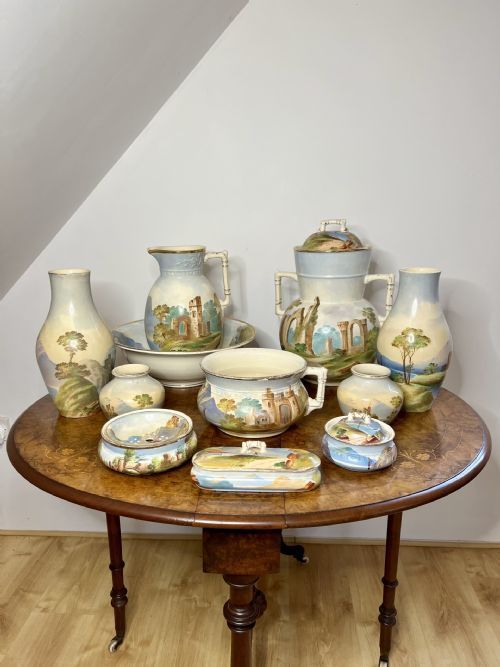


Polychrome Ceramic Basin
A polychrome ceramic basin brings vibrant colour and hand-painted detail to a room, drawing the eye with rich enamels and intricate glazes.
Polychrome Ceramic Basin
A polychrome ceramic basin is a decorated vessel created for display, service or washing, originating from various global traditions spanning multiple centuries. Buyers seeking a polychrome ceramic basin will encounter large punch bowls, elaborate wash sets, and decorative jardinieres shaped from earthenware, ironstone, or porcelain.
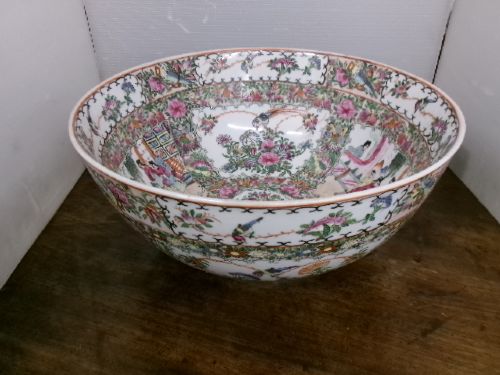
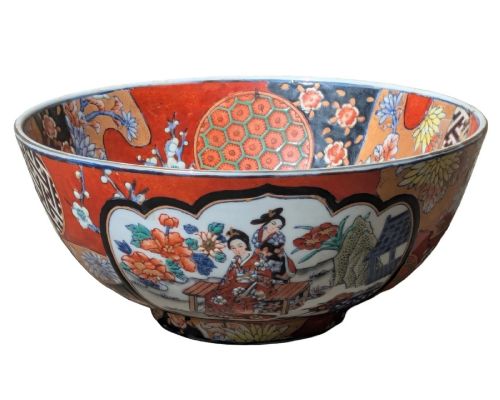
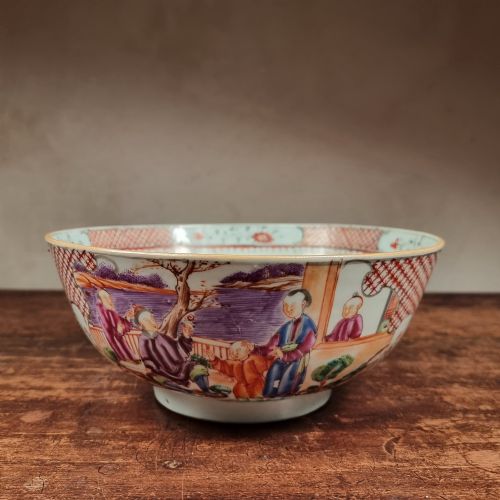
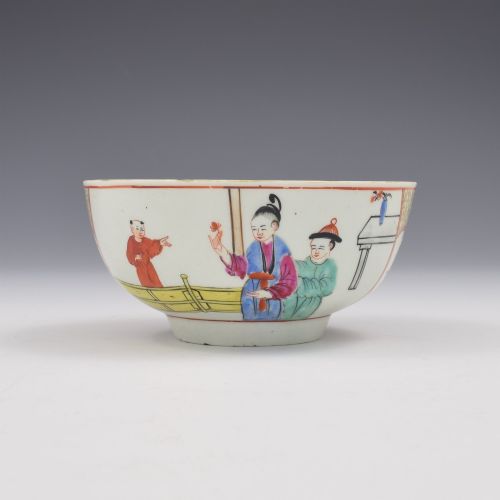
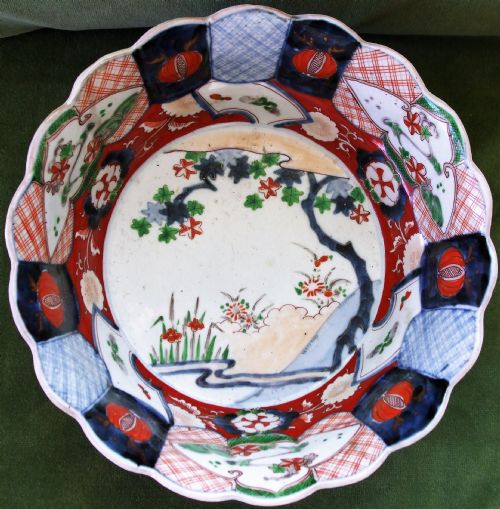
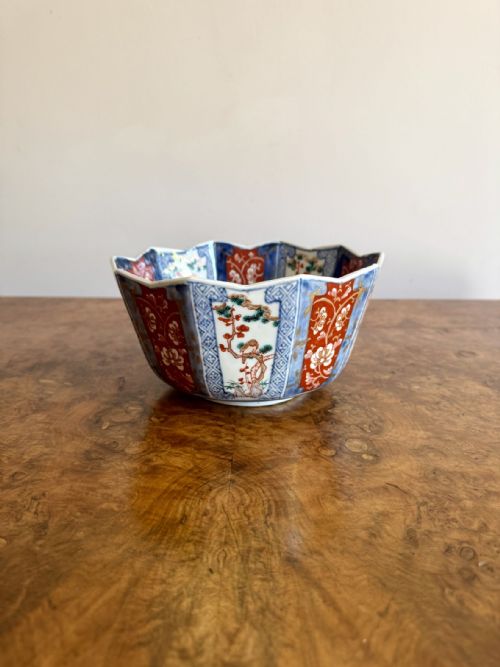
The pieces represented on this page lean heavily towards nineteenth-century Chinese Canton and Japanese Imari output, alongside English ironstone and European porcelain. These items range from expansive punch bowls featuring figural panels to utilitarian washbasin sets designed for nineteenth-century chambers.
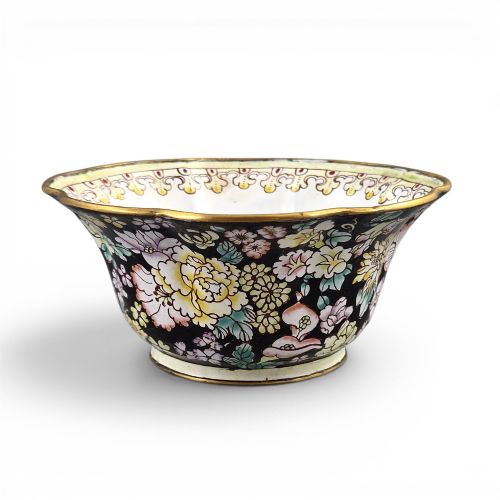
Forms vary from deep scalloped edges and lobbed rectangular shapes to grand footed bowls and complete jug and basin sets. Each iteration demonstrates how makers utilised colour and form to create functional items that doubled as striking interior ornaments.
Assessing quality and execution
Quality rests in the crispness of the hand-painted brushwork and the complexity of the polychrome palette, where finely delineated figures and rich, saturated enamels distinguish superior work from simpler, repetitive decoration. The precision of the porcelain body or ironstone moulding also dictates the refinement of the piece.
The presence of specialised markers, such as specific potteries like Mason or Fukagawa, elevates the standing of an item. Furthermore, the preservation of delicate gilt detailing and the crispness of moulded edges across large surfaces separate standard utilitarian wares from exceptional decorative examples.
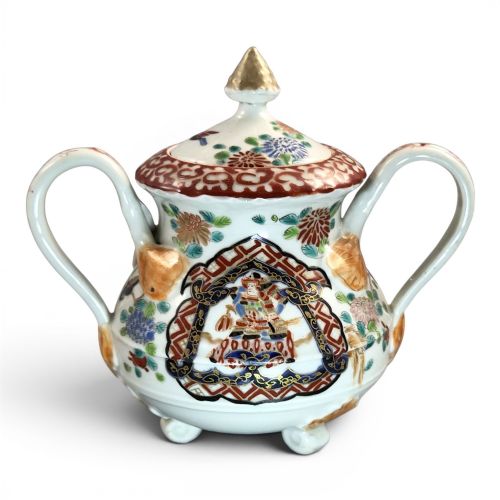
Samurai warriors and bustling Chinese court scenes frequently share shelf space here, keeping watch over nineteenth-century bedrooms and dining tables alike.
Mann & Co·Ryuzan
The Polychrome Ceramic Basin Glossary
- Polychrome
- Decoration executed in multiple colours, often involving hand-painted enamels applied over or under the glaze. This technique allows for complex pictorial scenes and vibrant floral motifs.
- Porcelain
- A hard, fine-grained ceramic fired at high temperatures until vitrified, producing a durable body that rings slightly when struck and can be made translucent. It serves as the primary canvas for many fine Asian and European bowls.
- Ironstone
- A heavy, durable type of earthenware patented in the nineteenth century by English potteries to imitate porcelain. It provides a robust body suited to large wash sets and heavy-use tableware.
- Imari
- A style of Japanese porcelain decorated in underglaze blue and overglaze iron red, gold, and secondary colours. It originated in Arita and became widely exported to Europe.
- Famille Rose
- A palette of Chinese porcelain decoration featuring an opaque pink or rose enamel derived from colloidal gold. Introduced in the Qing dynasty, it dominates eighteenth and nineteenth-century export wares.
Polychrome Ceramic Basin: Frequently Asked Questions
How were these basins originally used?
Many of these vessels served practical daily functions, ranging from large punch bowls used at dining tables to washbasin sets placed on bedroom washstands. Others were created strictly for display as decorative ornaments in formal rooms.
Over time, their roles shifted as domestic habits changed, turning functional wash sets and punch bowls into collectable display pieces that showcase historical ceramic artistry.
How do I care for an antique ceramic basin?
These pieces require gentle handling due to their age and the delicate nature of overglaze enamels and gilding. Dust them softly with a dry cloth and avoid abrasive cleaners or harsh scrubbing.
Display them away from areas of high traffic where they might be bumped, and keep them out of direct sunlight to prevent any fading of the pigments.
How do I distinguish between Chinese and Japanese pieces?
Chinese export pieces, such as Canton or Rose Medallion wares, typically feature distinct pink enamel palettes, densely packed floral borders, and figural court scenes. Japanese styles, including Imari and Satsuma, often employ deep cobalt blues, iron reds, and heavy gilding or intricate crackle glazes.
Examining the underlying paste, weight, and painting style helps clarify the distinct geographic origin of each specific vessel.
What is the difference between ironstone and porcelain?
Porcelain is a vitrified, high-fired ceramic that is hard, resonant, and sometimes translucent, allowing for delicate forms. Ironstone is a dense, opaque earthenware developed to be exceptionally sturdy and durable.
While both materials accept polychrome decoration well, ironstone tends to feel heavier and was preferred for robust domestic items like large jugs and basins.