
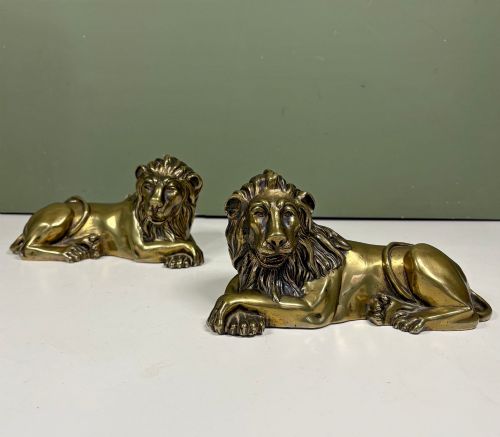


Vintage Animal Bookends
These vintage animal bookends keep shelves orderly while bringing sculptural character into a room through carved timber, cast metal and stone.
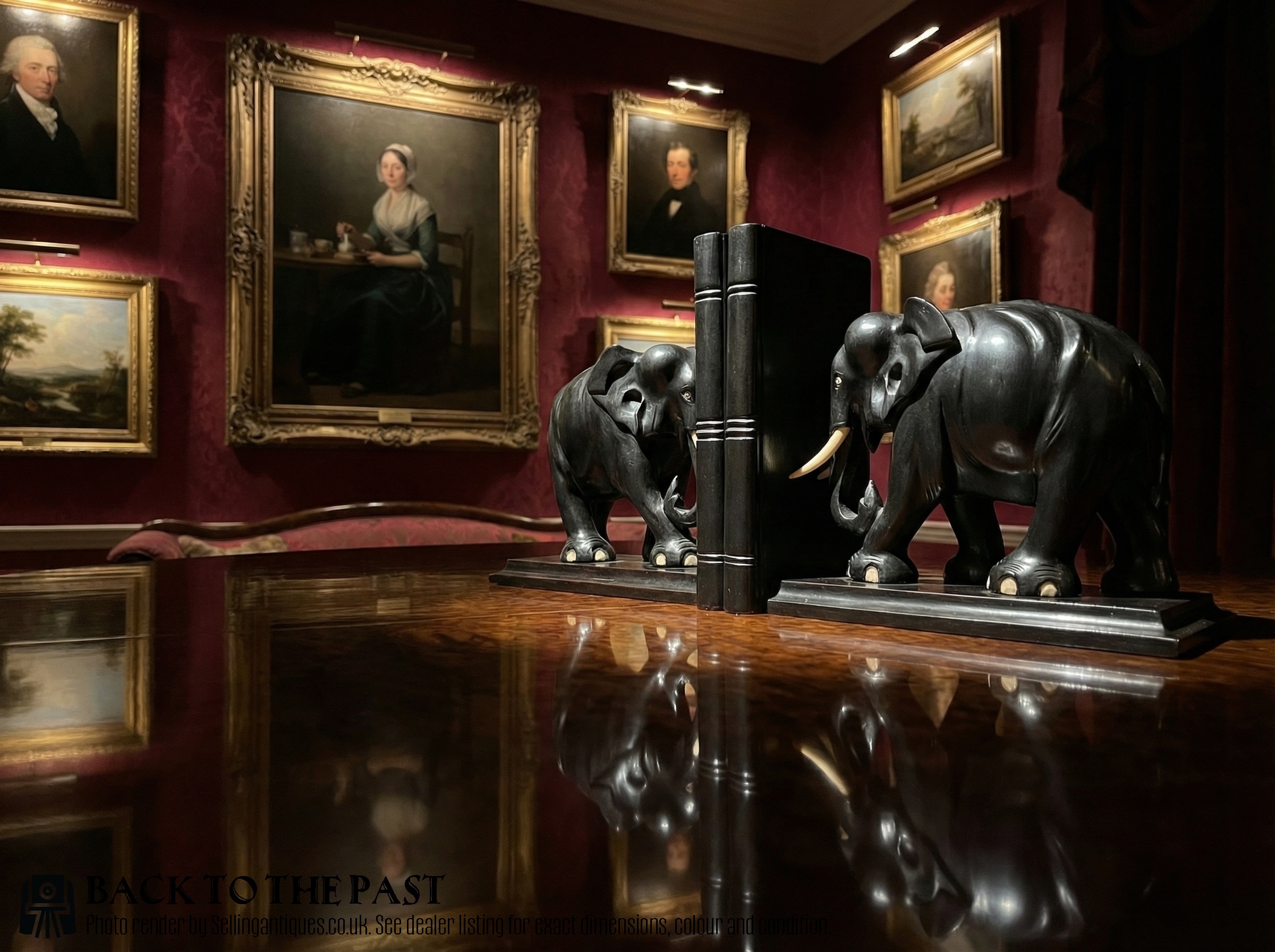
Vintage Animal Bookends
Vintage animal bookends encompass decorative supports modelled on creatures ranging from domestic dogs to wild fauna, designed to hold upright volumes on a shelf or desk. These objects emerge most frequently from the late nineteenth and early twentieth centuries, reflecting the period taste for naturalism and characterful fauna in domestic spaces.
Makers utilised various traditional formats, pairing matched beasts to anchor rowed volumes symmetrically. The collection spans Victorian productions through to modernist interpretations, offering different scales and material weights suitable for diverse interior settings.
Materials and Techniques
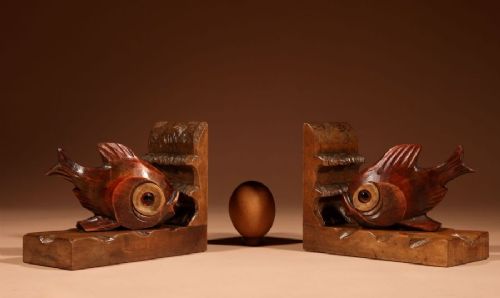
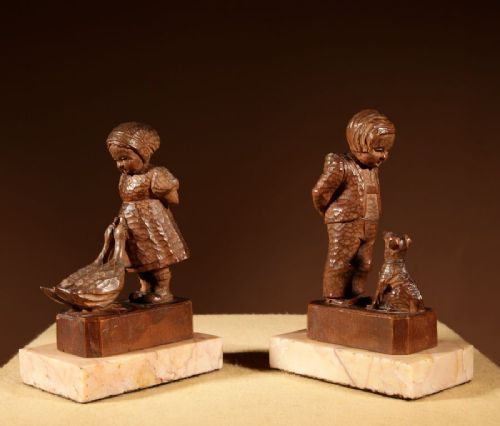
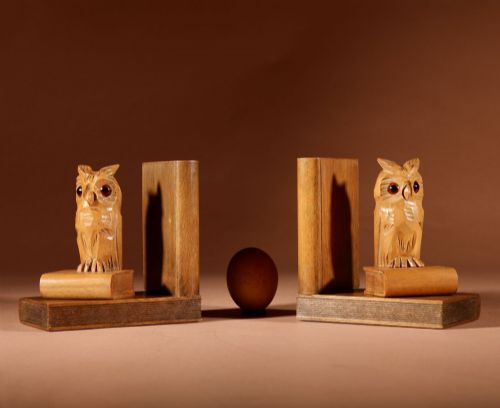
Carved timber forms a primary category, particularly in Black Forest and Anglo-Indian works utilising woods such as ebony, pine, bamboo and coromandel. Artisans shaped these materials by hand, capturing anatomical details in fur, feathers and skin through precise chisel work.
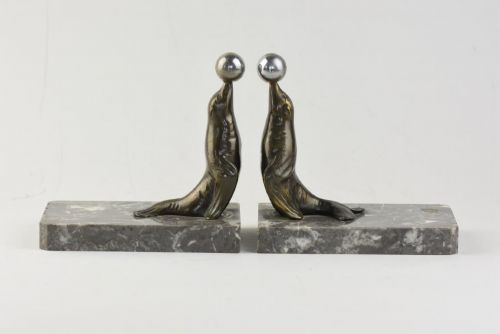
Metal and stone elements dominate the Art Deco pieces, employing cast bronze, brass, spelter, silvered bronze and marble. Foundries cast molten metals into moulds before finishing surfaces with patination, paint or polishing, mounting heavier metallic figures onto stone bases to provide the necessary weight for holding books.
Listings feature diverse animal subjects including dogs, elephants, lions, squirrels and sea lions rendered in materials spanning marble, bronze, wood and bone.
Assessing Quality and Execution
Material selection and structural integrity define the upper tier of production, visible in dense hardwoods, unblemished marble and substantial bronze castings. Original finishes and patination preserved over time distinguish exceptional survivals from pieces that have undergone heavy restoration or repainting.
Franz Gruber·C Omin·Karl Hagenaur
The Vintage Animal Bookends Glossary
- Black Forest
- A nineteenth and early twentieth-century style of wood-carving originating from the mountain region of central Europe, known for realistic depictions of bears, owls and other wildlife. These carvings typically employ lime or other regional timbers with dark stain finishes.
- Art Deco
- A design movement prevalent during the 1920s and 1930s characterised by streamlined geometric forms, stylised animal motifs and modern industrial metals. It succeeded the floral excess of earlier periods.
- Spelter
- An alloy of zinc and lead used widely in the manufacture of affordable decorative sculptures and bookends during the early twentieth century. It was frequently painted or bronze-plated to simulate heavier metals.
- Coromandel
- A dense, heavy tropical hardwood prized for its dark grain and used in nineteenth-century decorative objects and furniture from British India. It provides exceptional durability and a polished finish.
Vintage Animal Bookends: Frequently Asked Questions
How heavy do vintage animal bookends need to be?
Weight depends primarily on the density of the material and the volume of books you intend to support. Cast metal and marble pairs offer natural heft, while lighter wooden carvings rely on a wide base or backing plate to stabilize heavy literature.
For standard octavo volumes, moderate weight suffices, but substantial folios require the heavier bronze or stone combinations found in the twentieth-century selections.
How do I care for wooden animal bookends?
Timber surfaces require protection from direct sunlight and dramatic fluctuations in humidity to prevent the natural wood from splitting or warping. Dusting with a soft, dry cloth maintains the finish without introducing moisture.
A light application of appropriate furniture wax every few years helps nourish older woods like ebony or pine, preserving the subtle sheen developed over decades.
What is the difference between Victorian and Art Deco styles?
Victorian pieces tend toward ornate naturalism, folk art charm and heavier traditional materials like pine, ceramic and brass. They often depict animals in descriptive, storytelling poses.
Art Deco designs embrace sleek abstraction, stylised geometry and modern alloys like spelter or silvered bronze, reflecting the machine-age aesthetics of the 1920s and 1930s.
Where were Black Forest bookends made?
These decorative carved wooden items originated in the mountainous border regions of central Europe, particularly Switzerland and Germany. Local woodcarvers produced them for the tourist and export markets.
The distinct subjects, such as bears, owls and alpine dogs, became signature motifs of the region's cottage industries around the turn of the twentieth century.