


Dark Wood Book Ends
Dark wood book ends bring weight and character to a shelf, anchoring your volumes with solid timbers and carved detail.
Dark Wood Book Ends
When you search for dark wood book ends, you encounter items designed to keep upright rows of volumes on a shelf or desk. The selection includes paired carvings and extending slides originating across several centuries.
The most frequent examples on this page are carved pairs, often rendered in heavier timbers with distinct animal subjects. Alongside these dedicated bookends, the evidence includes extending book slides and rests that adjust to the shelf width.
The periods represented span from Georgian and Regency eras through Victorian, Edwardian, and Art Deco times. Styles range from Black Forest animal carvings to Gothic Revival pieces and Anglo-Indian craftsmanship.
Materials and construction
Makers utilised dense timbers such as oak, yew, ebony, coromandel, and teak, often finished with detailed hand carving. These woods provided the necessary heft to support heavy books without tipping.
Brass and mother of pearl frequently appear as decorative mounts, hinges, and inlay work, adding contrast to the dark timber surfaces. Glass and marquetry details also feature in specific Victorian and Edwardian examples.
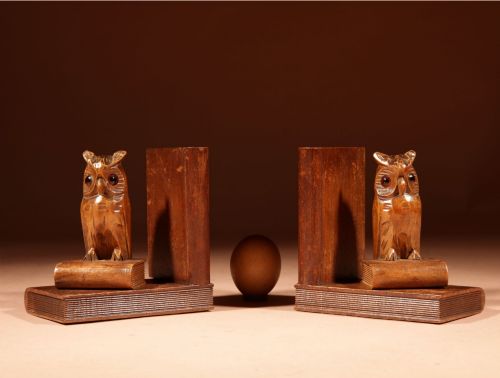
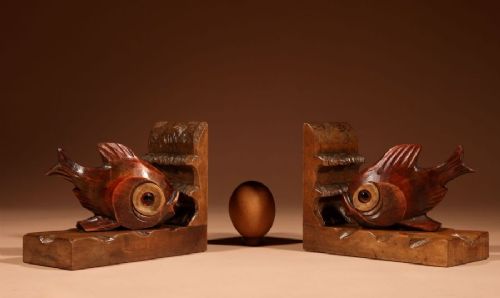
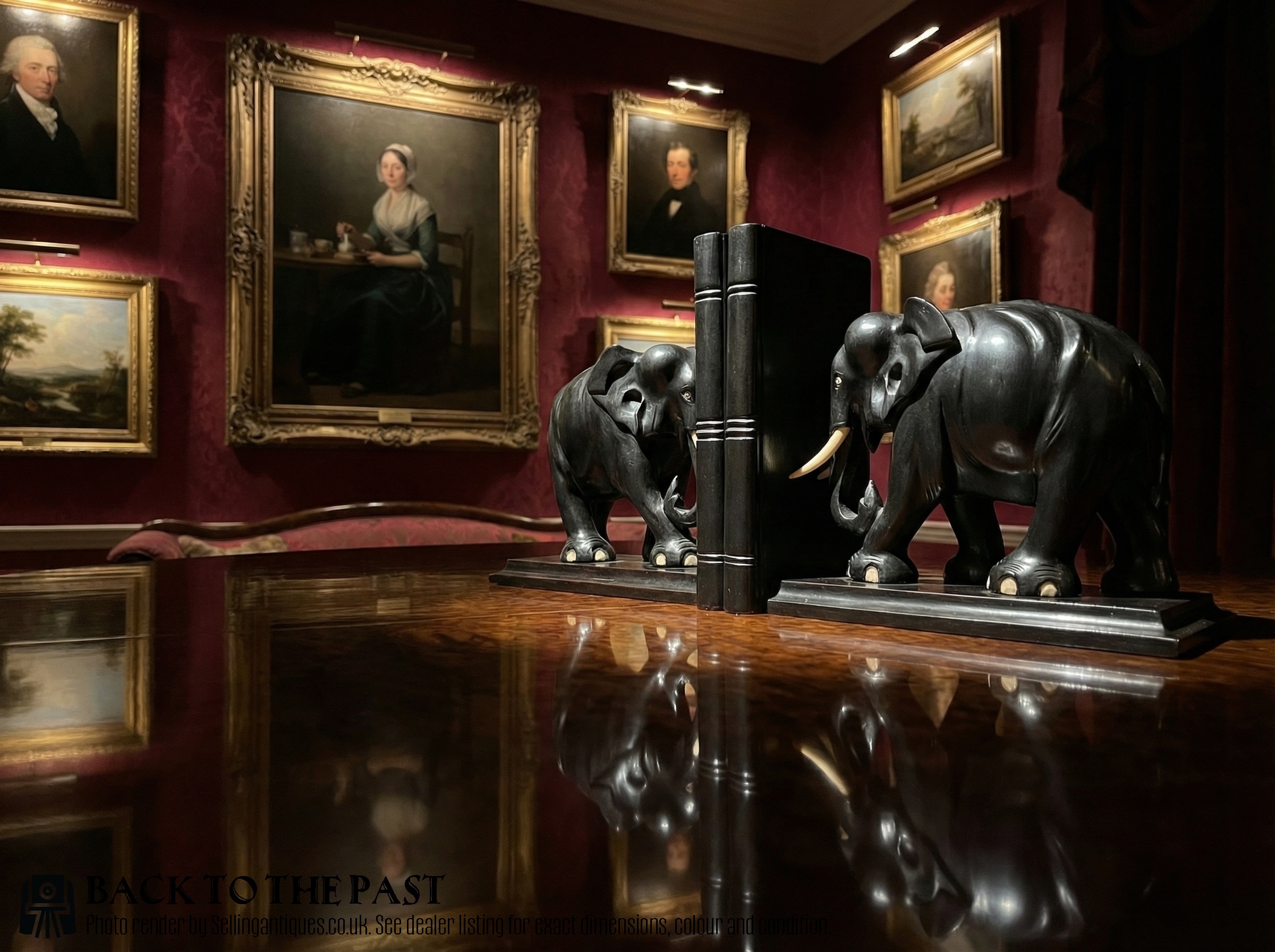
Owls, goldfish, and elephants stand guard over the library, proving that Victorian and Edwardian book storage had a delightful sense of humour.
Judging quality in dark wood
Quality rests in the precision of the carving and the selection of timber figures. Natural materials like mother of pearl and brass add refinement when integrated cleanly into the wood structure.
The integrity of extending mechanisms in book slides distinguishes standard utilitarian items from finer decorative accessories. Original patination on the timber surface indicates age and careful handling.
The Dark Wood Book Ends Glossary
- Book slide
- An extending wooden rack designed to hold a varying number of volumes upright between two fixed or moving ends.
- Coromandel
- A dense, heavily grained dark timber from Asia, prized for fine nineteenth-century desk accessories and slides.
- Black Forest
- A style of wood carving originating in Switzerland and Germany, known for naturalistic animal subjects such as owls and bears.
- Gothic revival
- A nineteenth-century design movement drawing inspiration from medieval architecture, often featuring pointed arches and heavy brass mounts.
Dark Wood Book Ends: Frequently Asked Questions
How do I care for dark wood book ends?
Keep wooden book supports away from direct sunlight and strong heat sources to prevent the timber from splitting. Dust them gently with a dry cloth and occasionally feed the wood with appropriate wax.
Avoid using modern liquid cleaners that can strip the original polish and patination from the surface.
What woods were used for antique book ends?
Cabinet makers utilised a range of heavy timbers including oak, yew, ebony, teak, and coromandel. These dense woods provided the natural weight needed to secure heavy books.
Linden wood and fruitwoods were also chosen for intricate figurative carvings, particularly in Black Forest work.
How do I identify a Victorian book rest?
Victorian book rests frequently combine dark timbers like mahogany with brass hinges, Gothic revival motifs, or inlaid mother of pearl. Their construction reflects the heavy, ornamental domestic tastes of the nineteenth century.
Extending mechanisms from this period often incorporate brass lazy tongs or sliding wooden channels.