

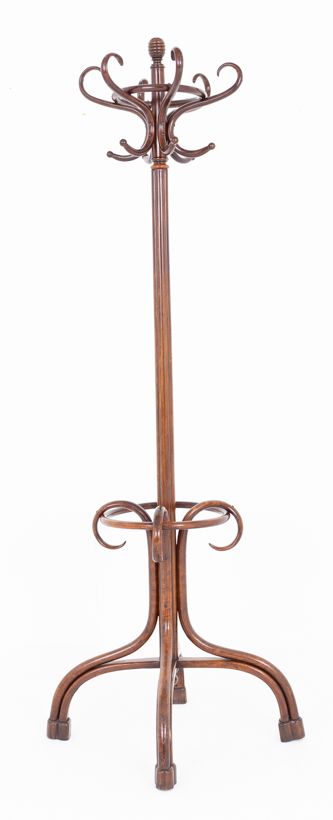
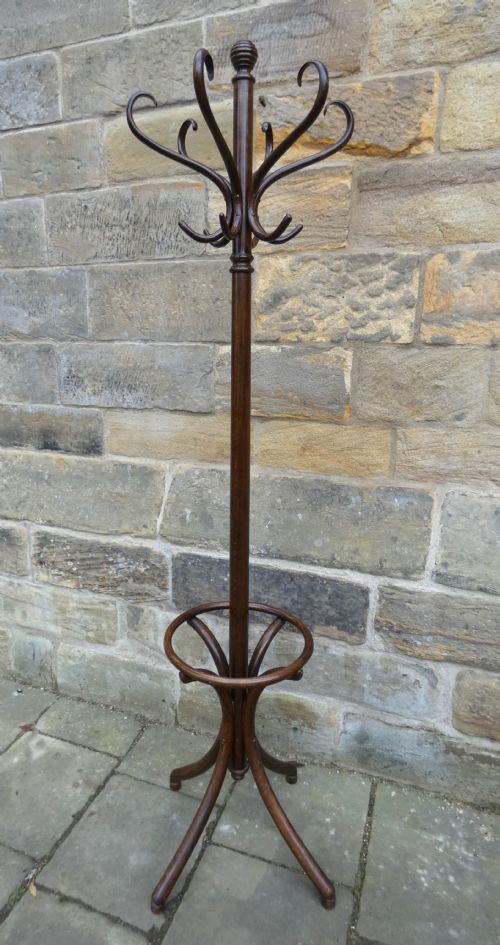
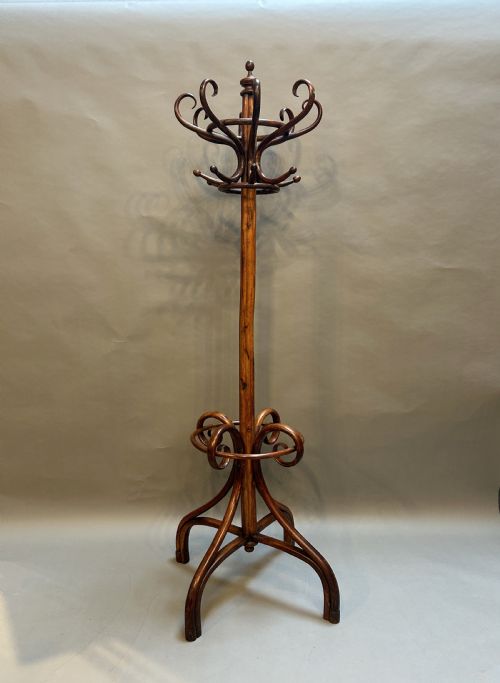
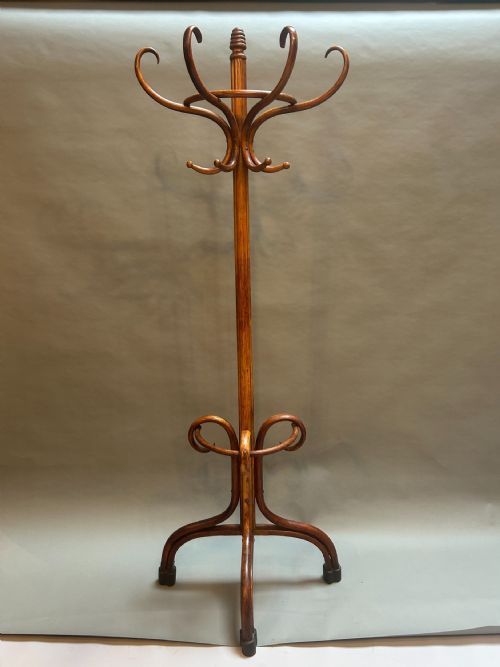


Vienna Bentwood Stand
A vienna bentwood stand offers architectural lightness and remarkable strength for hallways, bringing practical utility and classic lines to any interior.
Vienna Bentwood Stand
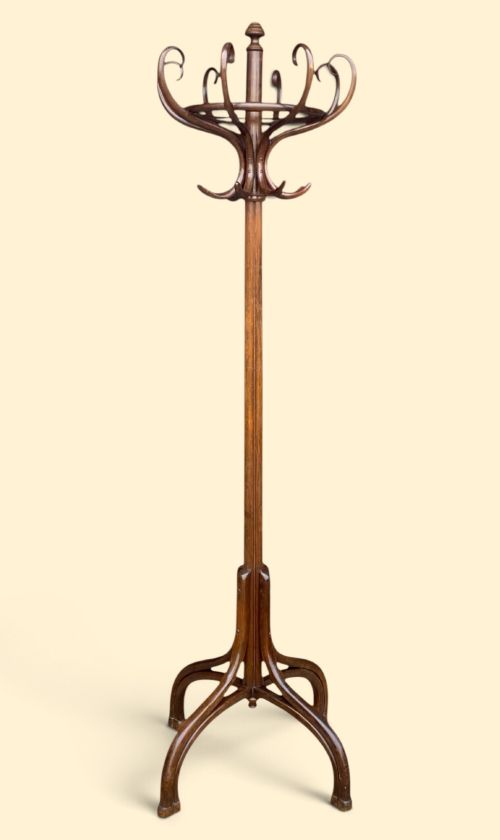
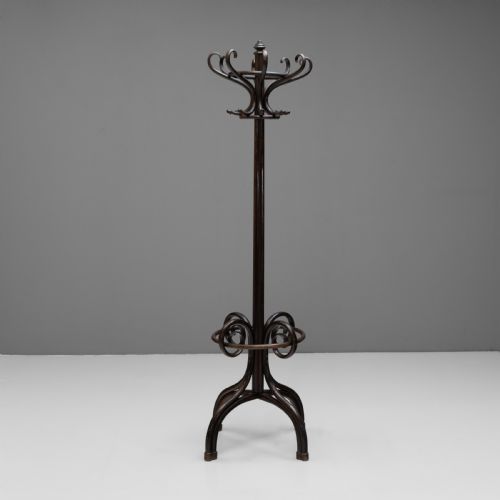
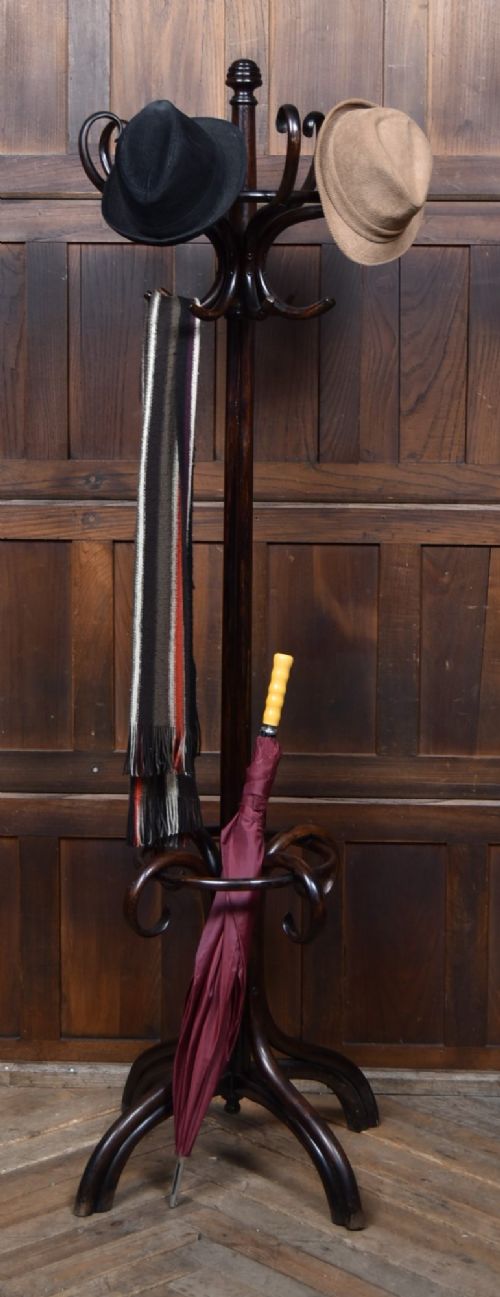
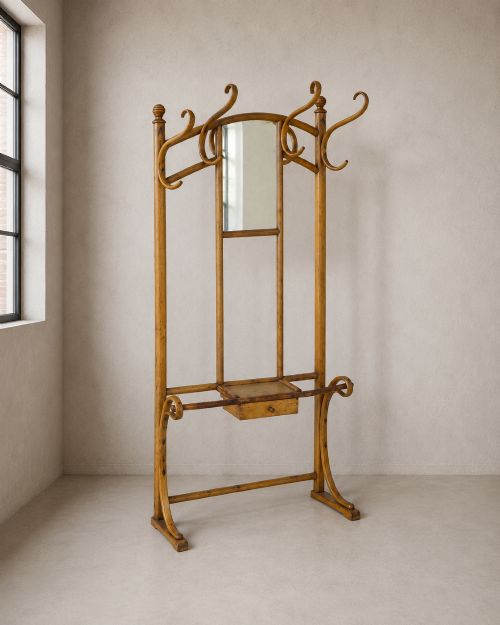
When you search for a vienna bentwood stand, you are looking at tall freestanding furniture designed for hanging hats, coats, and garments in entrance halls and vestibules. These pieces take the form of vertical columns fitted with curved upper hooks and occasionally lower umbrella rings or Demi Lune trays.
You are most likely to meet examples produced around nineteen hundred and the Edwardian period, along with later variations from the nineteen tens, twenties, and thirties. The forms range from simple revolving designs to large hall stands bearing the distinct aesthetic of Austrian bentwood and Thonet manufacture.
How they were made
These items rely on beech, bentwood, and steam-bent wood shaped through precise thermal processes to achieve their characteristic curves without breaking the grain. Craftsmen steam the timber until pliable, bend it into arches and loops, and secure the components to central structural posts.
Finishes typically involve wood stain, preserving the natural tone of the beechwood or adding a honey coloured lustre to the surface. Some iterations incorporate glass elements or hardware alongside the primary wooden frame.
Vienna Bentwood Stand Retail Price Guide 2026
Typical asking prices for vienna bentwood stand among the pieces listed under this phrase on Sellingantiques today, from the lower quarter to the upper quarter. They describe what is for sale here now, not the wider market.
Listings span periods from eighteen ninety through the nineteen thirties, encompassing Edwardian examples alongside specific nineteen hundreds and nineteen tens productions.
What varies in quality
The distinction between standard examples and finer pieces lies in the complexity of the bentwood forms and the fluidity of the curves. Superior items display harmonious proportions, seamless joinery, and retaining collars that distribute weight evenly across the structure.
Makers who applied rigorous steam-bending techniques produced stands that maintained their rigidity and balance over decades of heavy daily use. The presence of numbered models or specific workshop attribution adds considerable interest for collectors of the style.
The Vienna Bentwood Stand Glossary
- Bentwood
- Wood shaped by applying steam to soften the fibres before bending it into curved profiles. This technique allows for lightweight yet remarkably sturdy furniture construction.
- Demi Lune
- A half-moon shape often applied to the base or console sections of hall stands. It allows the furniture to sit flush against a wall while saving floor space.
- Thonet
- The pioneering firm and style associated with mass-produced steam-bent furniture. Their designs set the standard for nineteenth and twentieth-century bentwood production.
- Hall Stand
- A piece of hallway furniture combining coat hooks, hat racks, and sometimes umbrella storage. These items served as the primary greeting point for visitors in period homes.
Vienna Bentwood Stand: Frequently Asked Questions
What is a vienna bentwood stand?
A vienna bentwood stand is a tall vertical piece of hall furniture designed primarily for hanging coats, hats, and umbrellas in an entryway or hallway.
These pieces use steam-bent beechwood to create lightweight frameworks defined by sweeping curves and practical multi-tiered hanging hooks.
How do I date a bentwood hall stand?
Dating these stands involves examining the construction methods, hook attachments, and any maker marks stamped into the wood. Pieces associated with nineteen hundred or the Edwardian era often feature specific turning patterns and hardware styles distinct from later decades.
Earlier examples from the late nineteenth century tend to show heavier framing and distinct Thonet-style branding, whereas nineteen thirties variations sometimes display simpler, more streamlined profiles.
Where should I place a coat stand?
These stands belong in entrance halls, mudrooms, or vestibules where guests and family members drop outerwear upon entering the home. Their vertical footprint makes them suitable for narrow corridors.
Allowing sufficient clearance around the base ensures that coats and hats hang freely without crowding the surrounding walls.
Are revolving stands stable?
Revolving hall stands feature a rotating upper section that allows easy access to multiple garments without shifting the entire piece. Their stability depends on a heavy, well-balanced base.
Distributed weight across the upper hooks keeps the structure upright during daily use in busy hallways.