
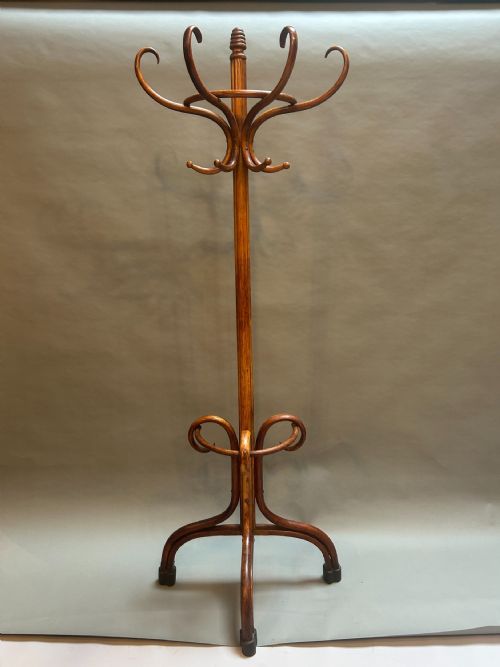
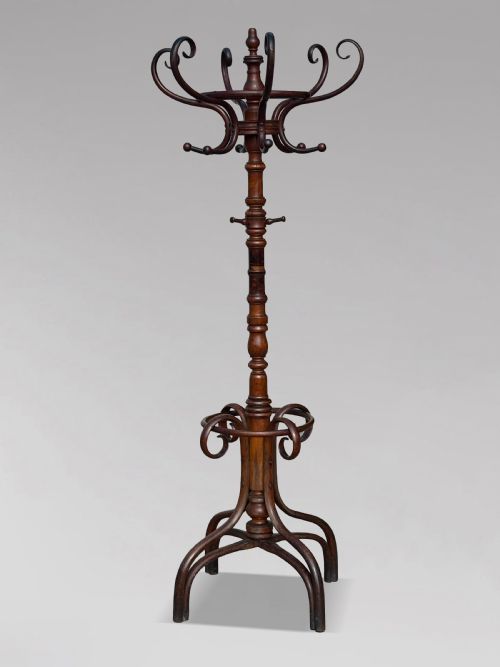


Beechwood Hall Stand
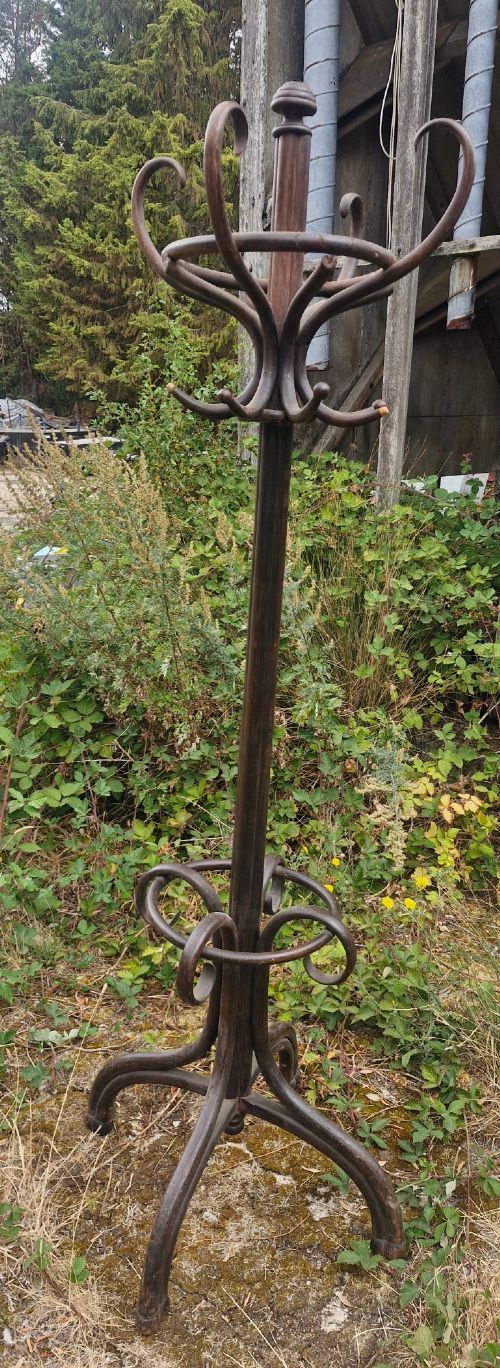
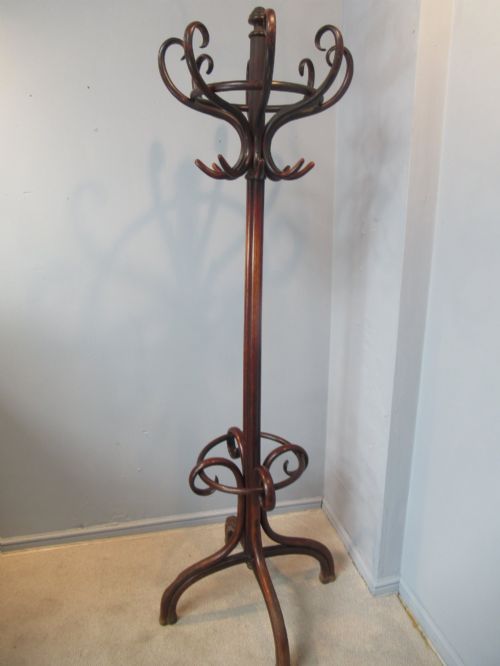
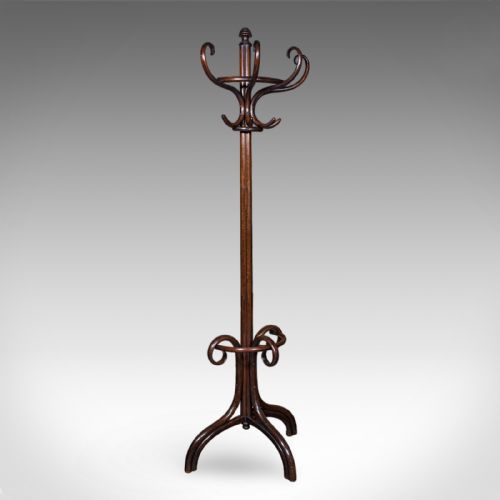
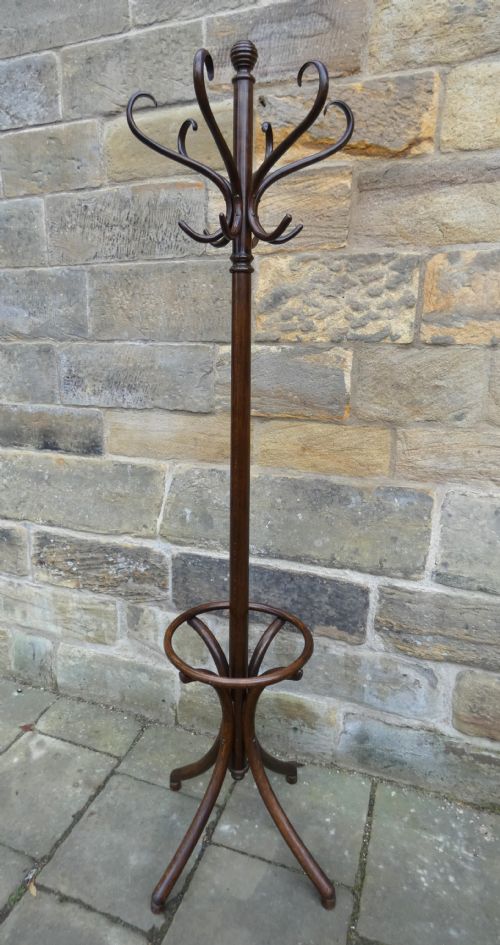
A beechwood hall stand gives an entranceway light timber warmth and practical hanging space through clever steam-bent construction.
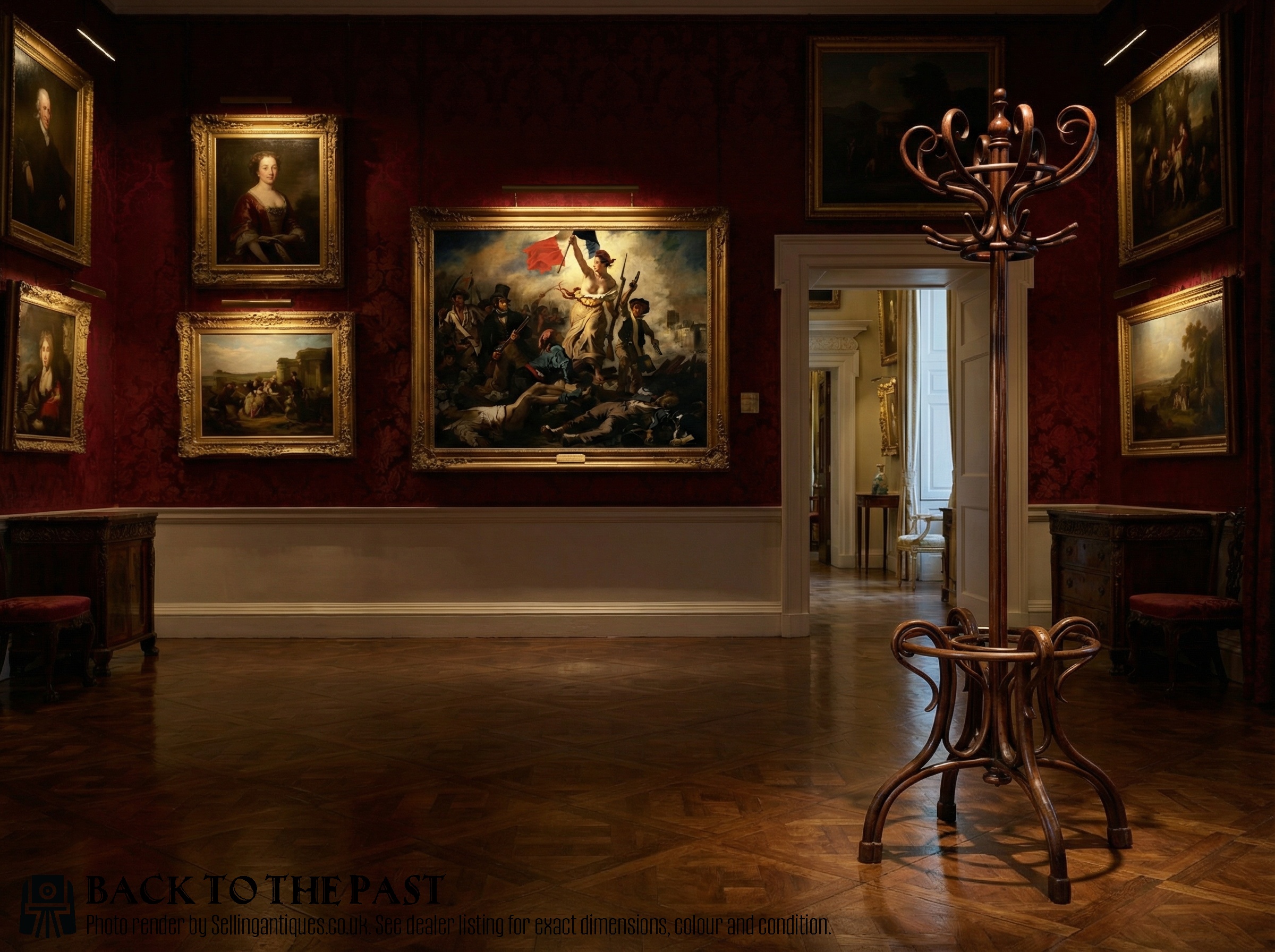
Beechwood Hall Stand
When you search for a beechwood hall stand, you encounter tall upright furniture designed for hallway use, primarily constructed from bent beech timber. The pieces appearing here span from the late nineteenth century through the Edwardian era into the nineteen-thirties, reflecting a sustained domestic demand for practical entrance storage.
The dominant version on this page is the bentwood hat and coat stand, often featuring curved hooks and occasionally incorporating revolving top sections. Forms range from compact demi-lune designs and half hall stands to substantial multi-purpose coat trees that accommodate hats, coats, and sometimes umbrellas.
Origins stretch from British domestic production to continental workshops, with Austrian bentwood examples appearing frequently among the listings. These versatile hall furnishings brought organic curves and functional organisation to Victorian and Edwardian hallways.
How they were made
Construction relies fundamentally on steam-bent beechwood, a technique where solid timber is subjected to moisture and heat until pliable, then shaped in metal forms to create characteristic continuous curves. This process produces lightweight yet remarkably resilient frames that utilise the natural tensile strength of beech.
Surfaces receive protective treatments including clear wood finishes and dark wood stains that enhance the grain while safeguarding the timber from daily wear. Selected models incorporate components such as glass elements alongside the primary wood structure to add functional utility.
Assembly methods frequently employ screwed joints and bent components locked into position under tension, creating stable upright structures without excessive heavy framing.
A revolving top section lets you spin your coat in circles until you find the scarf you lost last Tuesday.
What varies in quality
The distinction between standard examples and the finest pieces often rests upon the precision of the steam-bending and the complexity of the turned or curved components. Superior execution displays smooth, unbroken radius curves without grain distortion or stress fractures in the beech timber.
Attribution plays a role, as labelled or documented work by prominent bentwood makers commands distinct attention compared to anonymous production. The complexity of the specific form, such as revolving mechanisms or integrated demi-lune configurations, also elevates the architectural ambition of the piece.
Thonet·Fischel
The Beechwood Hall Stand Glossary
- Bentwood
- Wood shaped by applying steam and pressure to create permanent curves. This method defines the primary structural aesthetic of these hall furnishings.
- Demi-lune
- A half-moon shape used for console or hall stand profiles. This layout allows furniture to sit flush against an entrance wall while conserving valuable floor space.
- Hall stand
- A piece of furniture placed in an entrance hall for outdoor garments, hats, and accessories. It serves as an organised drop-off point immediately upon entering a home.
- Revolving top
- A rotating crown section on a coat stand allowing easy access to multiple hanging hooks. This feature permits efficient garment storage in compact hallways.
Beechwood Hall Stand: Frequently Asked Questions
What is a bentwood hall stand?
A bentwood hall stand is a tall upright furniture piece made from steam-bent beech timber, featuring curved hooks designed for hanging coats, hats, and umbrellas in an entrance hall.
These items gained popularity during the Victorian and Edwardian periods for their combination of lightweight strength and organic decorative form.
How do I maintain a beechwood hall stand?
Maintenance involves dusting the timber regularly with a soft cloth and occasionally applying suitable wood care products to preserve the finish.
Keep the stand away from direct heat sources and excessive moisture to protect the bentwood structure and prevent the timber from drying out.
Are these stands stable enough for heavy coats?
The steam-bent construction distributes weight effectively through the curved framework down to the wide base or legs.
Distributing heavy garments evenly around the hooks ensures the upright structure remains balanced during daily use in a busy hallway.
How can I tell the period of a hall stand?
Dating relies on stylistic markers such as Victorian ornamentation, Edwardian proportions, or Art Nouveau curves, alongside any manufacturer labels stamped into the wood.
Construction details, types of wood stain, and the presence of turning also help assign pieces to periods spanning from the late nineteenth century into the twentieth.