
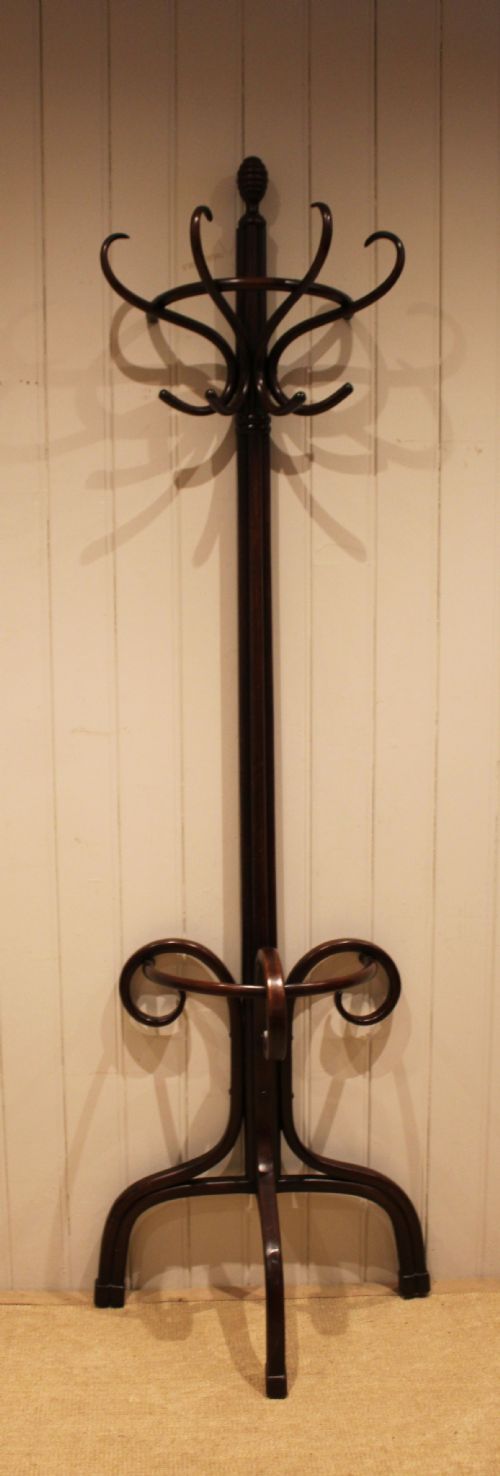


Vienna Bentwood Hall Tree
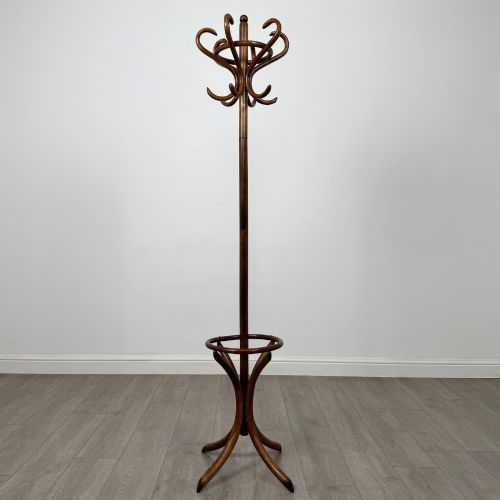
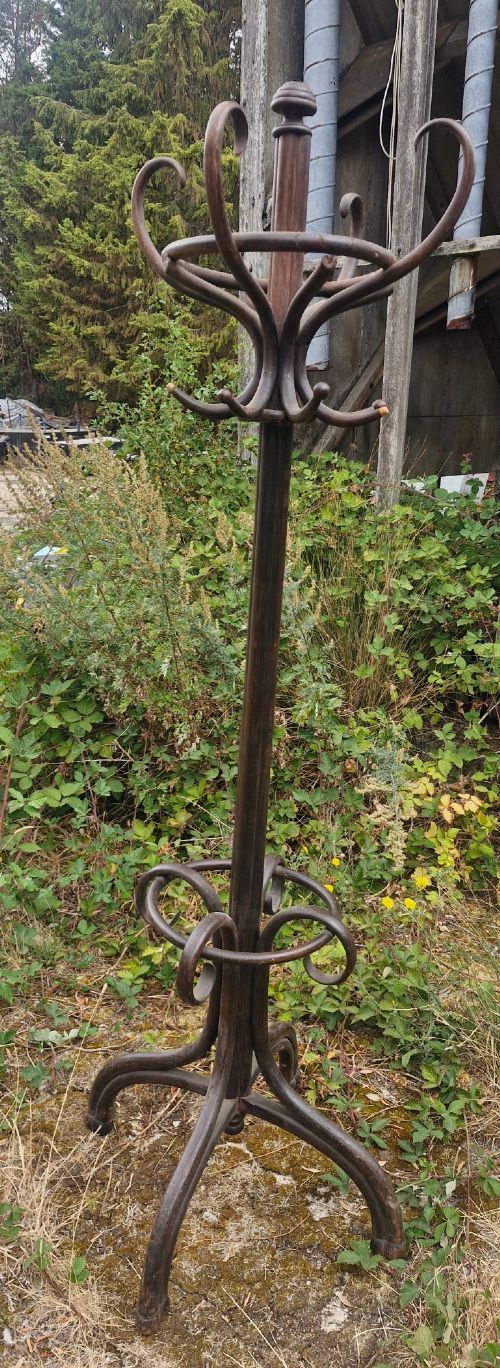
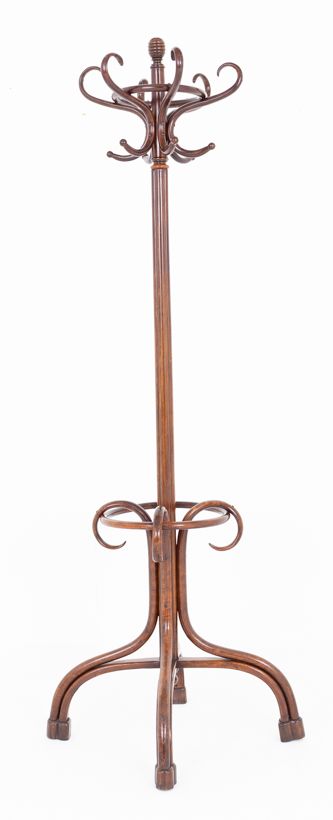
A vienna bentwood hall tree brings lightness to an entryway, using curved beech to hold hats and coats with simple elegance.
Vienna Bentwood Hall Tree
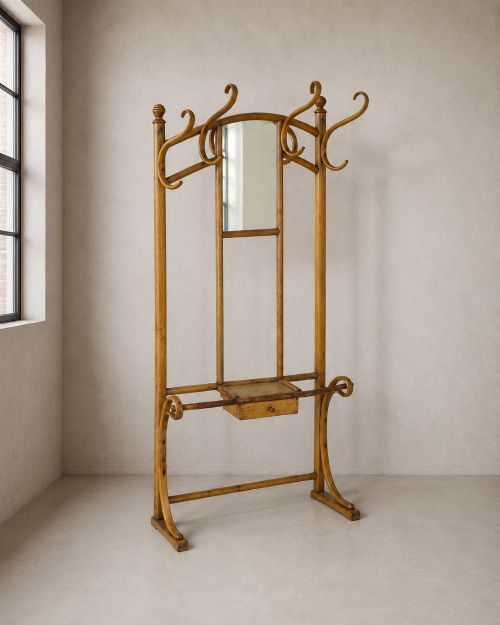
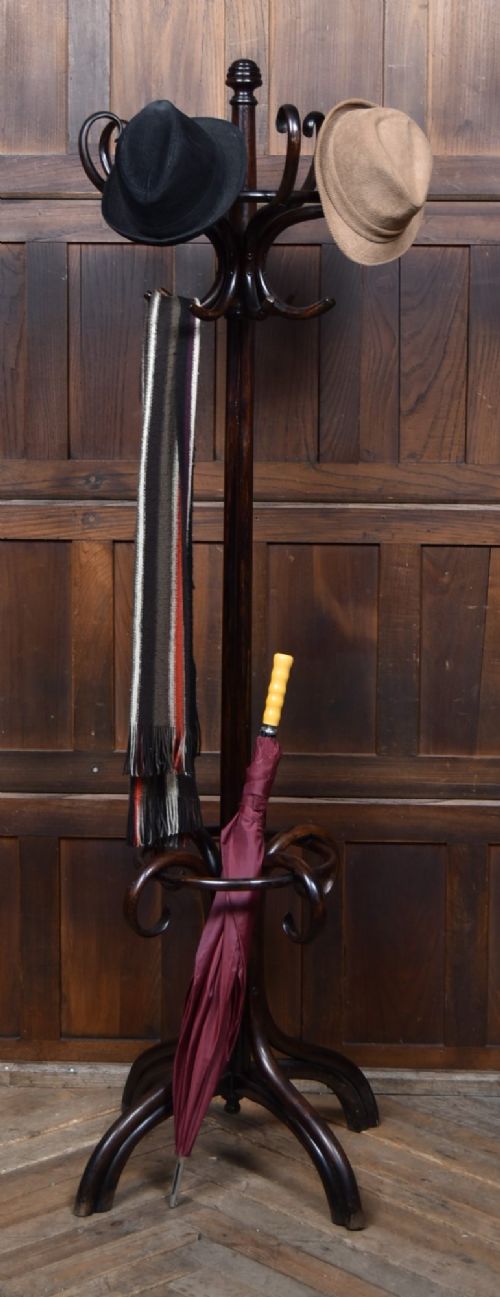
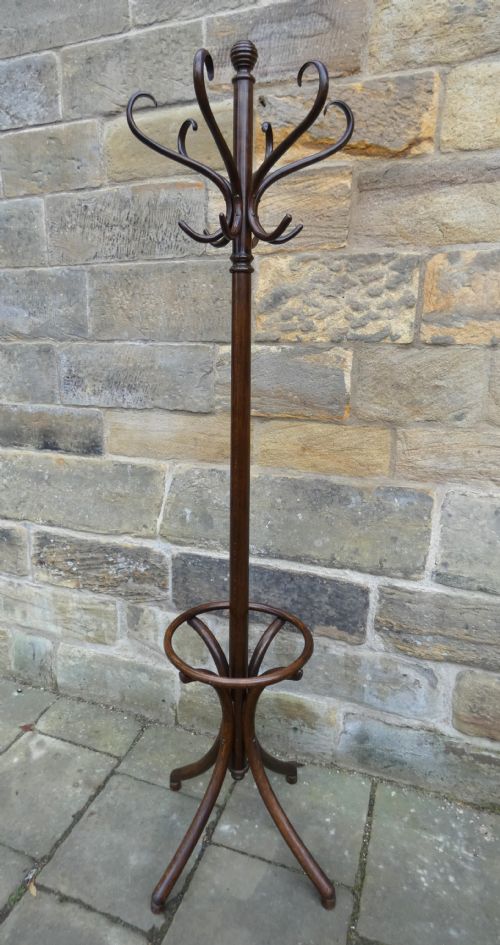
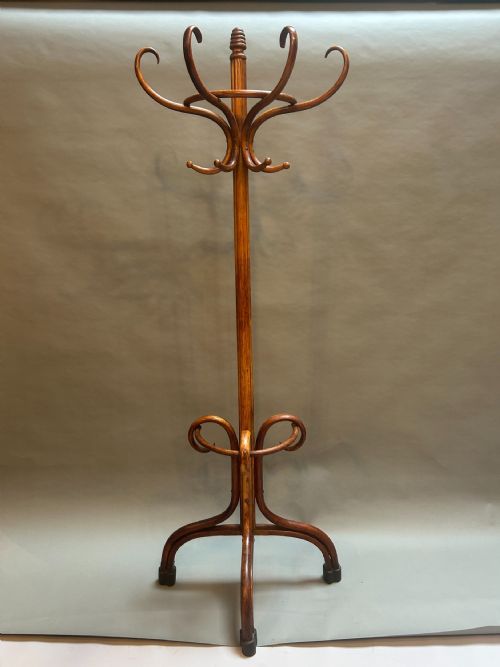
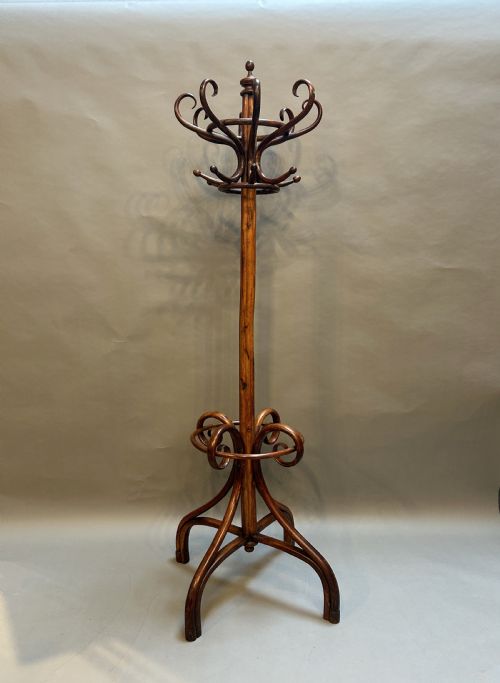
A vienna bentwood hall tree is a tall freestanding piece designed to hold hats, coats, and sometimes umbrellas in a hallway or vestibule. These stands date from the late nineteenth century through the early twentieth century, spanning periods from eighteen ninety to nineteen thirty. The most common examples seen here are Edwardian or early twentieth century pieces.
Most entries follow the Thonet style or Austrian bentwood tradition, originating from Viennese workshops. They take the form of coat stands, hat stands, and combined hall stands with hooks arranged around a central pole. A demi lune version or a revolving model occasionally appears among the standard upright designs.
How they were made
Makers utilised solid beech and beechwood, which responded exceptionally well to steam treatment. Wood strips were placed in a steam box until pliable, then bent by hand into graceful curves using iron forms.
Once dry, the components retained their rigid shape without losing structural strength. Pieces were joined with screws or metal brackets, then treated with a wood stain or wood finish to highlight the grain of the bentwood.
A revolving top tier lets you spin your coat collection like a carousel while deciding what to wear.
What varies in quality
The sophistication of the steam-bent curves defines the craftsmanship of a stand. Tighter, more complex bends require greater skill and superior timber that resists splitting under pressure.
Proportion and stability separate standard utility pieces from finer examples. Heavier turnings on the base and well-balanced arrangements of multiple tier hooks indicate thoughtful design and careful construction.
Thonet
The Vienna Bentwood Hall Tree Glossary
- Bentwood
- Wood that has been shaped by applying steam and pressure to create smooth, permanent curves. This technique allows for lightweight yet sturdy furniture frames.
- Beech
- A hard, dense timber with a fine, close grain that takes steam-bending exceptionally well. It serves as the primary material for Austrian and Viennese stands.
- Thonet
- A pioneering furniture maker known for industrialising steam-bent wood production. Their distinctive designs heavily influenced the Austrian bentwood tradition.
- Demi Lune
- A half-moon shape used for the base or profile of certain hall stands. This design allows the stand to sit flush against an entryway wall.
- Revolving
- A rotating top section that allows easy access to multiple hooks. This mechanical feature appears on select hall stands.
Vienna Bentwood Hall Tree: Frequently Asked Questions
What is a bentwood hall tree?
A bentwood hall tree is an upright wooden stand featuring multiple curved hooks for hanging coats and hats. They were designed for hallways and entryways to keep outdoor garments organised.
Most examples utilise steam-bent beech and date from the late Victorian period through the nineteen thirties. Their open, slender profile prevents them from dominating small spaces.
How do I date a bentwood stand?
Dating relies on stylistic clues, construction methods, and manufacturer labels when present. Pieces from eighteen ninety often feature heavier proportions, while nineteen twenty examples lean towards simpler lines.
Reference points include the Edwardian era and the early twentieth century. Comparing the complexity of the bends and the base design helps place the piece within its historical decade.
Where should I place one?
These stands suit entrance halls, boot rooms, and spacious corridors where coats and hats accumulate. Their vertical orientation makes efficient use of floor space.
Keep them away from direct heat sources and strong sunlight to protect the wood finish and prevent the steam-bent components from drying out excessively.
Are they stable enough for heavy coats?
Properly balanced bentwood stands easily support everyday coats, hats, and scarves. The wide wooden bases provide a secure footing for the tall central pole.
Distributing weight evenly across the upper hooks ensures the stand remains balanced. Heavier items work best on the lower tiers of hooks.