
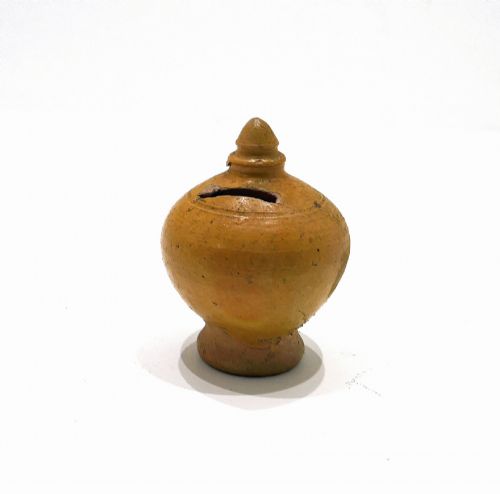


Victorian Yellow Ceramics
Victorian yellow ceramics bring warmth and rich colour to interiors through glazed earthenware, porcelain and majolica made during the nineteenth century.
Victorian Yellow Ceramics
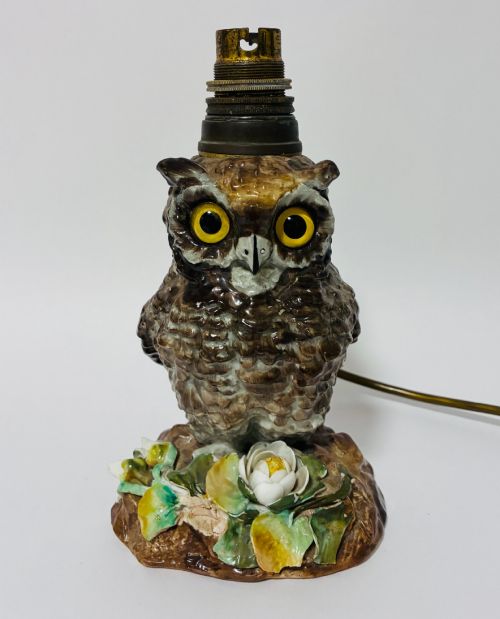
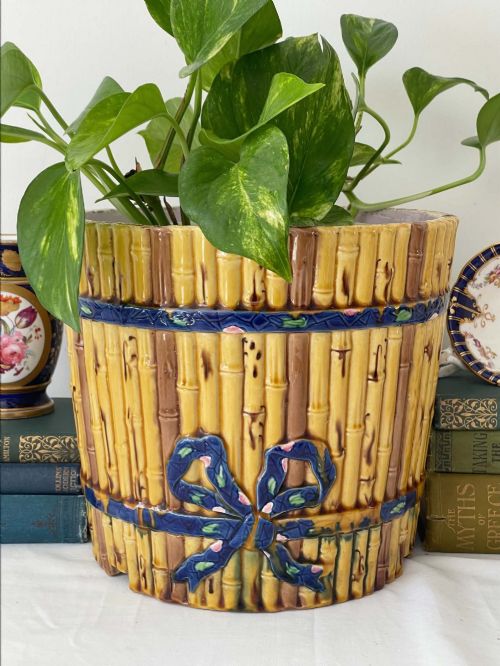
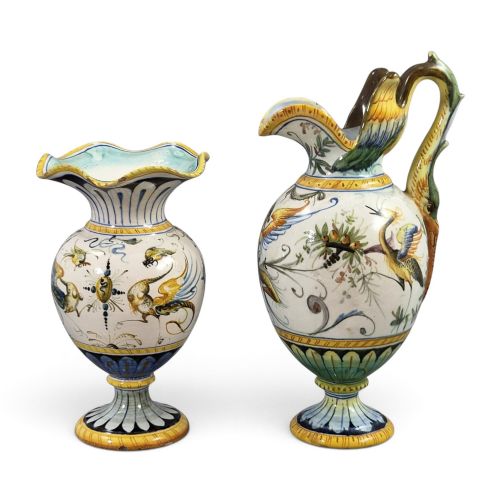
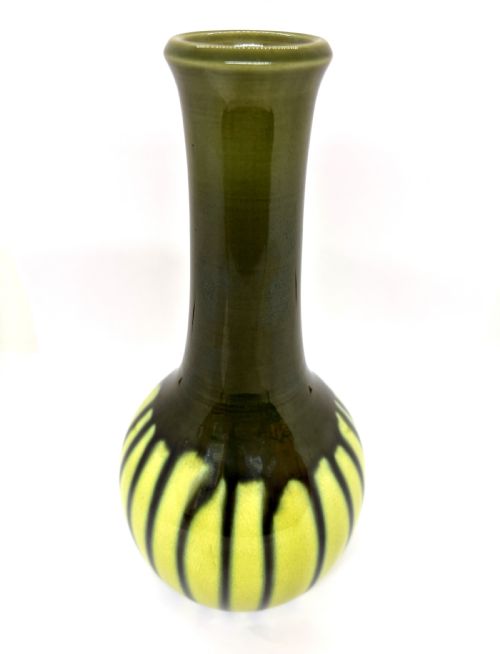
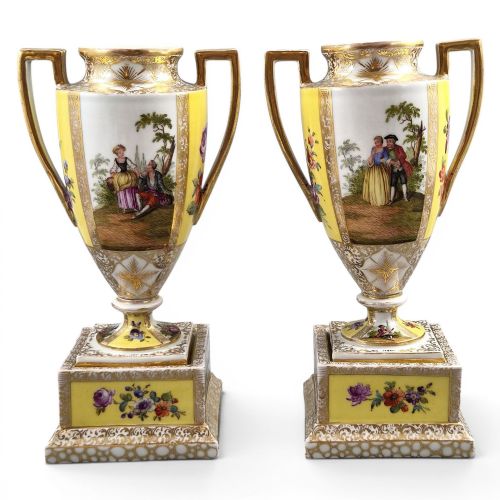
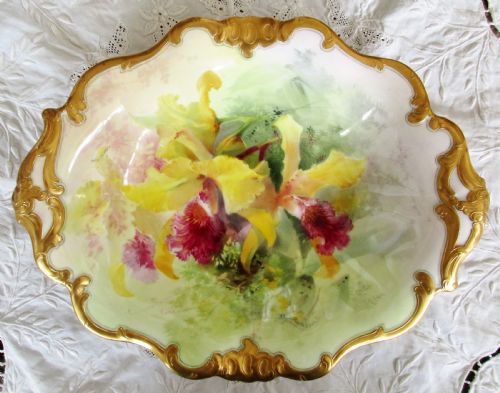
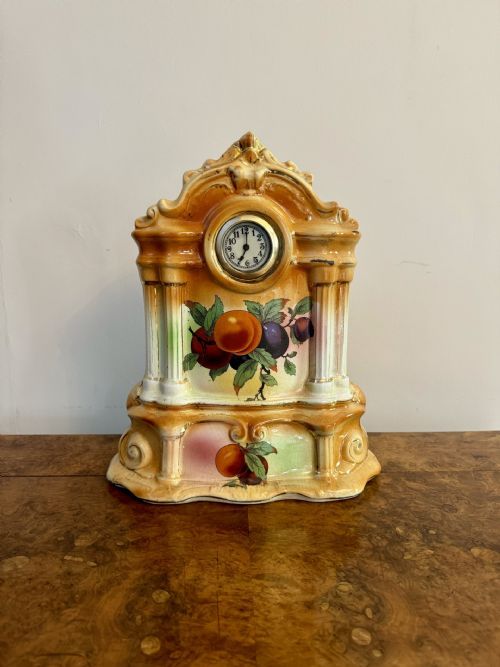
These items encompass domestic wares, decorative vessels and architectural pieces produced primarily during the nineteenth century and into the early twentieth century. When exploring victorian yellow ceramics, collectors encounter objects ranging from majolica umbrella stands and ewers to porcelain cabinet dishes, mantel clocks and table lamps.
The selection reflects diverse regional traditions and studio output, including English earthenware, continental majolica and porcelain figures. Forms vary from large jardiniere planters and dairy bowls down to decorative tiles, apothecary items and tea sets.
Materials and production methods
Potters shaped these pieces using earthenware, ironstone and porcelain, applying coloured glazes, enamel and occasionally gold leaf to achieve surface depth. Many examples utilise majolica techniques, where vibrant metallic oxides fuse with an opaque tin glaze during kiln firing.
Makers employed specialised glazing methods such as faience work and Slaters patent texturing to create tactile patterns across vases, lamp bases and wall plaques.
Listings feature items spanning the nineteenth century up to the 1920s, employing earthenware, porcelain, glass and brass.
Distinguishing quality and execution
Standard varies through the precision of hand-painted detailing, the crispness of moulded relief work and the richness of the underlying glaze. Pieces decorated by named artists or produced by notable potteries display superior technical control in their palette and firing.
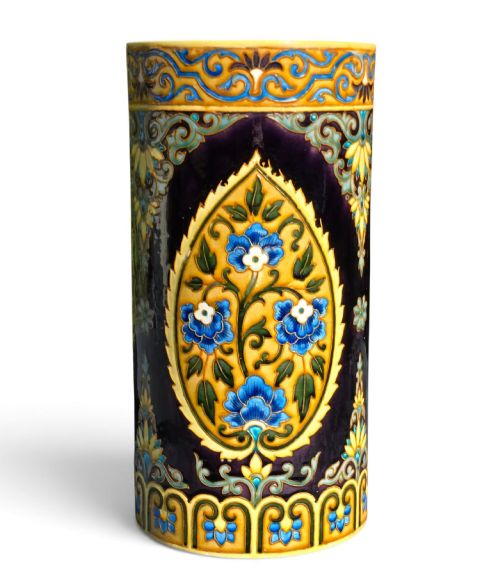
The integrity of the body, the complexity of revival styles such as Iznik or Renaissance motifs, and the overall balance of the form dictate distinction within this category.
Théodore Deck·Minton·Meissen·Cantagalli Florence·Burmantofts Pottery·Royal Doulton·Doulton Lambeth·Royal Crown Derby·Royal Bonn·Royal Worcester·Wedgwood·William de Morgan
The Victorian Yellow Ceramics Glossary
- Majolica
- A type of earthenware decorated with opaque tin glazes and fired with metallic oxide colours. This technique produces vibrant, glossy surfaces found on many nineteenth-century planters and umbrella stands.
- Earthenware
- Porous pottery fired at lower temperatures, requiring a glaze to hold liquids. It serves as the primary body for many utilitarian and decorative nineteenth-century vessels.
- Faience
- European tin-glazed pottery, often incorporating intricate hand-painted designs or textured surfaces. Examples include nineteenth-century vases and architectural elements.
- Ironstone
- A durable type of British semi-vitreous pottery developed to rival Chinese porcelain. It provides a sturdy base for teapots, jugs and chargers.
- Porcelain
- A fine-grained, translucent ceramic fired at high temperatures. It forms the material basis for delicate cabinet dishes, figurines and decorative urns.
Victorian Yellow Ceramics: Frequently Asked Questions
What styles influence these yellow ceramics?
Designers drew heavily from historical movements, producing pieces in Renaissance Revival, Rococo Revival and Iznik Revival styles. Naturalism also heavily influenced decorators who favoured botanical and animal motifs.
English Country Folk Art traditions sit alongside high-style aesthetic movement pieces within the same period, reflecting varied domestic and international tastes.
Can these ceramic lamps be rewired?
Many nineteenth-century ceramic and brass lamp bases are adapted for modern electrical standards by professional electricians. Preserving the original body while updating internal components allows safe daily use in contemporary interiors.
Consult a specialist conservator or experienced lighting technician to ensure any rewiring respects the structural integrity of the antique ceramic body.
How do I date a ceramic piece?
Examine the base for impressed factory ciphers, registration marks, date codes or artist signatures that indicate the exact year of manufacture. Stylistic clues such as glaze composition and form also point toward specific decades within the nineteenth century.
Reference marks against established pottery archives to narrow down the production window, keeping in mind that some marks were used continuously over extended periods.