


Late Victorian Ewers
Late victorian ewers are water vessels turned decorative ornament, offering sculptural forms that bring period character to any mantelpiece.
Late Victorian Ewers
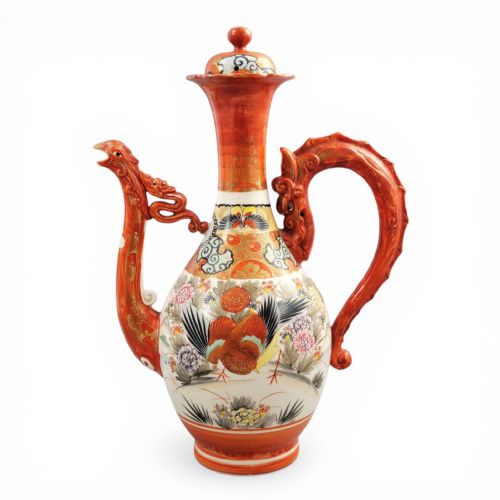
When you search for late victorian ewers, you encounter ornamental vessels rooted in historical water pitchers, spanning the late nineteenth century and the early decades of the twentieth. The examples on this page encompass porcelain, ceramic, earthenware, glass, and gilt metal forms.
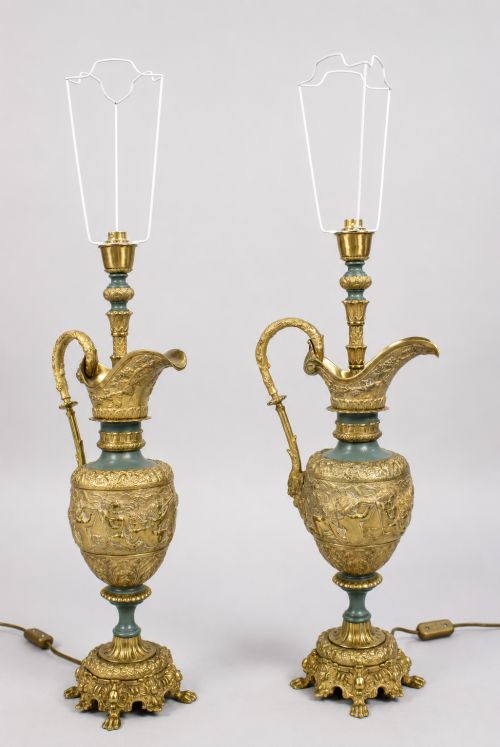
Most pieces date around eighteen-ninety, drawing on Victorian aesthetic movement, neoclassical, and Japanese Meiji period styles. You find pairs configured as table lamps alongside traditional decorative ewers, jugs, and washstand sets.
Many items originate from established potteries such as Royal Worcester, Doulton Burslem, and Royal Crown Derby. The selection ranges from reticulated porcelain and blush ivory finishes to hand-blown glass and Persian influenced pottery.
What varies in quality
Quality rests upon the crispness of the modelling and the precision of the hand-painted decoration across the body and handle. Potteries like Royal Worcester achieved exceptional refinement in their blush ivory finishes and gilt detailing.
The sophistication of the stylistic influence, whether classical revival, Persian design, or Japanese Meiji motifs, dictates the artistic ambition of the piece. Intricate reticulation and well-preserved gilding or gilt metal mounts elevate the standing of an ewer.
The site records periods from eighteen-sixty through the Victorian era up to nineteen-twenty.
Royal Worcester·Doulton Burslem·Royal Crown Derby·Grainger Worcester·Sherwin & Cotton·Vienna porcelain
The Late Victorian Ewers Glossary
- Ewer
- A large jug or pitcher with a wide spout and handled body, traditionally used for water but chiefly decorative in this period. These vessels evolved from functional washstand accessories into purely ornamental mantel and table pieces.
- Reticulated
- Decorated with an openwork network of pierced holes forming a lattice pattern across the ceramic. This labour-intensive technique demonstrates high technical skill in Victorian porcelain manufacturing.
- Blush Ivory
- A matt cream ceramic finish developed by Royal Worcester featuring soft pastel flower painting and gilt highlights. The technique imitates the subtle warmth of natural ivory.
- Meiji Period
- The era in Japanese history spanning from eighteen-sixty-eight to nineteen-twelve, which heavily influenced British aesthetic design through imported motifs and dragon or phoenix iconography.
- Neoclassical
- A revival style drawing on classical Greek and Roman art forms, characterised by restrained symmetry, urn profiles, and formal ornamentation.
Late Victorian Ewers: Frequently Asked Questions
What is a late victorian ewer used for?
These pieces served primarily as decorative ornaments on mantelpieces, sideboards, or as part of washstand sets during the late nineteenth century.
Today, collectors display them as sculptural objects or utilise converted ewer form table lamps for ambient lighting.
How do I identify a Royal Worcester ewer?
Look for characteristic blush ivory ceramic bodies, delicate hand-painted floral motifs, and gilt accents across the handle and spout.
Many pieces feature factory puce marks or specific date ciphers from the eighteen-nineties on the underside.
Are these ewers made of porcelain or pottery?
The listings include both fine porcelain and heavier earthenware or ceramic bodies depending on the pottery and the intended style.
Some examples also incorporate hand-blown glass, gilt metal mounts, and brass elements.
What styles influence late victorian ewers?
Designs draw heavily from the Victorian aesthetic movement, neoclassical revival, and Japanese Meiji period motifs.
You also encounter Persian influenced pottery styles and classical revival shapes among the various manufactories.
How should I clean my antique ewer?
Dust gently with a soft, dry cloth to protect delicate gilt leaf, hand-painted enamels, and reticulated porcelain surfaces.
Avoid using water, chemical cleaners, or abrasive cloths that might damage the antique glaze or gilding.