


Decorative Porcelain Ewers
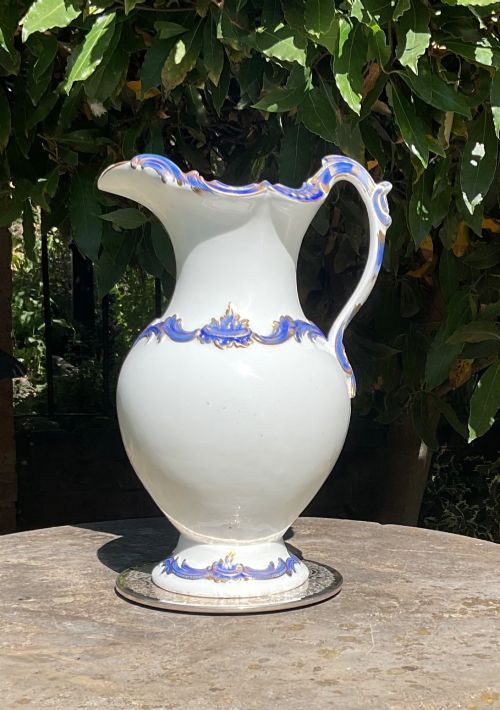
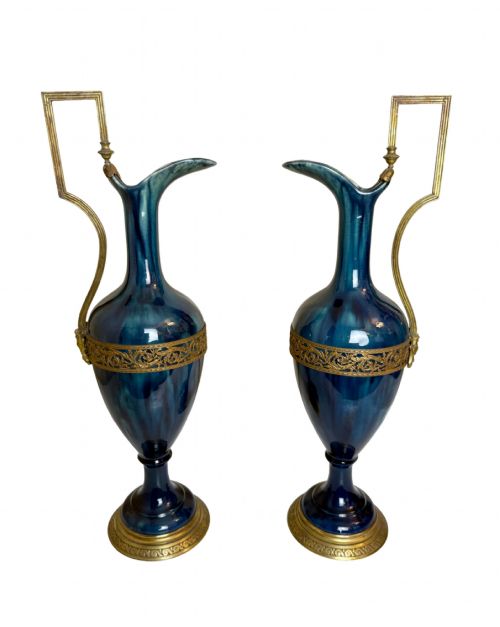
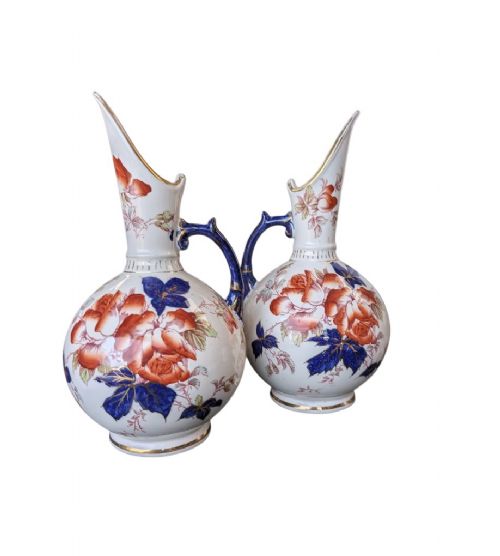
These decorative porcelain ewers bring sculptural form and rich painting to a mantelpiece, showing the heights of nineteenth and early twentieth century ceramic design.
Decorative Porcelain Ewers
Decorative porcelain ewers take the ancient form of the pouring vessel and turn it into a purely ornamental display piece, often paired with matching basins or companion urns. When you search for decorative porcelain ewers, you encounter bulbous jugs, pedestal vases with handles, and slender wine ewers shaped for visual effect rather than practical service. The versions found here span the Victorian, Edwardian, and early twentieth century eras, showing the persistent taste for ornate ceramic forms.
Makers drew on diverse design languages, from Rococo Revival curves and French Neoclassical symmetry to Japanese Imari palettes and Persian motifs. You will frequently meet pieces bearing the marks of major English potteries like Royal Worcester and Doulton Burslem, alongside continental works from Vienna and Minton. These vessels range from intimate scent bottles to large table centrepieces.
The utility of the traditional water jug vanished entirely in these designs, replaced by elaborate spouts, scroll handles, and slender necks that prioritize silhouette over function. Many examples integrate gilt bronze mounts or reticulated panels to heighten their decorative presence. They survive as records of Victorian and Edwardian parlour taste.
How they were made
Potters shaped these vessels using fine porcelain or earthenware bodies, often applying delicate biscuit or blush ivory glazes as a ground for hand painting. Artisans built up floral panels, landscapes, and abstract motifs using enamel colours that required multiple firings in kiln heat to fix the pigments. Factories employed specialist artists to paint birds, flowers, and classical scenes directly onto the ceramic surface.
Guilders and decorators added lavish surface detail through the application of gold leaf, raised gold decor, and heavy gilding along the rims, handles, and foot rings. Some advanced pieces incorporated reticulated openwork cutting in the wet clay before firing, creating intricate latticework patterns across the body of the ewer. Gilt bronze mounts were sometimes fitted to the finished porcelain to provide architectural contrast.
Listings feature Victorian and Edwardian porcelain ewers utilising gold leaf, enamel, and blush ivory glazes across various revival styles.
What varies in quality
The distinction between standard production and the finest work lies in the ambition of the hand painting and the crispness of the moulded relief. Pieces signed by known factory artists or decorated with raised gold and encrusted flowers represent the upper tier of output. The complexity of the ceramic body, such as reticulated piercing or blush ivory gradients, signals higher manufacturing ambition.
Proportion and weight also divide the range, as sturdier bodies with cast bronze mounts or detailed pedestal bases demand greater technical skill. The preservation of the original gilding and enamel brilliance without rubbing determines the visual strength of a surviving piece. Marks on the underside, such as specific puce factory stamps, help anchor the pedigree of the finer examples.
Royal Worcester·Doulton Burslem·Royal Crown Derby·Coalport·Minton
The Decorative Porcelain Ewers Glossary
- Ewer
- A large jug with a wide spout and a curved handle, traditionally used for holding water but made here purely for display. Many examples feature slender necks and pedestal feet.
- Reticulated
- Pierced or openwork ceramic decoration formed by cutting into the clay body before firing to create a lattice effect. Grainger Worcester specialised in this intricate technique.
- Gilding
- The application of gold leaf or gold paint to highlight rims, handles, and painted panels. Raised gold decor adds a tactile, three-dimensional quality to the surface.
- Blush ivory
- A matte cream-coloured glaze developed by Royal Worcester in the late nineteenth century, providing a soft ground for floral hand painting. It mimics the appearance of natural ivory.
- Imari
- A style of ceramic decoration featuring deep underglaze blue and iron red combined with gold, borrowed from Japanese export porcelain. Victorian factories frequently adapted this palette for ewers.
Decorative Porcelain Ewers: Frequently Asked Questions
What is a decorative porcelain ewer?
A decorative porcelain ewer is a non-functional pouring vessel created purely for visual display on sideboards, mantels, or washstands during the nineteenth and early twentieth centuries. These pieces translate classical and revivalist forms into elaborate ceramic sculptures.
They often feature hand-painted floral panels, intricate gilding, and sculptural handles that prioritize aesthetics over practical use.
Were these ewers used for water?
While the shape derives from functional water jugs and washing pitchers, most surviving examples were made strictly for ornamental display. Some larger sets included matching basins for bedroom furniture, but many ewers served only as decorative mantel ornaments.
Their delicate painted surfaces and raised gold decoration made them ill-suited for daily washing routines.
How do I date an antique ewer?
Dating relies on factory factory marks stamped or painted on the underside, stylistic cues like Aesthetic Movement motifs, and materials such as blush ivory glazes. Victorian and Edwardian pieces often bear specific date ciphers or puce ink stamps corresponding to production years.
Comparing the decorative style, such as Rococo Revival curves or Japanese Imari palettes, helps narrow the period of manufacture.
How should I display a porcelain ewer?
Display these vessels on stable surfaces away from direct sunlight to protect the enamel colours and delicate gilding from fading. Because many feature slender handles and pedestal bases, placing them out of high-traffic areas prevents accidental knocks.
Pairing single ewers with matching vases or urns creates a balanced decorative arrangement on a sideboard or mantel.