


Royal Crown Derby Vases
Royal crown derby vases bring rich porcelain and intricate pattern to a room, offering the charm of Victorian and Edwardian craftsmanship.
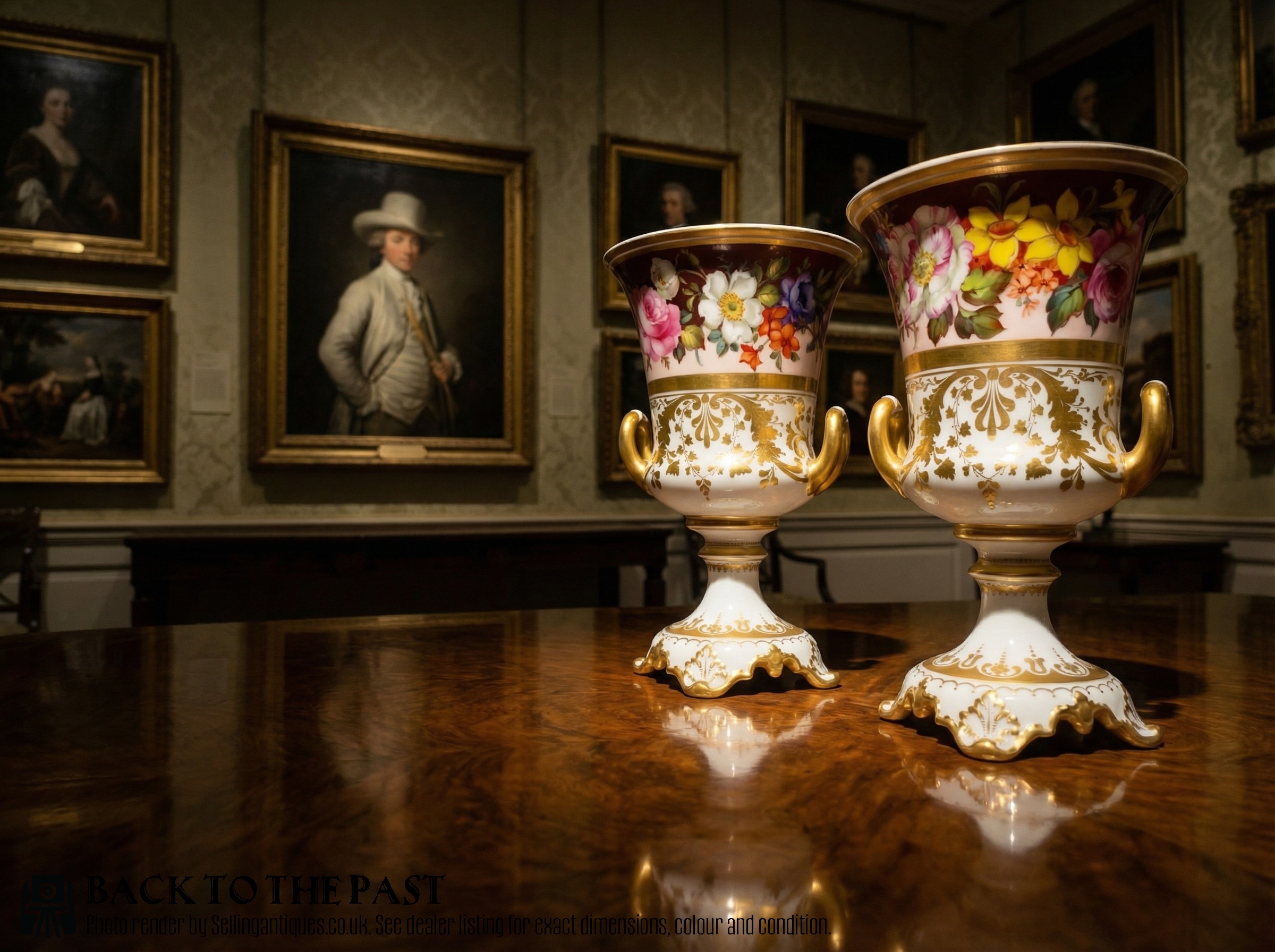
Royal Crown Derby Vases
Royal crown derby vases encompass porcelain vessels produced across the nineteenth and twentieth centuries, spanning the Victorian and Edwardian eras. Buyers encountering this selection will find decorative vases, urns, bud vases, and ewers showcasing traditional forms.
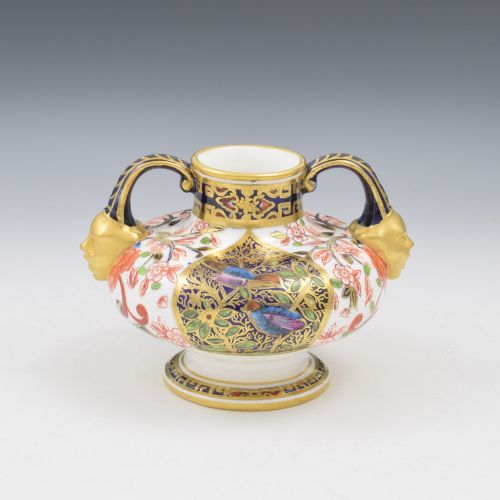
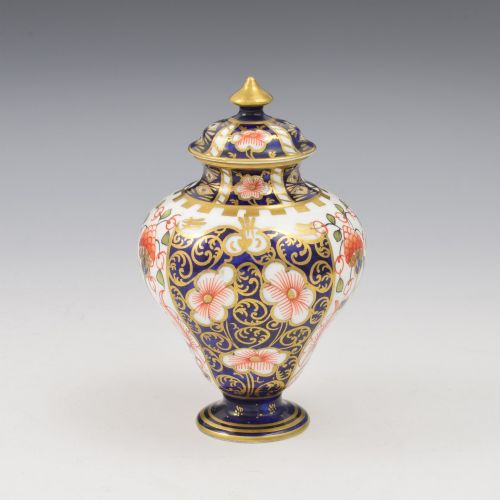
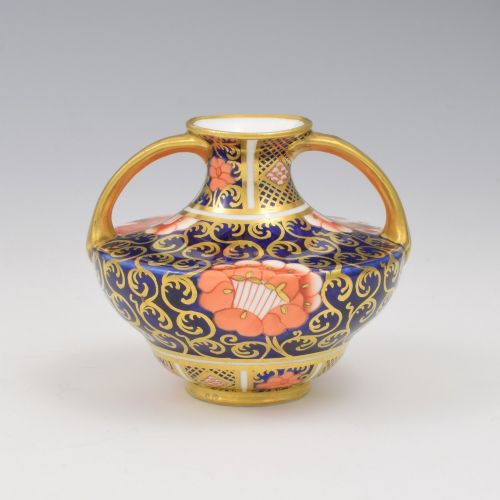
The objects include miniature porcelain vases with covers, twin-handled vessels, and garnitures. Pieces date from the eighteen-eighties through to nineteen-twenty, reflecting distinct periods of production.
How they were made
Potters shaped fine bone china and porcelain into bodies and handles before applying enamel colours and gold gilding. Many examples incorporate raised gold decoration and intricate hand painting.
Makers utilised traditional firing techniques to set the porcelain and enamel, finishing surfaces with detailed gilding characteristic of the Imari styles and Aesthetic Movement.
Some miniature porcelain vases measure mere inches, proving that grand decorative ambition fits comfortably in the palm of a hand.
What varies in quality
Quality differentiates through the precision of the hand painting and the complexity of the pattern, such as Imari Witches or exotic bird motifs. Artist signatures, including work by Darlington, Gregory, Leroy, and Harris, elevate individual pieces.
The application of gold leaf and the crispness of moulded details such as twin mask handles distinguish finer works from standard production vessels.
Albert Gregory·Charles Harris·Darlington·Leroy
The Royal Crown Derby Vases Glossary
- Imari
- A decorative style featuring rich iron red, cobalt blue, and gold gilding. This palette originates from Japanese ceramics and strongly influences Edwardian designs.
- Gilding
- The application of gold leaf or liquid gold to porcelain surfaces. It highlights rims, handles, and raised pattern details.
- Bone china
- A type of soft-paste porcelain incorporating animal bone ash. It provides a bright white base for enamel painting.
- Ewer
- A large jug with a flared spout and curved handle used for decoration. Several examples appear alongside traditional vases and urns.
- Garniture
- A set of three or more matching vases or urns designed to sit together on a mantelpiece. Victorian sets often include lidded vessels.
Royal Crown Derby Vases: Frequently Asked Questions
How do I date my royal crown derby vase?
Dating relies on stylistic markers, patterns, and recorded periods such as the Victorian or Edwardian eras. Reference numbers and artist signatures also help establish the decade of creation.
Comparing handle styles and decorative motifs like Aesthetic Movement gilding provides further chronological context.
What is the Imari pattern on these vases?
The Imari style uses a distinct combination of deep cobalt blue, iron red, and heavy gold gilding. It became popular during the Edwardian period on fine bone china.
Pieces bearing pattern numbers such as sixty-two ninety-nine typically display these characteristic colours.
Were these vases used for flowers?
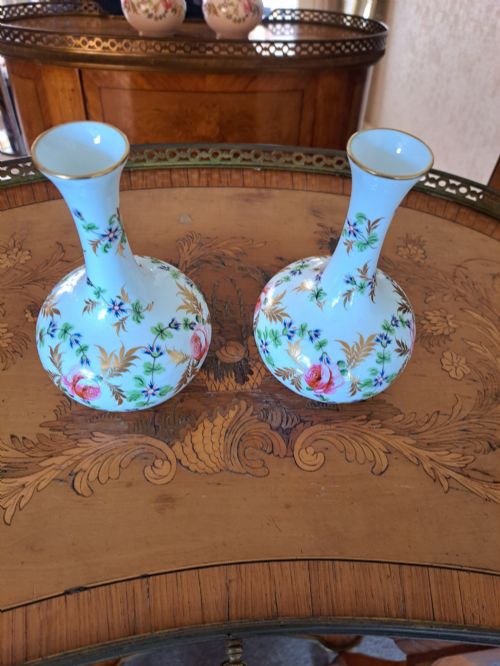
Many specific forms, such as bud vases, served to hold single stems or small floral arrangements. Others functioned purely as decorative garnitures and urns.
Twin-handled lidded vases and ewers were generally kept as ornamental display pieces rather than utility items.
What makes an artist signed vase different?
Signed pieces feature the hand of a specific painter, such as Harris, Gregory, Darlington, or Leroy. These individuals executed detailed hand-painted scenes like exotic birds.
Such attribution often points to higher quality work within the factory output.