
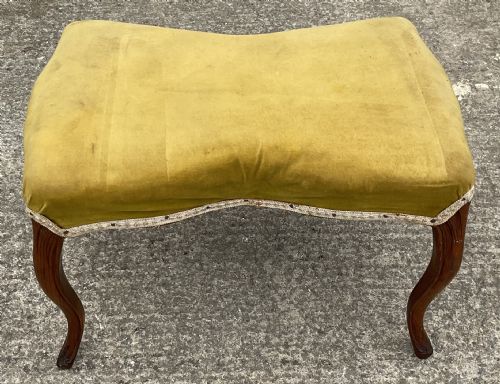


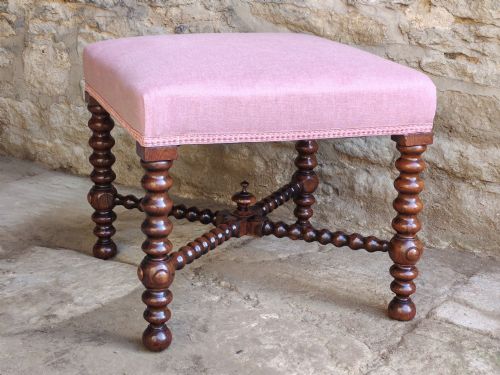



Victorian X Frame Stool
A victorian x frame stool brings distinct architectural lines and padded comfort to a dressing room or window seat.
Victorian X Frame Stool
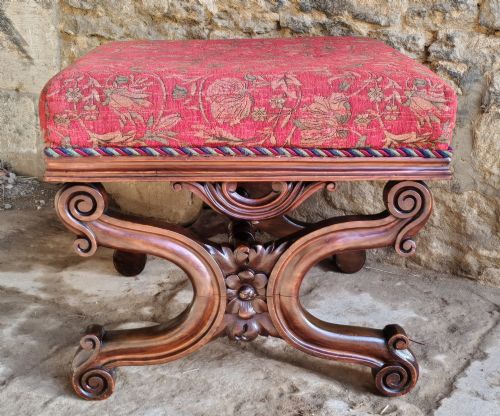
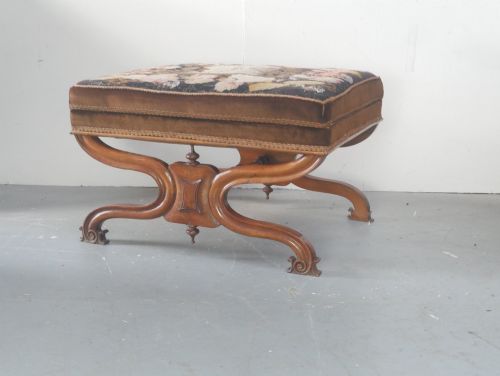
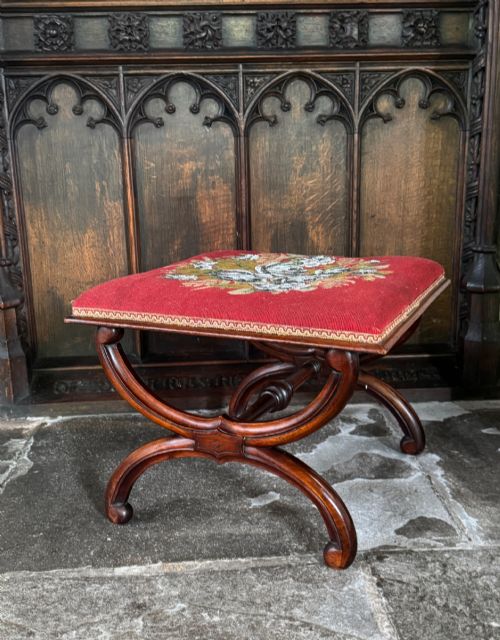
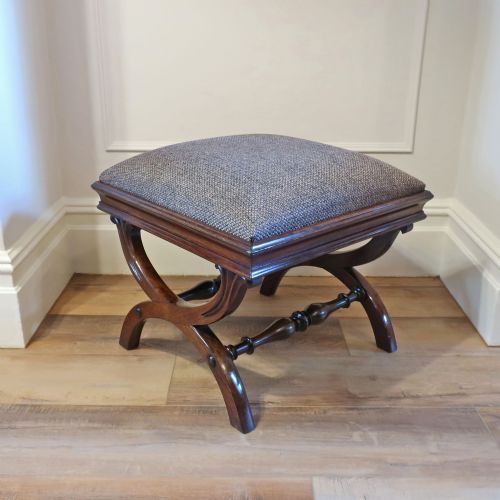
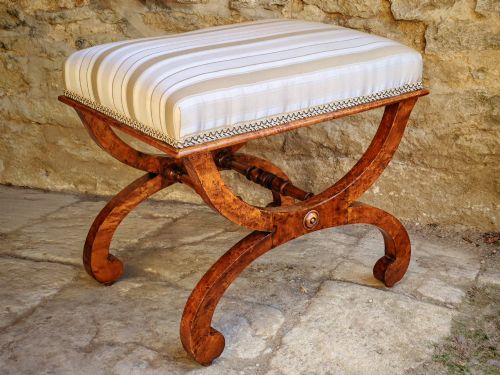
A victorian x frame stool relies on crossed structural timbers that form a curule or X shape beneath an upholstered seat. These pieces appear frequently in mahogany and walnut, spanning the middle decades of the nineteenth century.
Makers produced these forms as dressing stools, window seats, and footstools, often incorporating carved details or needlework tops. The silhouette draws on earlier revival styles while remaining rooted in Victorian seating design.
Construction and materials
Carpenters shaped solid timbers like mahogany, walnut, and rosewood to form the curved or straight members of the cross frame. Joinery required secure half-lap joints at the intersection to bear weight across the span.
Upholstery utilised traditional stuffing secured over webbing, finished with textiles ranging from velvet and fabric to gros-point needlework and beadwork.
Design influences across the inventory include Scottish Baronial, Aesthetic Movement, and William and Mary revivals.
Distinctions in craftsmanship
Quality rests in the weight of the timber and the crispness of the hand-carved details on the frame junctions. Superior examples maintain rigidity at the central pivot without requiring modern metal reinforcement.
The sophistication of the upholstery edge and the selection of secondary woods underneath also separate standard utility pieces from finely finished chamber seating.
The Victorian X Frame Stool Glossary
- X-frame
- A seating support structure formed by two crossed members making an X shape when viewed from the side. This ancient form reappeared frequently in nineteenth-century revival furniture.
- Gros-point
- A heavy needlepoint stitch worked on canvas using wool yarn. It creates a durable, textured surface commonly found on period upholstery.
- Curule
- An ancient chair shape featuring curved legs that cross to form an X. Victorian designers adapted this classical outline for domestic stools and benches.
- Prie-dieu
- A devotional chair or stool featuring a low seat and an upper rail designed for kneeling and prayer. These pieces occasionally share turnings with domestic stool frames.
- Ebonised
- Timber treated with a dark stain or finish to imitate ebony. This technique gained popularity during the nineteenth century, particularly within aesthetic movement designs.
Victorian X Frame Stool: Frequently Asked Questions
Where were these stools used in the home?
These pieces served primarily in bedrooms as dressing table seats or placed by windows to provide low seating without obstructing views.
They also appeared in drawing rooms and hallways as convenient perches or footrests alongside larger armchairs.
How do I date a nineteenth-century stool?
Dating relies on observing timber choices, such as early reliance on rosewood and mahogany shifting towards walnut and satinwood later in the period. Carving styles and revival influences also provide clues to the decade of manufacture.
Construction marks, screw types, and hand-cut joinery help confirm whether a piece originates from the mid-nineteenth century or a later revival phase.
Are these frames strong enough for daily seating?
Solid timber construction and sturdy cross-bracing make these frames durable for regular use when the central joints remain tight. Periodic checks of the structural intersections ensure the wood bears weight safely.
Upholstery webbing may require professional reupholstering if the internal support has softened over decades of sitting.
What is the difference between a footstool and a dressing stool?
Footstools feature lower profiles and compact dimensions designed specifically to support feet while sitting in an armchair. Dressing stools stand taller to match the height of a dressing table and often include padded upholstered tops.
Window seats share the X-frame support but generally stretch wider to accommodate more than one person.