

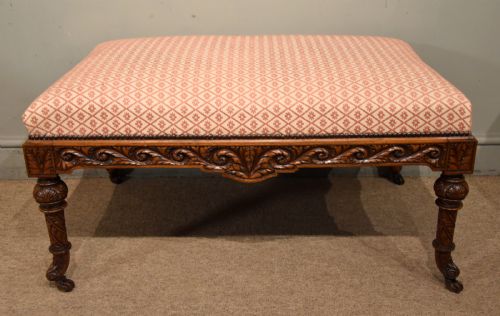


Rosewood Bedroom Stool
These rosewood bedroom stool examples bring tactile historic seating into domestic spaces, offering compact form alongside rich timber grain.
Rosewood Bedroom Stool
When you search for a rosewood bedroom stool, you encounter low seating designed for dressing rooms and parlours during the nineteenth century. These forms include dressing stools, ottomans, footstools, window seats, and cross-frame varieties.
The pieces on this page span the Victorian era alongside Qing Dynasty examples in huali wood. You see cabriole legs, oval shapes, and Gothic Revival influences sitting alongside standard dressing forms.
Most items stem from the nineteenth century, ranging from mid-Victorian production to late-century pieces. They serve primarily as low seating or footrests, often retaining upholstered pads in various fabrics.
How they were made
Makers shaped these items from dense timber including rosewood and huali wood, applying carved details to frames and cabriole legs. Structural assembly relies on traditional joinery suited to supporting weight on a compact footprint.
Upholstery forms an integral part of the construction, utilising fabric, tapestry, and occasional gold braid trim. Brass fittings appear on specific mechanisms or structural elements where appropriate.
Rosewood Bedroom Stool Retail Price Guide 2026
Typical asking prices for rosewood bedroom stool among the pieces listed under this phrase on Sellingantiques today, from the lower quarter to the upper quarter. They describe what is for sale here now, not the wider market.
Some stools hide cross-frames beneath their upholstery, ready to spring into action.
What varies in quality
The refinement of the timber carving dictates much of the distinction between standard items and superior examples. Crisp execution in Victorian Rococo Revival or Qing Dynasty carving demonstrates greater artisan investment.
The integrity of the original frame structure and the preservation of secondary materials like tapestry and gold braid influence the overall character of each piece.
The Rosewood Bedroom Stool Glossary
- Cabriole leg
- A furniture leg that curves outward and then tapers inward, resembling the front leg of an animal. This form became popular during revival periods.
- Cross frame
- A support structure formed by intersecting members. This design provides stability to compact dressing stools.
- Prie Dieu
- A devotional chair featuring a low seat and an upper rail for kneeling or leaning. These appear in Gothic Revival contexts.
Rosewood Bedroom Stool: Frequently Asked Questions
Where were rosewood bedroom stools used?
These pieces functioned primarily in private chambers, dressing rooms, and parlours. They provided convenient seating before dressing tables or alongside windows.
Their compact scale allowed them to move easily about domestic spaces as needed.
How do I identify a Victorian rosewood stool?
Look for dense rosewood timber combined with characteristic nineteenth-century stylistic elements like cabriole legs or carved frames. Many pieces align with Victorian Rococo or Gothic Revival aesthetics.
Dates typically centre around the mid to late nineteenth century based on construction methods.
What is a huali wood dressing stool?
Huali is a prized hardwood utilised in Chinese Qing Dynasty cabinetmaking. These stools feature carved decoration distinct from European domestic furniture.
They function as low dressing seats or window benches.
Can these stools support regular sitting?
Most examples were built for domestic use as dressing seats or footrests and retain sturdy hardwood frames. Upholstery condition varies, but the underlying timber structures remain robust.
Gentle daily use suits these historic items appropriately.