



Antique Rosewood Footrest
These antique rosewood footrest options are solid timber pieces designed to support tired feet, offering heavy grain and period upholstery.
Antique Rosewood Footrest
When you search for an antique rosewood footrest, you encounter low timber stools designed for domestic comfort across several centuries. The selections span Regency, Georgian, William IV, and Victorian eras.
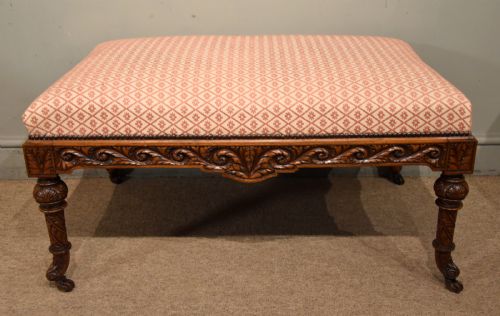
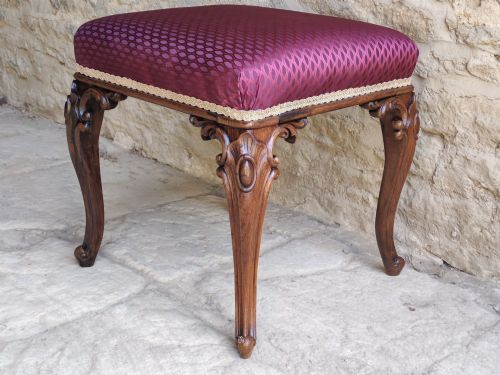
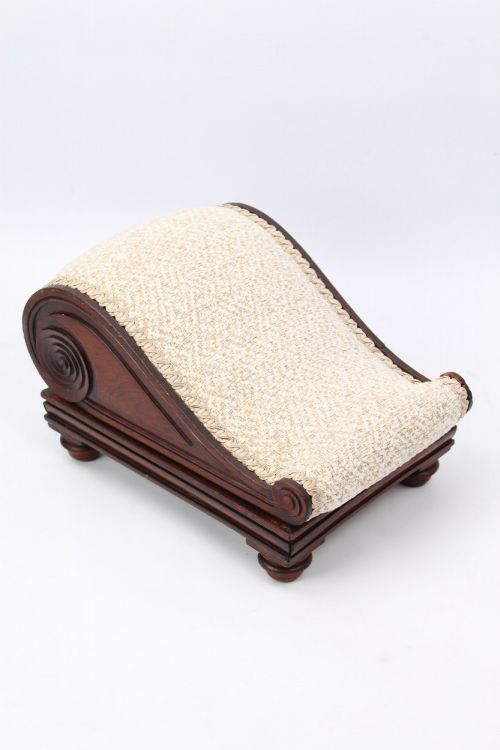
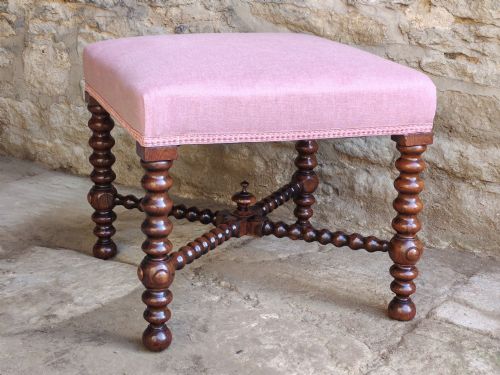
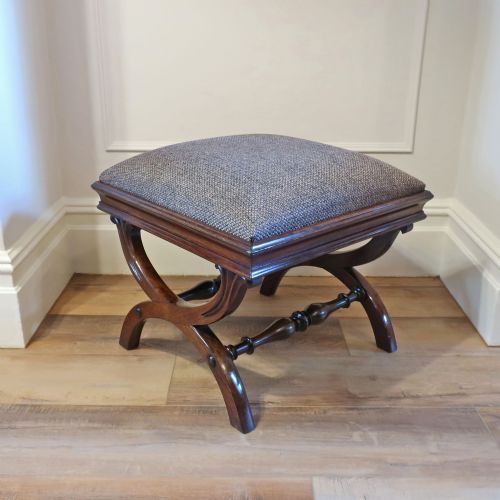
Most examples appearing on this page belong to the Victorian period, frequently showing carved details, cabriole legs, or bobbin turnings. Forms range from simple rectangular frames to oval shapes and X-framed designs.
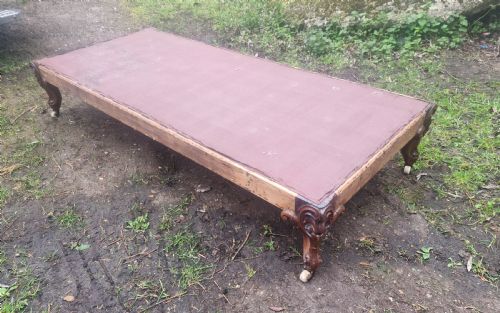
Makers utilised dense timber alongside various textile coverings, creating low seating that paired with armchairs and sofas. You also find larger centre stools and occasional reclining library armchairs fitted with foot supports.
Materials and construction
Workshops built these frames predominantly from rosewood, harnessing the dark, heavy grain of the timber to anchor carved decoration and turned supports. Timber sections were shaped into cabriole legs or bobbin turned structures.
Upholstery formed a central part of the construction, layering fabric, tapestry, and woven textiles over the wooden frame. Details like gold braid often finished the edges where the textile met the wood.
Brass fittings appeared on specific pieces, particularly on castors or hardware associated with reclining mechanisms in library armchairs. Hardwood variations also emerged, reflecting regional influences such as Anglo-Indian production.
Library chairs of the period allowed readers to recline with built-in foot rests, ensuring comfort while studying heavy volumes.
Judging quality in rosewood footrests
The standard of a piece rests heavily on the crispness of the timber carving and the integrity of the rosewood grain. Finer examples display deeply sculpted foliage or smooth, well-proportioned cabriole legs rather than plain, unadorned rails.
Construction methods dictate longevity, with tight joints and substantial timber framing separating superior items from lesser examples. The choice of original upholstery materials, such as heavy tapestry or woven fabric with gold braid, also indicates higher workshop standards.
Robert Daws
The Antique Rosewood Footrest Glossary
- Rosewood
- A dense, dark tropical timber valued for its distinct grain and heavy weight. It takes a high polish and forms the primary structure of these pieces.
- Cabriole leg
- A furniture leg that curves out and then in, resembling an animal's leg in motion. This shape appears frequently on Victorian examples.
- X-framed
- A structural design where the legs cross in the centre to form an X shape. This configuration provides sturdy support for low stools.
- Bobbin leg
- A turned wooden leg shaped to resemble a series of bobbins or spools stacked end to end. It is a common feature on mid nineteenth century seating.
- Tapestry
- A heavy hand or machine woven textile used for upholstery. It provides a durable and decorative surface for footstools.
Antique Rosewood Footrest: Frequently Asked Questions
What periods do these footstools come from?
The pieces span the Georgian, Regency, William IV, and Victorian eras, with the majority originating in the nineteenth century.
Craftsmen produced them across decades that embraced changing styles, from early Regency lines to heavy Victorian Rococo Revival carving.
Were these stools used alone or with chairs?
They served as low seating or accompanied armchairs and sofas to support the feet of people sitting in parlours and libraries.
Some larger versions functioned as centre stools or ottoman seating rather than simple footrests.
How do I care for rosewood furniture?
Keep the timber away from direct heat sources and sudden temperature shifts to prevent the dense wood from drying out.
Dust the carved surfaces regularly with a soft cloth and apply specialist wax sparingly when the timber appears dull.
Can I reupholster a vintage footstool?
Many pieces require new fabric or completely fresh upholstery to suit modern interiors while preserving the antique timber frame.
Workshops often offer frames specifically intended for reupholstering, allowing you to select appropriate textiles like tapestry or woven fabric.