
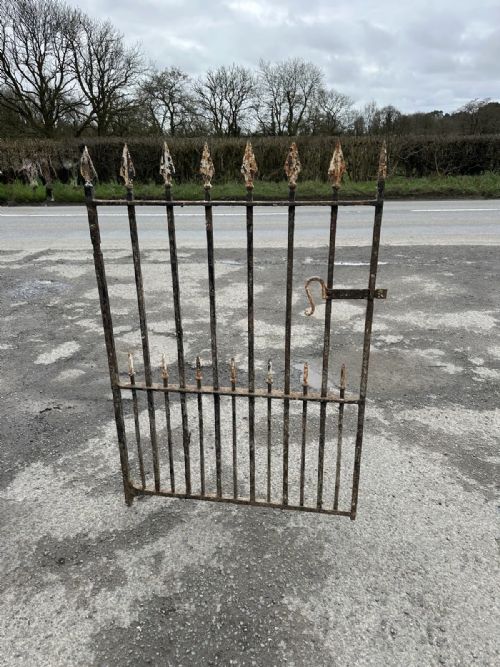


Victorian Wrought Iron Gates
Victorian wrought iron gates are heavy, hand-forged boundaries built to last generations, offering a striking historic entrance to a garden or driveway.
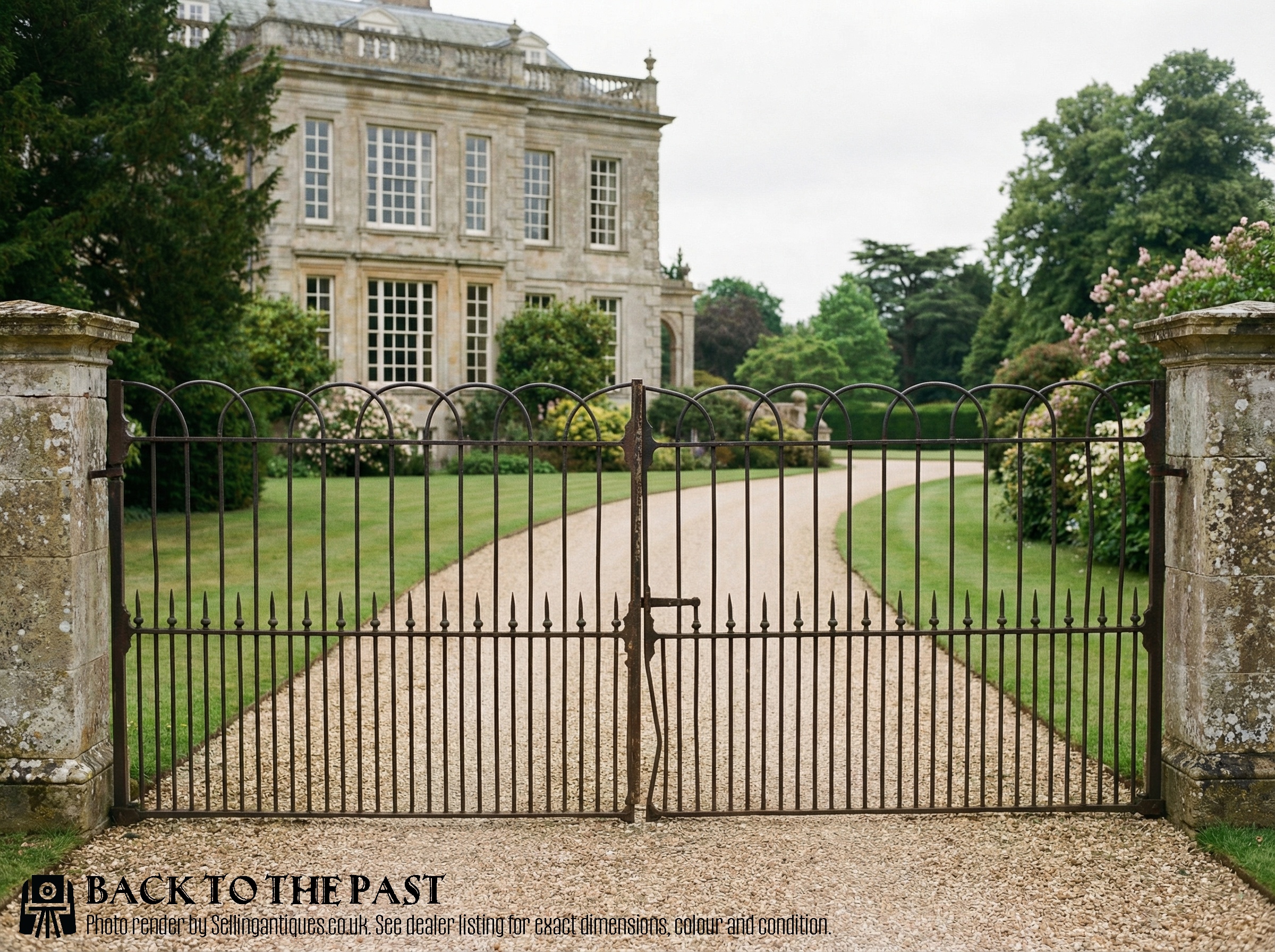
Victorian Wrought Iron Gates
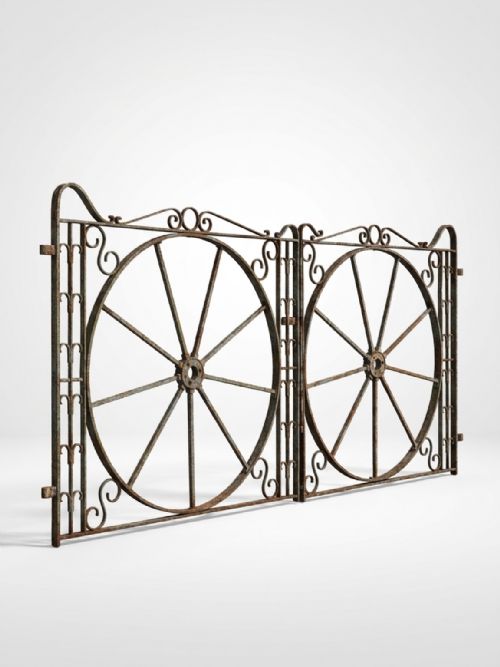
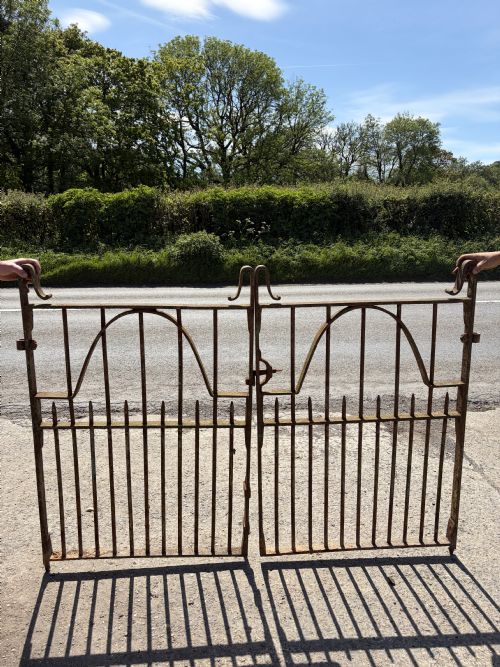
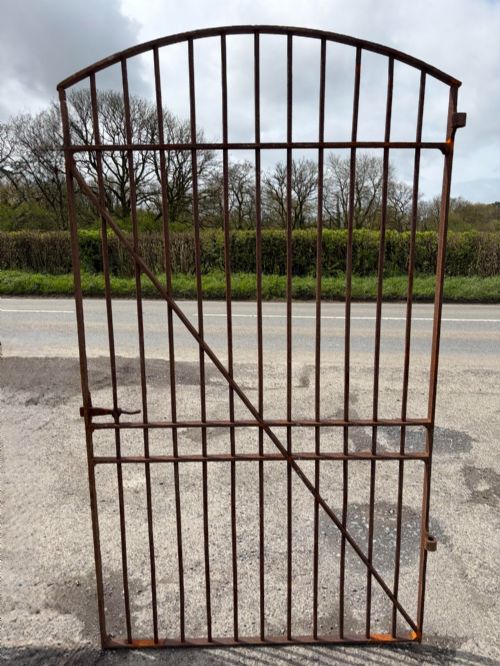
Victorian wrought iron gates are substantial architectural barriers designed for estates, gardens, and driveways. When searching for victorian wrought iron gates, buyers encounter robust garden gates, tall arched driveway entrances, and specialised forms such as kissing gates.
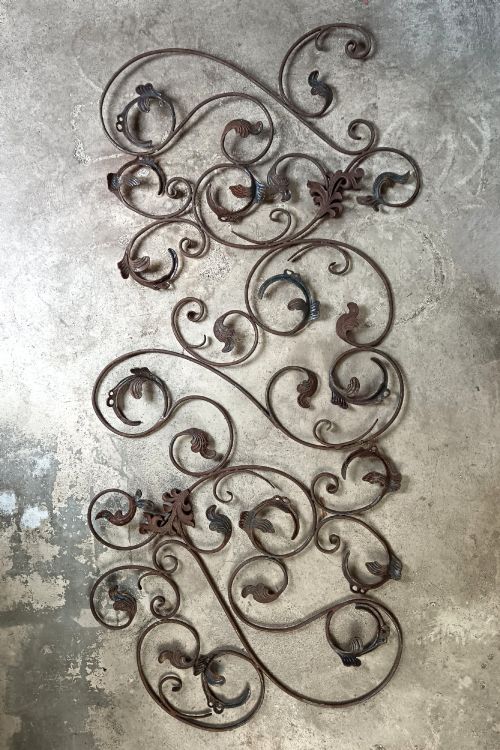
The pieces on this page span the Victorian era, the nineteenth century, and around nineteen hundred, alongside occasional related structures and salvaged scroll panels. They appear in single formats and matching pairs, often featuring strapwork or trident details that denote their period origins.
Originating predominantly from the nineteenth century, these structures reflect the functional and decorative demands of period country estates and farms. Surviving examples demonstrate the heavy engineering and blacksmithing traditions typical of the era's ironwork.
Materials and construction
These pieces are constructed primarily from wrought iron, sometimes combined with cast iron components for decorative elements or structural rigidity. Blacksmiths shaped the metal by hand, utilising techniques such as riveting and strapwork to join heavy bars together.
The construction relies on solid forged bars rather than hollow tubing, resulting in exceptional weight and durability. Riveted joints and scroll panels demonstrate the manual labour involved in creating rigid frames capable of withstanding decades of outdoor exposure.
At least one surviving example includes a kissing gate, designed to let walkers pass while stubbornly keeping wandering sheep out.
Assessing quality and proportion
Quality in these structures is dictated by the complexity of the blacksmith's forge work, particularly the execution of strapwork, scroll panels, and specialised details like trident finials. Superior examples display clean, purposeful hammering and harmonious proportions across large estate dimensions.
The condition of the metalwork also separates standard utilitarian pieces from exceptional ones, considering the depth of weathering and the survival of original riveted joints. Heavier solid construction and monumental scale generally indicate a commission for a significant country estate.
The Victorian Wrought Iron Gates Glossary
- Wrought iron
- A tough, malleable form of iron containing slag inclusions, traditionally worked by hand at a forge. It resists corrosion better than modern steel and shows a fibrous grain when fractured.
- Strapwork
- Flat bands of metal used decoratively or structurally to reinforce joints and frame sections. In these gates, strapwork adds rigidity while creating geometric surface patterns.
- Kissing gate
- A small gate enclosed within a U-shaped or V-shaped pen that allows only one person through at a time. This clever design keeps livestock enclosed while providing pedestrian access.
- Trident detail
- A decorative finial shaped like a three-pronged spearhead. Blacksmiths welded or riveted these elements to the top rails for both visual presence and boundary deterrence.
- Architectural salvage
- Building components rescued from demolition or alteration for reuse in new settings. These pieces retain historical character from period estates.
Victorian Wrought Iron Gates: Frequently Asked Questions
How do I hang heavy iron gates?
Hanging these heavy structures requires substantial stone piers or reinforced brick pillars capable of supporting immense downward force and leverage. Professional installers typically use adjustable heavy-duty hinges anchored deep into the masonry.
Alignment is critical during installation to ensure the leaves swing freely without dragging across the ground. Periodic maintenance involves checking these anchor points and lubricating the pivot mechanisms.
Can these gates be resized?
Altering the width or height of solid forged iron requires a skilled blacksmith or metalworker with appropriate cutting and welding equipment. Because these pieces rely on balanced proportions and structural strapwork, cutting them changes both strength and appearance.
It is generally preferable to adjust the hanging pillars or entrance opening rather than modify the original metalwork. Professional intervention ensures the structural integrity remains uncompromised.
How do I treat surface rust?
Surface oxidation is normal for outdoor iron exposed to weather for over a century and often forms a protective patina. Active flaky rust should be gently wire-brushed away before applying a stabilizing rust converter and suitable exterior paint.
Avoid abrasive sandblasting on older hand-forged surfaces, as this can erase tool marks and the subtle textures left by the blacksmith. Regular inspection and touch-ups prevent deep corrosion from compromising the metal.
What is the difference between cast and wrought iron?
Cast iron is poured into moulds while molten, resulting in a rigid, brittle material ideal for ornate decorative panels but susceptible to sudden snapping under stress. Wrought iron is worked by hand while hot, producing a fibrous structure that bends rather than breaks.
Many period entranceways combine both materials, utilising brittle cast elements for decorative finials and tough wrought iron for the main structural frame.