


Victorian Driveway Gates
Victorian driveway gates are substantial architectural ironwork built for estates and country houses, offering secure and impressive perimeter access.
Victorian Driveway Gates
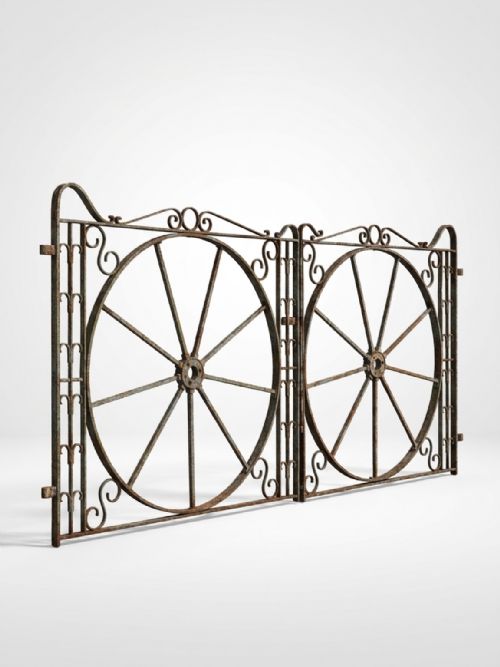
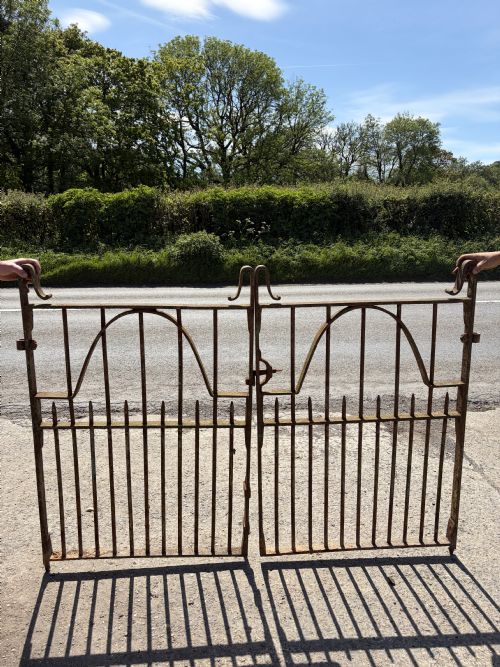
Victorian driveway gates are large architectural ironwork installations designed for country estates, grand entrances and properties requiring secure perimeter access. Buyers search for these pieces to secure property entrances with authentic period metalwork that matches historic architecture.
The versions most commonly met on this page are wrought iron estate gates and strapwork designs, often found as pairs or large single vehicular entrances. These heavy barriers reflect the substantial scale and functional requirements of nineteenth-century rural and urban properties.
How they were made
These pieces utilise forged and cast metals, combining wrought iron for structural strength and strapwork with cast iron elements for decorative stability. Blacksmiths shaped the iron while hot, hammering strapwork and structural bars to create robust entrance barriers.
Makers integrated various metalworking techniques to build these heavy structures, ensuring the iron components could withstand constant operation and weight. The construction relies on traditional joining methods, such as riveting and collar joints, rather than modern welding.
Listings on this site span Victorian, nineteenth-century, and 1920s periods, featuring wrought iron, cast iron, sandstone, and reconstituted stone.
What varies in quality
Quality in these gates rests on the weight and gauge of the iron used, alongside the complexity of the strapwork and forging. Heavier estate gates with refined hand-forged details represent the higher end of the range, showing superior blacksmithing skill.
The integrity of the original ironwork and the survival of decorative components dictate the standing of a piece. Simple utilitarian panels sit at a different level from monumental estate gates featuring elaborate strapwork and balanced proportions.
The Victorian Driveway Gates Glossary
- Wrought iron
- A tough, malleable form of iron containing slag inclusions, traditionally used by blacksmiths for durable outdoor metalwork. It resists corrosion better than modern steel and allows for intricate hot-forging.
- Strapwork
- Ornamental flat bands of metal arranged in geometric patterns across the face of a gate. This technique adds both structural rigidity and visual decoration to large estate barriers.
- Cast iron
- Iron poured into a mould in a molten state to create rigid components or decorative details. It offers high compressive strength but lacks the flexibility of forged metal.
- Estate gate
- A large vehicular barrier built to enclose expansive grounds or country properties. These pieces are typically scaled to accommodate carriages and early motor vehicles.
- Architectural salvage
- Building components rescued from older structures slated for demolition or alteration. This category preserves historic ironwork for reuse in period settings.
Victorian Driveway Gates: Frequently Asked Questions
How wide are Victorian driveway gates?
These gates typically measure ten to twelve feet across, built to span carriage entrances and wide driveways.
Buyers must measure their opening carefully to accommodate the substantial physical width and hinge clearances required for these heavy iron barriers.
Are these gates made of solid iron?
The listings show pieces constructed from solid wrought iron and cast iron components, reflecting nineteenth-century metalworking practices.
This solid metal construction gives the gates their notable weight and structural longevity when exposed to outdoor environments.
How do I maintain historic iron gates?
Maintenance involves regular inspection of the metal surface, removing surface rust, and applying protective coatings suitable for historic ironwork.
Keeping the hinges lubricated and the paint layer intact protects the underlying wrought iron from moisture damage over decades of use.
Can these gates be altered in size?
Altering historic ironwork requires specialist blacksmithing skills to cut, reforge, and rejoin the heavy metal bars without compromising structural integrity.
Most buyers prefer to find gates that match their exact opening dimensions to preserve the original strapwork and proportions.