
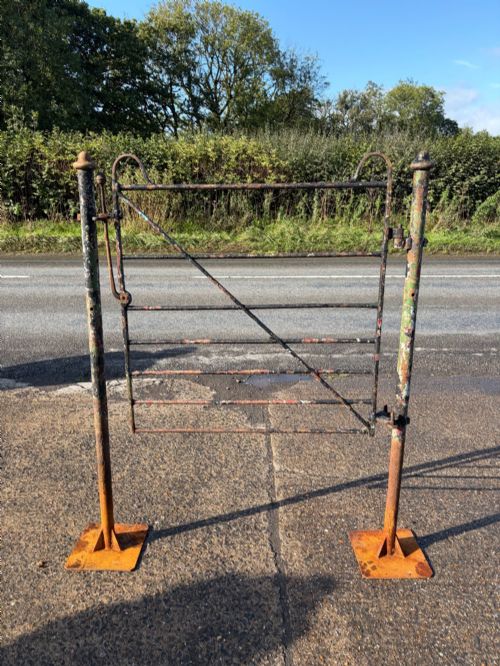
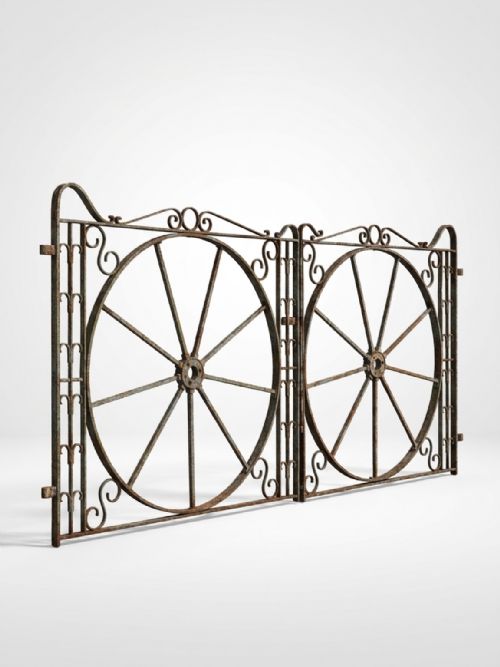
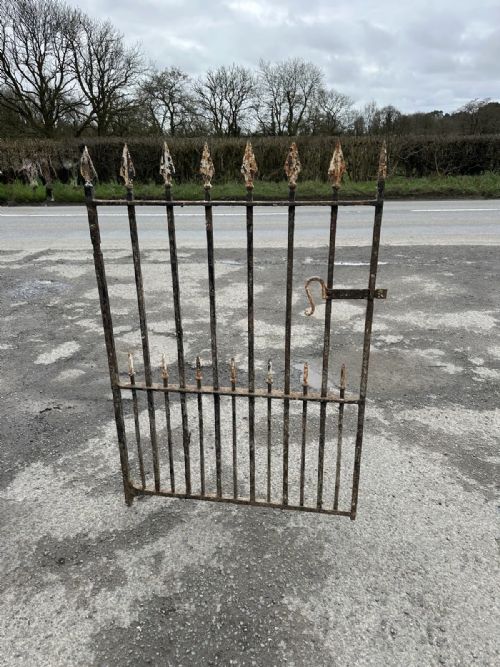


Antique Iron Estate Gates
These antique iron estate gates offer substantial boundary marking and country house character, built for endurance.
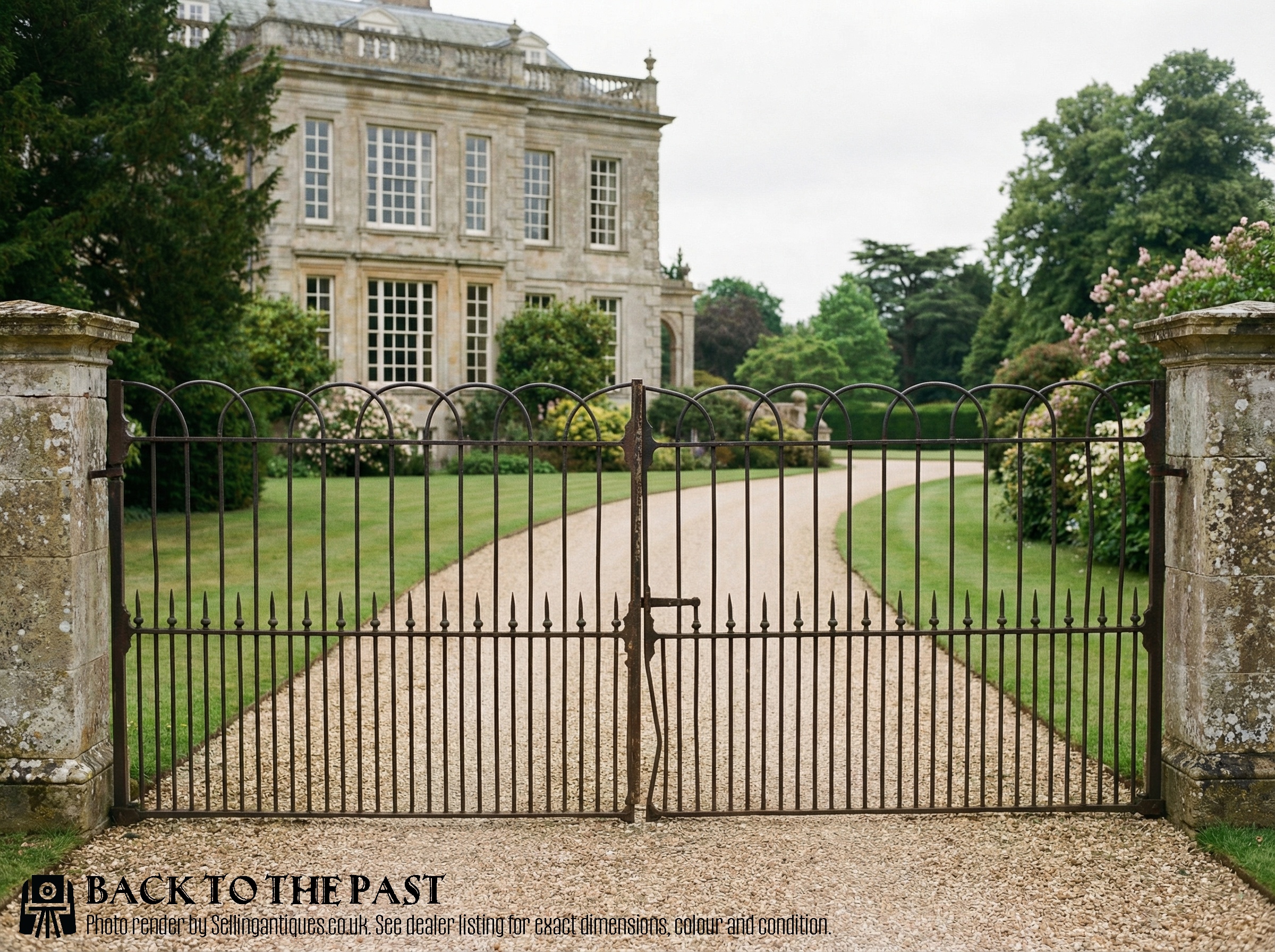
Antique Iron Estate Gates
When you search for antique iron estate gates, you encounter substantial barriers designed for grand entrances, driveways and country properties. These pieces serve to secure land while maintaining a dignified architectural presence at the perimeter.
The selections available here span the 18th century, the 19th century, Victorian eras and around 1900. You will frequently meet heavy pairs alongside smaller garden gates and specialised forms like kissing gates.
Forms range from monumental estate-made examples to strapwork driveway gates and blacksmith-made pieces. They originate primarily from domestic country estate contexts.
How they were made
Blacksmiths forged these barriers using wrought iron, hammering the metal while hot to shape structural bars and decorative strapwork. This labour-intensive method produced resilient metalwork that resisted bending under tension.
Makers occasionally combined cast iron elements with wrought iron components to balance decorative rigidity with structural strength. This dual-material construction allowed for intricate surface details paired with heavy-duty framing.
Listings feature pieces spanning the 18th century, 19th century, Victorian period, and around 1900, constructed from wrought iron and cast iron.
What varies in quality
Quality separates mass-produced foundry work from bespoke blacksmith-made commissions through the dexterity of the forging and the weight of the metal. Monumental scale and complex strapwork indicate a higher tier of original craftsmanship.
The Antique Iron Estate Gates Glossary
- Wrought iron
- A tough, malleable form of iron containing slag inclusions that permits hammering into decorative shapes. Blacksmiths traditionally utilised this material for its fibrous resistance to shock.
- Cast iron
- Iron melted and poured into a mould to take complex rigid shapes. This material provides decorative detail but lacks the flexibility of forged metal.
- Strapwork
- Flat bands of metal interwoven or applied in geometric patterns across a gate frame. This technique reinforces the structure while adding visual rhythm.
- Kissing gate
- A small gate swinging within an enclosed U-shaped or V-shaped area that allows one person through at a time. Country boundaries frequently incorporated these pedestrian access points.
- Architectural salvage
- Elements rescued from buildings or estates before demolition for reuse in new settings. These pieces carry historical patina from their original installations.
Antique Iron Estate Gates: Frequently Asked Questions
How do I hang heavy iron gates?
Hanging these barriers requires substantial stone or brick piers capable of supporting significant lateral weight. Professional installation involves secure pin hinges anchored deep into the masonry.
Alignment must account for the natural sag of wide spans over time. Proper clearance prevents dragging across gravel or driveways during daily operation.
What periods do these gates date from?
The available pieces span the eighteenth century, the nineteenth century, and the Victorian and Edwardian eras. Dating relies on construction methods, such as hand-forged blacksmith techniques versus later foundry casting.
Earlier examples often display individual blacksmith marks and heavy strapwork. Later Victorian and 1900 pieces incorporate standardised industrial components alongside traditional hand-work.
Are these gates suitable for modern driveways?
These historical barriers adapt well to contemporary vehicular entrances when paired with appropriate automated systems or heavy pivots. Their robust construction handles regular daily use without losing structural stability.
Widths vary from pedestrian garden paths to expansive eight-foot and twelve-foot driveway spans. Buyers must measure existing opening clearances carefully before selection.
How should I maintain antique ironwork?
Regular inspection of the metal surface helps manage surface oxidation before it compromises the structural gauge. Applying protective coatings keeps moisture from settling into forged joints and strapwork crevices.
Keeping hinges lubricated ensures smooth movement and reduces strain on the mounting points. Routine care preserves the original material integrity for decades of continued service.